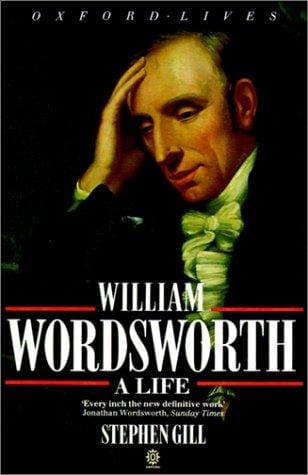
William Wordsworth may be a name you remember from a school anthology, but hearing his work aloud, as an audiobook, is a different kind of encounter. The English Romantic poet, whose “I Wandered Lonely as a Cloud” sits on Spinn Radio in audio form, wrote classics that were meant to be spoken, heard, and felt line by line.
As one of the voices who launched the Romantic Age in English literature with Samuel Taylor Coleridge and their 1798 collection Lyrical Ballads, Wordsworth helped shift poetry toward personal feeling, ordinary life, and the natural world. In a listening era where you can tap and hear a poem in seconds, his work suddenly feels less like homework and more like a quietly radical kind of audio storytelling.
Key facts
- Era
- Classic
- Genres
- classics, poetry
- Country
- England
- Lived
- 1770-1850
- Notable works
- Lyrical Ballads, The Prelude
- Audiobooks on Spinn Radio
- I Wandered Lonely as a Cloud
What William Wordsworth’s “I Wandered Lonely as a Cloud” is really about
On paper, “I Wandered Lonely as a Cloud” is a short lyric about a walk, a field of daffodils, and the memory of that scene. In audio, it becomes something closer to a guided reverie. The poem begins in isolation, with that wandering “lonely as a cloud” image, then slowly fills with movement, color, and a crowd of flowers that “flash upon that inward eye” later on. Listening, you notice how the mood shifts from solitude to quiet joy and then to the afterglow of remembered happiness.
As a Romantic poet, Wordsworth is obsessed with how nature and memory talk to each other. The daffodils are not just pretty scenery, they become a store of feeling the speaker carries around for years. In an audiobook, you can hear the pivot points in his cadence: where the voice lingers on “golden daffodils” or quickens as the flowers “dance.” That sonic shape is the takeaway here. The poem does not just describe a landscape, it imitates the rhythm of a thought that keeps returning when you least expect it.
If you want the most direct way into Wordsworth, queue “I Wandered Lonely as a Cloud” on Spinn Radio. It captures his signature move in just a few minutes: an everyday encounter with nature that unfolds into a deeper, replayable feeling.
“In audio, “I Wandered Lonely as a Cloud” feels less like a school text and more like a guided reverie you can slip into on repeat.”
How William Wordsworth and Coleridge sparked the Romantic Age
William Wordsworth lived from 1770 to 1850, a period of upheaval and change, and he helped redirect English poetry during that time. With Samuel Taylor Coleridge, he published Lyrical Ballads in 1798, a joint collection often cited as the starting point of the Romantic Age in English literature. That date matters because it marks a shift away from highly formal verse toward poems about ordinary people, rural scenes, and inner life.
If you come to the audiobook of “I Wandered Lonely as a Cloud” knowing it grew out of that Romantic project, the listening experience sharpens. Lines about a “host of golden daffodils” are not only picturesque, they are part of a conscious push to show that a solitary walk in England could be worthy of serious art. In your headphones, that philosophy becomes personal. The poet’s gaze is local and specific, and the audio brings you right into that world, without footnotes or historical distance.
To explore more of this context, start with William Wordsworth on Spinn Radio, where his place in classics and poetry sits alongside other authors from the same era. The key detail to remember: this is the voice that helped make emotional, nature-focused, first-person poetry feel central rather than marginal.
“A field of English daffodils became, in Wordsworth’s hands, a manifesto for taking everyday feeling seriously.”
Spinn Radio
Explore William Wordsworth on Spinn Radio
Why William Wordsworth’s classic poetry still feels modern
Wordsworth wrote in what we now call the Classic era, but his themes map neatly onto the present. He is preoccupied with solitude, mental restlessness, and the need to recharge in nature, all ideas that resonate in a world of constant noise and screen time. In “I Wandered Lonely as a Cloud, ” the simple act of walking alone becomes a way to reset the mind, and later, remembering that walk becomes a private refuge.
This is one reason his poetry continues to endure in audio form. When a narrator voices his lines, you can hear the slight hesitations and repetitions, the way he circles back to images as if searching for the right emotional angle. That pattern sounds surprisingly close to contemporary spoken word and lyrical songwriting. It also means you do not need deep literary background to connect with him. You only need a quiet moment and a pair of headphones.
The enduring takeaway is that Wordsworth treats attention as a kind of art. He looks closely at a lake, a cloud, a stand of flowers, and then follows the feeling that attention awakens. As a listener, you are invited to do the same with your own surroundings, even if your “host of golden daffodils” is a city park on your commute.
“Wordsworth turns attention itself into an art form, which is exactly what makes his poems feel strangely current in your headphones.”
What to listen for in the “I Wandered Lonely as a Cloud” audiobook
Because Wordsworth works in classics and poetry, the listening experience on Spinn Radio rewards close attention to sound. His lines move in a steady, musical rhythm, and in “I Wandered Lonely as a Cloud” that rhythm carries you from the drifting opening image into the quickened, almost dancing middle stanzas. Notice how a good reading leans into the contrast between soft, airy words like “cloud” and “breeze” and the firmer beats of “sprightly dance” or “golden daffodils.”
Runtime matters with poetry, and one advantage of this particular audiobook is its brevity. You can listen to the full piece in a single sitting, then loop it. That repetition is not a chore. Each replay lets you pick out a new detail: maybe the pause before “a crowd, ” the slight lift on “glee, ” or the quieting of the voice when the poem reaches that inward eye “which is the bliss of solitude.” Over time, those sonic cues become as memorable as the words themselves.
To experience this for yourself, hit play on Listen to I Wandered Lonely as a Cloud. Treat it the way you might treat a favorite track in a playlist: revisit it at different times of day and notice how the poem’s mood shifts with your own. The key takeaway is simple. In audio, this classic is not an assignment, it is a short, re-listenable burst of calm and clarity.
“The best way to hear Wordsworth is on repeat, the way you return to a favorite track until every pause and inflection feels familiar.”
Where “The Prelude” and other Wordsworth classics fit in
While “I Wandered Lonely as a Cloud” is the perfect entry point, William Wordsworth’s shelf stretches further, and knowing that deepens the audiobook. His notable works include Lyrical Ballads and The Prelude, the latter a long, autobiographical poem that traces the growth of his own mind. Even if you are not hearing The Prelude itself, that self-examining impulse runs through the daffodils too. The speaker is always asking what the scene means, how it alters his inner life.
This is why Wordsworth sits so firmly in the classics and poetry genres. He writes with a clear narrative thread, but his real subject is the way memory and place shape a person over time. As you listen to a short piece like “I Wandered Lonely as a Cloud, ” you are hearing a single chapter in a larger lifelong project to capture consciousness in verse. The poem’s reflection on how a past scene resurfaces in “vacant or in pensive mood” feels like a miniature version of the grander journey in The Prelude.
If hearing one poem leaves you curious about the rest, browse more in the Browse the authors directory and treat Wordsworth as a recurring voice rather than a one-off name. The memorable detail to carry with you is that his famous daffodils are not a decorative flourish, they are part of a decades-long experiment in turning lived experience into enduring sound.
“The daffodils are not a postcard, they are a single vivid frame in a lifelong film of memory that Wordsworth kept writing.”
Good to know
Frequently asked questions
Who was William Wordsworth?
William Wordsworth was an English Romantic poet from England who helped launch the Romantic Age in English literature. He is best known for classics like Lyrical Ballads, The Prelude, and the much-loved poem “I Wandered Lonely as a Cloud.”
When did William Wordsworth live?
William Wordsworth lived from 1770 to 1850. His lifetime spans the Classic era, a period that shaped his focus on nature, memory, and inner life in poetry.
What is William Wordsworth famous for?
William Wordsworth is famous for helping to launch the Romantic Age in English literature with Samuel Taylor Coleridge through their 1798 collection Lyrical Ballads. He is also widely known for The Prelude and the poem “I Wandered Lonely as a Cloud, ” which appears on Spinn Radio as an audiobook.
What genre did William Wordsworth write in?
William Wordsworth wrote in the genres of classics and poetry. His work focuses on nature, personal feeling, and memory, all central to the Romantic movement in English literature.
Which William Wordsworth audiobook can I listen to on Spinn Radio?
You can listen to the William Wordsworth poem “I Wandered Lonely as a Cloud” as an audiobook on Spinn Radio. It offers a concise, immersive way to experience his Romantic style in just a few minutes.
Explore more on Spinn Radio: William Wordsworth on Spinn Radio · Browse the authors directory · Listen to I Wandered Lonely as a Cloud
Sources