Omar Khayyam is back in headlines this summer, with Scroll.in tracing how the Rubaiyat wrestles with rain, death and the “strange soil” of the mind, and The Economic Times pulling out that sharp reminder that “your hand can seize today, but not tomorrow.” It is a good week to meet him not on the page, but in your headphones.
Born in 1048 in Nishapur in what is now Iran, Khayyam wrote compact verses that mix poetry and philosophy, pleasure and terror, skepticism and faith. The Rubaiyat of Omar Khayyam has travelled nearly a millennium to reach you. Heard as an audiobook, its brief quatrains feel like someone thinking out loud in real time about how short life is and what, if anything, can make it meaningful.
Key facts
- Era
- Classic
- Genres
- poetry, philosophy
- Country
- Iran
- Lived
- 1048-1131
- Notable works
- Rubaiyat of Omar Khayyam
Who Omar Khayyam was and why his era matters to the Rubaiyat
Omar Khayyam lived from 1048 to 1131, a Persian polymath working in poetry, philosophy, mathematics and astronomy during the Seljuk era, around the time of the First Crusade. That context matters. This was a period of expanding empires, religious contest and serious scientific work. Khayyam was not a cloistered court poet, he was someone who calculated, observed the sky and then turned around and questioned destiny in verse.
The Rubaiyat of Omar Khayyam comes out of that mix. Each rubai (quatrain) is short, concentrated and often argumentative. A line about wine and roses is rarely just pastoral decoration. It comes from a mind that has done the math on how brief a human life is and wants you to feel the urgency of every passing hour. Hearing those verses read aloud, you catch not only the lyrical surface but the philosophical pressure underneath.
If you remember one thing about the man himself, remember this: Khayyam was Persian, he lived in Nishapur, and he spanned the worlds of science and art. When a voice reads his poetry in your ear, you are eavesdropping on someone who spent his life measuring the cosmos and then turned that same precision on human fear and desire.
“You are eavesdropping on someone who measured the cosmos and then turned that same precision on human fear and desire.”
What the Rubaiyat of Omar Khayyam is actually about
The Rubaiyat is usually shelved as poetry, but it is also a compact work of philosophy. Across its quatrains you meet three recurring concerns: the brevity of life, the uncertainty of what comes after, and the pull of sensory pleasure in the face of both. When The Economic Times quotes Khayyam on how “your hand can seize today, but not tomorrow, ” it is pointing straight at the core of his project. The poems return again and again to that now-or-never tension.
Listening, you will hear images of wine, gardens, lovers and dawn. They are not soft-focus escapism. They are deliberately concrete: a cup, a flower, a face. Khayyam keeps asking whether these immediate, tangible things might be all we truly have. The Scroll.in headline about “writing death” and “the rains” gestures at this, too. Weather, season and mortality keep overlapping in his lines, as if each cloud is a reminder and each clearing in the sky a brief reprieve.
The takeaway for a first listen is simple. Go in expecting short poems about time, fate and pleasure, delivered not as lectures but as scenes. One quatrain might sound like a toast, another like a confession, a third like a philosophical argument compressed into four lines. That variety of tone is what keeps the Rubaiyat so listenable in a single sitting.
“Go in expecting short poems about time, fate and pleasure, delivered not as lectures but as scenes.”
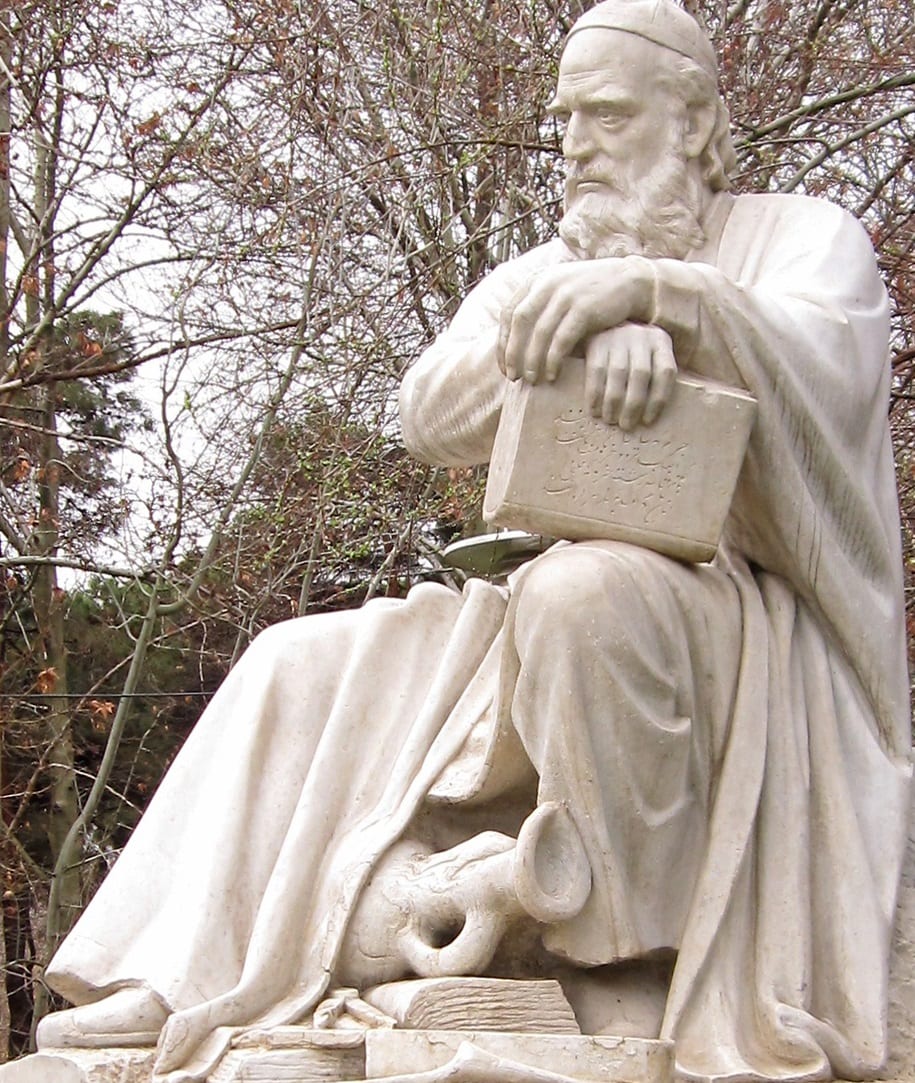
Spinn Radio
Explore Omar Khayyam on Spinn Radio
Why Omar Khayyam’s Persian poetry still feels modern
Although Omar Khayyam wrote in the 11th and 12th centuries, he keeps resurfacing because his doubts sound like ours. He treats faith and fate as open questions rather than settled answers. That wary curiosity fits neatly alongside contemporary essays like the Scroll.in piece on the “strange soil” of the mind. Nearly a thousand years apart, both are circling the same anxiety: how do you live well knowing you will die, with no guarantee of meaning beyond your own choices?
Khayyam’s mix of poetry and philosophy is another reason his work endures. He does not separate argument from image. Instead, he embeds questions about destiny in the texture of daily life: a shared drink, the feel of rain, the turn of a season. For modern listeners used to podcasts that blend storytelling and ideas, this feels surprisingly familiar. Each quatrain is like a miniature episode: set-up, tension, unresolved insight.
If you are coming to Khayyam through Omar Khayyam on Spinn Radio, that is the hook. You are not listening for historical curiosity. You are hearing a classic Persian voice whose obsession with the present moment, and suspicion about tomorrow, lines up exactly with what is pushing him into headlines right now.
“You are not listening for historical curiosity. You are hearing a classic Persian voice whose obsession with the present moment could have been written this week.”
What it’s like to hear the Rubaiyat as an audiobook
The Rubaiyat of Omar Khayyam belongs to the genres of poetry and philosophy, and it behaves beautifully in audio. The quatrain structure gives you a natural rhythm: four-beat bursts, each with a thought you can hold in your head. In print, it is easy to skim and miss the turn in the final line. In your ears, that turn lands more sharply, like the reveal in a good joke or the sting in a late-night confession.
Because the poems are short, the overall runtime of a typical Rubaiyat audiobook is compact, more like a focused album than a sprawling novel. You can listen in a single sitting, or dip in and out during a commute or a walk, taking a handful of quatrains at a time. That flexibility makes it perfect for listeners who want something reflective without the commitment of a many-hour epic.
For the best experience, treat the audiobook like a piece of music. Let it play through once, then replay individual sections that snag your attention. Hearing certain refrains about seizing today, doubting tomorrow and noticing the rain, you start to catch how often Khayyam loops back on the same big questions from slightly different angles.
“Treat the Rubaiyat audiobook like an album: one concentrated listen, then favorite tracks on repeat.”
Where to start with Omar Khayyam on Spinn Radio
If you are new to Khayyam, the clearest entry point is the Rubaiyat of Omar Khayyam. It is his notable work and the one that concentrates his blend of poetry and philosophy. On Spinn Radio you can head straight to Omar Khayyam on Spinn Radio to find editions that foreground the flow and musicality of the quatrains.
Once you have listened, it is worth browsing how he sits alongside other authors who straddle genres and eras. The Browse the authors directory page is a useful next step if you want to hear more classic voices in audio, or line Khayyam up next to other thinkers who blur the line between verse and argument.
If one concrete goal helps: aim to come away from your first listen able to quote at least a line about seizing today or questioning tomorrow. That small act of memorising ties you directly to a Persian mind from the 11th century, and turns the audiobook into something you carry around even when the headphones are off.
Good to know
Frequently asked questions
Who was Omar Khayyam?
Omar Khayyam was a Persian poet and polymath who lived from 1048 to 1131 in Nishapur in present-day Iran. He worked in poetry, philosophy, mathematics and astronomy.
What is the Rubaiyat of Omar Khayyam about?
The Rubaiyat of Omar Khayyam is a collection of poetic quatrains that blend poetry and philosophy to explore time, fate, mortality and the pull of present pleasure. It often returns to the theme of seizing today while questioning what tomorrow holds.
When did Omar Khayyam live?
Omar Khayyam lived from 1048 to 1131 during the Seljuk era around the time of the First Crusade. His lifetime places him in a period of intense scientific work and religious conflict in the Persian world.
What genres did Omar Khayyam write in?
Omar Khayyam wrote in the genres of poetry and philosophy. His most famous work, the Rubaiyat of Omar Khayyam, combines lyrical imagery with sharp, questioning thought.
Where was Omar Khayyam from?
Omar Khayyam was from Nishapur in Iran. His Persian background shapes the imagery, language and intellectual context of the Rubaiyat.
Explore more on Spinn Radio: Omar Khayyam on Spinn Radio · Browse the authors directory