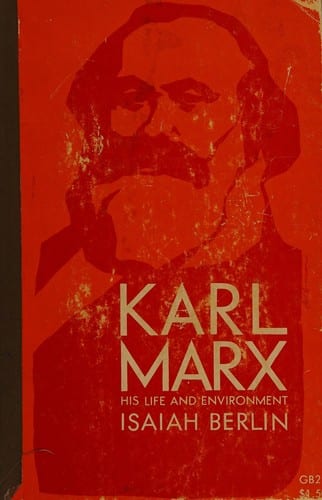
Karl Marx is back in the headlines this week, quoted in The Economic Times and dissected in Modern Diplomacy pieces on capitalism and war, while his name is flung around on social media debates about communism and power. It is a noisy, distorted conversation, which makes the quiet, concentrated experience of hearing his own words read aloud unusually valuable right now.
On Spinn Radio you can go straight to the source: the concise Eleven Theses on Feuerbach and the monumental Capital: a critical analysis of capitalist production, Vol 1. Both sit at the heart of a body of work that has haunted politics since the 19th century, and both reward listening with the kind of focus we rarely give to ideas that still shape our paychecks, our working days, and our sense of what freedom might mean.
Key facts
- Era
- Classic
- Genres
- classics, philosophy, history
- Country
- Germany
- Lived
- 1818-1883
- Notable works
- The Communist Manifesto, Das Kapital
- Audiobooks on Spinn Radio
- Eleven Theses on Feuerbach; Capital: a critical analysis of capitalist production, Vol 1
What Karl Marx was actually arguing in these audiobooks
The premise that runs through Karl Marx’s work is disarmingly simple: if you want to understand a society, start with how it produces what people need to live, and who controls that process. He called this way of looking at history historical materialism, and it is the backbone of both Eleven Theses on Feuerbach and Capital: a critical analysis of capitalist production, Vol 1. Class struggle under capitalism is not a subplot for him, it is the main story, and he believed it would end with the system’s overthrow by the proletariat in favour of communism.
In Eleven Theses on Feuerbach, you hear Marx in a compressed, almost impatient register. He is arguing with earlier philosophers who, in his view, were too content to interpret the world instead of changing it. The theses pivot again and again to practice: how human beings act together, not only how they think. It is a concentrated shot of his larger project, ideal for a first listen or a reorientation if you mostly know him through second‑hand polemics.
Capital Vol 1 expands that project into a sustained critique of classical political economy. Over its long runtime, Marx tracks how value, labour, and profit move through a capitalist system, and why this produces recurring crises and exploitation. Hearing that analysis unfold makes the abstractions concrete: you start noticing where, in your own working life, labour and ownership are split, and why Marx thought that fracture would eventually become unmanageable.
“Class struggle is not a subplot in Marx’s work, it is the main story that structures both his brief theses and his long critique of capital.”
Who Karl Marx was, and the 19th‑century world behind the voice
Karl Marx was a German philosopher, social and political theorist, economist, and revolutionary socialist who lived from 1818 to 1883. Listening to his texts means listening into that century’s upheavals, from early industrial capitalism to new forms of working‑class politics. He wrote as someone who thought ideas mattered only if they could be taken up by real movements and real people, and that tension between theory and struggle gives his prose its enduring charge.
The audiobooks on Spinn Radio sit alongside his best‑known collaborations and solo works. In 1848 he co‑authored The Communist Manifesto with Friedrich Engels, a text that has become shorthand for revolutionary socialist politics. Between 1867 and 1894 he developed his magnum opus Das Kapital, whose first volume is the basis of Capital: a critical analysis of capitalist production, Vol 1 in audio form. Knowing those dates and titles helps situate what you hear: the brisk anger of the Theses on Feuerbach belongs to an early, combative Marx, while Capital Vol 1 reflects decades of wrestling with economics and history.
The genres attached to him on Spinn Radio tell their own story: classics, philosophy, history. He wrote in the heat of 19th‑century controversy, but today his work sits on shelves and playlists next to other canonical thinkers. The audiobook formats bring some of that original friction back. Instead of a distant “classic author, ” you hear a German critic of capitalism trying to engineer a new way of thinking about work, profit, and power.
“Audiobook Marx feels less like a marble bust and more like what he was: a 19th‑century troublemaker trying to redesign how we think about work and power.”
Spinn Radio
Explore Karl Marx on Spinn Radio
Why Karl Marx’s ideas still feel urgent in 2026
The current news cycle proves Marx never really leaves. Modern Diplomacy is publishing Marxist perspectives on capitalism, imperialism, and America’s wars in the Middle East. The Economic Times is still quoting his claim that the human being is “in the most literal sense a political animal.” Commentators hostile to communism cite his name to attack contemporary movements, as in recent viral posts covered by outlets such as The Gateway Pundit. Even in crime reporting, like the New York Post story about Marx’s writings found in an apartment, his books appear as loaded symbols.
That constant return tells you something about why his work endures. Marx offered not just a moral critique of inequality, but a structural one. He argued that capitalism generates systematic conflict between owners of capital and workers, and that this conflict is baked into how production is organised, not only into individual motives or ethics. When today’s debates turn to wages, housing, precarity, or global supply chains, people are still using his vocabulary of class, exploitation, and crisis, sometimes without realising it.
For a listener, this endurance is the reason to queue up Capital Vol 1 or Eleven Theses on Feuerbach now. Instead of hearing Marx filtered through pundits or passing headlines, you get his own framing of class struggle and historical change. The surprise is how many current arguments suddenly look like footnotes, whether you agree with his conclusions or not.
“Marx’s concepts of class, exploitation, and crisis still sit under arguments about wages, housing, and war, whether his name is spoken or not.”
How Karl Marx reads in your headphones: the listening experience
On Spinn Radio, Karl Marx arrives as audio in two distinct shapes: the compact, sharp Eleven Theses on Feuerbach, and the sprawling Capital: a critical analysis of capitalist production, Vol 1. The former is suited to a single sitting, almost like a long essay podcast episode. You can listen, pause, and immediately feel where he is pushing philosophy to confront real social practice. It is dense, but in audio it carries a rhythm that keeps you moving through each thesis without getting lost in the rhetoric.
Capital Vol 1 is a different kind of commitment. Think of it as a long‑form series rather than a single feature. The runtime gives you space to live with his categories of labour, capital, and value over days or weeks. Heard in sequence, arguments that can feel forbiddingly technical on the page start to cohere. Repetition becomes a feature of the listening experience, a way of reinforcing key distinctions rather than an obstacle.
If you are new to Marx, the best route is to start small, then go long. Queue Eleven Theses on Feuerbach for a first encounter with his style and stakes, then move into Capital Vol 1 once you are ready for the full economic critique. You can explore both from the author hub at Karl Marx on Spinn Radio, or jump straight into Eleven Theses on Feuerbach and sample Capital: a critical analysis of capitalist production, Vol 1 via its dedicated page at Listen to Capital: a critical analysis of capitalist production, Vol 1. In audio form, the theories that shaped revolutions become something more intimate: a voice in your ear, inviting you to test his analysis against your own life.
“Treat Capital Vol 1 as a listening series, not a single sitting, and Marx’s formidable critique turns into a set of ideas you can live with for a while.”
Good to know
Frequently asked questions
Who was Karl Marx in simple terms?
Karl Marx was a German philosopher, social and political theorist, economist, and revolutionary socialist who lived from 1818 to 1883. He developed historical materialism and analysed class struggle under capitalism.
What are Karl Marx’s most famous books?
Karl Marx’s most famous books are The Communist Manifesto and Das Kapital. The first laid out his revolutionary socialist politics and the second critiqued classical political economy.
What Karl Marx audiobooks can I listen to on Spinn Radio?
Spinn Radio offers Karl Marx audiobooks of Eleven Theses on Feuerbach and Capital: a critical analysis of capitalist production, Vol 1. Together they give you both a concise statement and his major economic critique.
What did Karl Marx believe about capitalism?
Karl Marx believed that capitalism was defined by class struggle between capitalists and the proletariat and would be overthrown in favour of communism. His analysis focused on how production and exploitation were structured in that system.
Why is Karl Marx still important today?
Karl Marx is still important today because his ideas, known as Marxism, have influenced revolutions and uprisings in many countries and still shape debates about capitalism. His concepts of class struggle and historical materialism remain central to political and economic theory.
Explore more on Spinn Radio: Karl Marx on Spinn Radio · Browse the authors directory · Listen to Eleven Theses on Feuerbach · Listen to Capital: a critical analysis of capitalist production, Vol 1