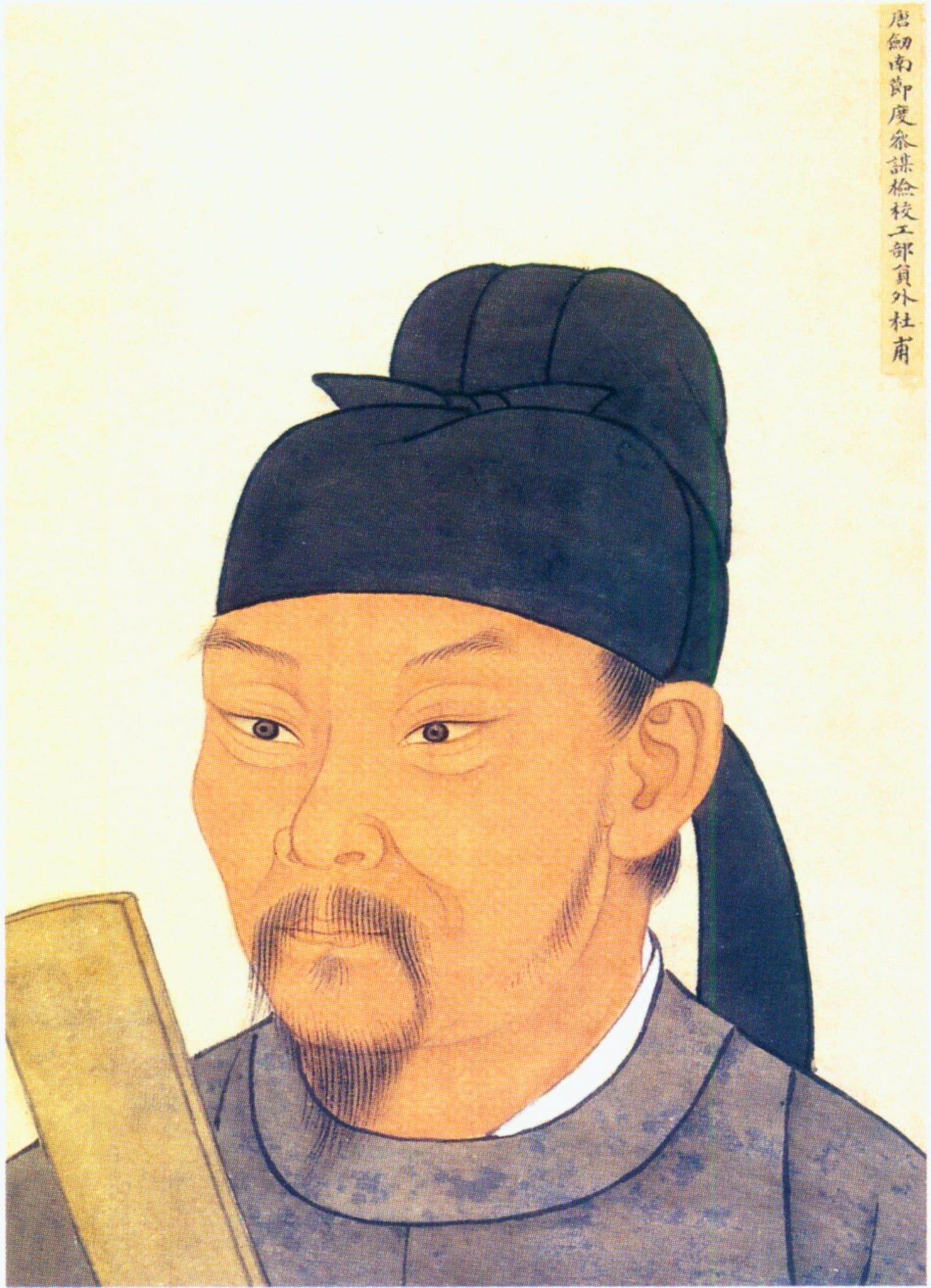
Du Fu speaks across thirteen centuries with disarming clarity. Heard in audio, this Tang dynasty poet of war, wandering, and wasted talent sounds less like a monument from 712-770 and more like a friend thinking aloud as the world falls apart.
If you know his elder contemporary Li Bai, Du Fu is the counterpoint: grounded where Li Bai is airborne, exact where Li Bai is ecstatic. His poem "Spring View" alone can carry a whole audiobook session, its images of ruined cities and blooming flowers sharpening into focus when a voice gives them breath. For anyone curious about classic Chinese poetry, an audio collection of Du Fu is one of the most rewarding ways to meet a writer whose life, and art, were permanently twisted by the An Lushan rebellion of 755.
Key facts
- Era
- Classic
- Genres
- poetry
- Country
- China
- Lived
- 712-770
- Notable works
- Spring View
Who Du Fu was and why his life shapes every poem
Du Fu lived from 712 to 770 in China, in the high flowering of the Tang dynasty. He was not just a poet but also a politician, with a very specific dream: to serve as a successful civil servant. That stable life never quite arrived. He could not make the necessary accommodations to thrive in the bureaucracy, and the failure of that ambition haunts his verse. When you listen, you are hearing someone who measures himself against an ideal of public duty he feels he never fully met.
The turning point is historical as well as personal. The An Lushan rebellion of 755 devastated China and shattered any illusion of a stable empire. Du Fu’s last fifteen years became a long season of unrest: displacement, uncertainty, and the constant sense that the ground might shift again tomorrow. This context matters for the audiobook listener, because the poems often sound like dispatches from a moving front line. Even when the subject is a landscape, the tension of that civil war era presses in at the edges.
Queue up a track built around "Spring View" and you can hear both halves of his life in one work. The trained official who knows the machinery of the state looks out on its wreckage. The private citizen feels grief and helplessness. Every time the narrator pauses on an image of ruined walls or spring blossoms, you are hearing a man for whom history is not backdrop but personal injury.
“Du Fu sounds less like a distant sage and more like a civil servant who never quite got the job he wanted, talking you through the ruins.”
The themes to listen for in Du Fu’s classic poetry
Du Fu writes within the genre of poetry, but the range inside that single word is wide. In one piece he is a court insider, in another a refugee, in another simply a father worrying about his family during an age of chaos. An audiobook makes these shifts feel almost theatrical. You can hear the change in tone as the reader moves from public voice to private aside, from high formal address to something closer to confession.
Several themes echo across his work. Duty and failure are constant companions. He never stops taking the idea of service seriously, even after his political ambitions stall. War and unrest, especially after 755, color his imagery: soldiers, ruined cities, restless travel. At the same time, there is an almost stubborn attention to the ordinary: views from a window, the arrival of spring, the small details of daily life that survive even in a broken country.
"Spring View" crystallizes all of this. The title promises a simple seasonal scene, yet under the blossoms sit the ruins of a capital and the ache of separation. When voiced aloud, the contrast between the gentle natural setting and the grief underneath becomes unmistakable. If you remember one thing while listening, let it be this: Du Fu uses familiar images of nature as a way to talk about a country and a self that no longer feel whole.
“The title promises spring, but Du Fu fills it with ruins, duty, and the sting of a country that has slipped its moorings.”
Spinn Radio
Explore Du Fu on Spinn Radio
How Du Fu’s Tang dynasty era shapes the listening experience
Listening to Du Fu means listening to the Tang dynasty itself at a moment of crisis. This was an era often celebrated for cultural brilliance, yet his lifetime slices straight through its fracture. That tension makes an audio collection feel less like a museum tour and more like a live report from inside a turning point. You hear a poet who has memorized the ideals of his age trying to reconcile them with the chaos in front of him.
The An Lushan rebellion is the quiet drumbeat under many of the poems. You do not need to be an expert in Chinese history to feel its impact. All you really need to know as you press play is that from 755 onward Du Fu’s world was one of “almost constant unrest.” With that in mind, every reference to travel, to lost friends, to empty halls, lands harder. The era is not background trivia. It is the atmosphere you breathe as you listen.
For listeners approaching Chinese poetry for the first time, this specific historical frame is your anchor. You are hearing a classic author from a Classic era, not in some hazy timelessness but precisely located between 712 and 770, watching an empire splinter in real time. That fixed point in history is part of what makes his work so enduring: you can always orient yourself, even across languages and centuries.
Why Du Fu’s poetry still feels so modern in audio
One reason Du Fu endures is that his concerns have not gone out of date. Ambitions that do not pan out, loyalty to institutions that disappoint you, the disorientation of political upheaval, the stubborn persistence of beauty even when it feels inappropriate: these are not ancient problems. When they arrive in your headphones in plain, steady language, the poems sound uncannily current.
The intimacy of an audiobook makes this even clearer. Silent reading can put a glass wall between you and a canonical name. A spoken version tends to do the opposite. You hear pauses, emphasis, the small catches that suggest emotion. It becomes much easier to recognize that Du Fu was, at core, a man talking himself through an impossible period, not a remote sage pronouncing from on high.
On Du Fu on Spinn Radio, that immediacy is the main selling point. You are not just checking off a “classic author” from a list. You are eavesdropping on someone whose life was pinned between public duty and personal cost. Start with a track centered on "Spring View" to feel the balance of public catastrophe and private sorrow, then branch out into more of his poetry to see how often he returns to that emotional territory.
“In audio, Du Fu stops being a monument and becomes a voice trying to stay honest while history tilts under his feet.”
How to start listening to Du Fu on Spinn Radio
If you are new to classic Chinese poetry, the safest entry point is a focused set of Du Fu selections rather than a massive chronological sweep. Look for an audiobook that foregrounds key poems like "Spring View" and clusters them with other works from the same period of unrest. Hearing several pieces from those last fifteen years back to back will give you a feel for how he varied his response to the same historical pressure.
Give yourself time with the voice. These are poems built from careful observation, not shock twists. Let the reader’s pacing guide you, and do not worry if you cannot place every historical reference. The broad arc is simple: a poet from 712-770, in China, trying to reconcile his desire for civil service with the fact that war and political disruption have made that path nearly impossible.
If Du Fu connects for you, use the rest of Spinn Radio’s book offerings to keep exploring. You can browse the authors directory to move outward from classic poetry into other eras, other countries, and other forms. For many listeners, though, Du Fu becomes a touchstone, the voice they return to when modern headlines start to rhyme a little too closely with the old stories of rebellion and unrest.
Good to know
Frequently asked questions
Who was Du Fu?
Du Fu was a Chinese poet and politician of the Tang dynasty who lived from 712 to 770. He is often considered one of the greatest Chinese poets of his time and is noted for the poem "Spring View."
When did Du Fu live?
Du Fu lived from 712 to 770 during the Tang dynasty in China. His life spanned the An Lushan rebellion of 755, which marked the beginning of his years of unrest.
What is Du Fu famous for?
Du Fu is famous for his poetry, including the notable work "Spring View." He is widely regarded as one of the greatest Chinese poets and was also active as a politician.
What genre did Du Fu write in?
Du Fu wrote in the genre of poetry. His work combines personal experience, political insight, and reflections on the turmoil of his era.
Where can I listen to Du Fu on audio?
You can listen to Du Fu on audio by visiting Du Fu on Spinn Radio at /books/author/du-fu. It is a convenient way to hear his classic Chinese poetry performed aloud.
Explore more on Spinn Radio: Du Fu on Spinn Radio · Browse the authors directory
Sources