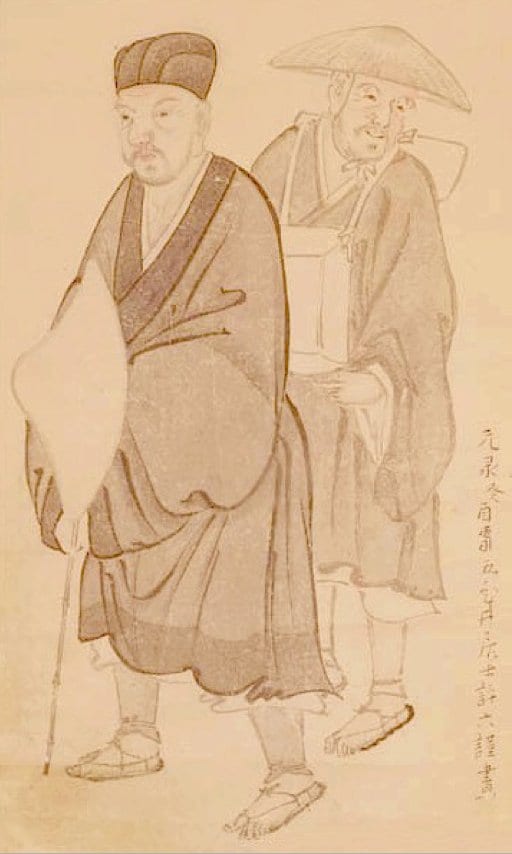
Matsuo Bashō wrote of roads, rivers, rain, and silence; in audiobook form, those distances close and his Japan moves right up to your ear. Listening to おくのほそ道 (Oku no Hosomichi) on Spinn Radio, you are not just reading a classic, you are walking beside the most famous poet of Japan’s Edo period.
Born in 1644 and active until 1694, Bashō helped shape what we now call haiku and left behind travel essays that feel startlingly intimate centuries later. This recording of his journey text invites modern listeners to hear how a master of poetry thinks, pauses, and pays attention as he travels from place to place.
Key facts
- Era
- Classic
- Genres
- poetry
- Country
- Japan
- Lived
- 1644-1694
- Notable works
- The Narrow Road to the Deep North
- Audiobooks on Spinn Radio
- おくのほそ道 (Oku no Hosomichi)
What is Matsuo Bashō’s Oku no Hosomichi actually about?
At its core, おくのほそ道 (Oku no Hosomichi) is a travel book. Bashō sets out on a long road into Japan’s “deep north, ” recording the landscapes, towns, and encounters that mark each stage. The work belongs to the classic era, yet its premise is disarmingly simple: a poet walks, looks carefully, then writes. The mix of brief poems and reflective prose turns the journey into a series of concentrated moments instead of a straightforward itinerary.
Bashō was already respected for collaborative haikai no renga when he undertook the travels that fed this book, and you can hear that history in the rhythm of his scenes. One passage might focus on a weather-beaten shrine, the next on a fleeting conversation, then a poem arrives like a quiet gong strike. For a first-time listener, the key takeaway is that this is not a plot-driven narrative. It is a sequence of heightened perceptions, each one framed by a short poem that locks the feeling of a place and time into a few lines.
“A poet walks, looks carefully, then writes: Oku no Hosomichi is a journey built from moments, not milestones.”
How Matsuo Bashō’s Edo-era life shapes the journey
Matsuo Bashō, born Matsuo Kinsaku in 1644, lived during Japan’s Edo period and became its most famous poet. Over his lifetime he was deeply involved with the collaborative form haikai no renga, where poets build linked verses together. That social, call‑and‑response way of writing helps explain why his solo travel prose and haiku feel open and conversational when read aloud. You can hear him anticipating an audience, even if that audience is centuries away.
He later became known as Matsuo Chūemon Munefusa, yet the name that endures is Bashō, tied to the simple, attentive voice in his poems. His classic status is not just a matter of later critics. During his own life he was recognized as a major figure, and today he is widely regarded as the greatest master of haiku. When you listen to Oku no Hosomichi, you hear the sensibility that also shaped The Narrow Road to the Deep North, his best‑known travel work by title in English. The same poet who could turn a journey into a book also turned a passing cloud, a lonely hut, or a sudden rainstorm into a handful of unforgettable syllables.
Records of a Weather-Exposed Skeleton, written after his 1684 journey west to Kyoto and Nara, sits in the background of this later road narrative. Together, these essays show a writer who kept returning to the road as a way to test his art. Knowing that lineage, the takeaway for listeners is clear: each stop along the route in Oku no Hosomichi also charts the evolution of a poet at the height of his craft.
“Bashō used the road as his workshop, testing what poetry could notice and hold.”
Spinn Radio
Explore Matsuo Bashō on Spinn Radio
Why Bashō’s classic Japanese poetry still feels modern
Despite its 17th‑century setting, Bashō’s work lands with a modern clarity that suits audio especially well. His signature form, haiku, is compact by design. In Oku no Hosomichi those short poems function as tiny spotlights within the longer travel narrative, each poem capturing a shift in weather, mood, or perspective. Listened to aloud, they feel almost like musical motifs that return in new keys as the journey unfolds.
The themes he returns to are familiar to contemporary ears: impermanence, travel as self‑discovery, the pull between solitude and companionship. You can hear him wrestling with age and time as he moves through places layered with history. That mix of personal reflection and precise observation is part of why his travel essays, beginning with Records of a Weather-Exposed Skeleton, still circulate globally. Listeners often come away with one striking detail lodged in memory, such as his fixation on how exposure to the elements changes both a traveler’s body and the buildings, statues, and roads they pass.
“Haiku in audio play like recurring motifs, each one a sharp new angle on the same long journey.”
What the Oku no Hosomichi audiobook experience feels like
As an audiobook on Spinn Radio, おくのほそ道 (Oku no Hosomichi) turns Bashō’s mix of prose and verse into a distinctive listening arc. The prose sections give you stretches of narrative road, while each poem functions almost like a pause button. You get a breath, an image, and a moment to let the previous scene settle. The rhythm is slower than most contemporary audiobooks, which is part of its appeal. It is listening that invites you to look up from your own journey for a second and actually see where you are.
Because this is poetry from 17th‑century Japan, you may find it helpful to pair your listening with a brief author overview. The Matsuo Bashō on Spinn Radio page is a useful starting point if you want to situate this audiobook among his other classic works, including The Narrow Road to the Deep North. You can also go straight to the source and Listen to おくのほそ道 (Oku no Hosomichi), letting the book introduce itself through its sounds and silences.
One practical takeaway for new listeners: this is perfect for listening in short segments. A single stretch of road, a cluster of verses, then a stop. That format lets you echo Bashō’s own method of travel, where the journey unfolds in stages rather than in a single, continuous push.
“Oku no Hosomichi rewards being heard in segments, each one a small stage on a much longer road.”
Where to start with Matsuo Bashō on Spinn Radio
If you are new to Bashō, おくのほそ道 (Oku no Hosomichi) is an ideal entry point because it shows all sides of his work at once: the travel diarist, the haiku master, and the reflective observer of everyday scenes. The audiobook gathers those elements into a single classic Japanese text that you can absorb with your headphones on a commute or a walk.
From there, exploring more of his writing is simple. On the Matsuo Bashō on Spinn Radio page, you can see how this audiobook sits alongside the rest of his legacy as a classic author of poetry. Even one listening session will give you at least one moment worth carrying with you, whether it is a roadside temple glimpsed in passing or the sensation of becoming, as he once put it in another work, a kind of “weather-exposed skeleton” yourself.
“Start with Oku no Hosomichi and you meet Bashō the traveler, the poet, and the listener to the world around him all at once.”
Good to know
Frequently asked questions
Who was Matsuo Bashō?
Matsuo Bashō was a classic Japanese poet who lived from 1644 to 1694 and became the most famous poet of the Edo period. He is recognized as the greatest master of haiku and was also noted in his lifetime for collaborative haikai no renga and for his travel essays.
When did Matsuo Bashō live?
Matsuo Bashō lived from 1644 to 1694 in Japan’s Edo period. His lifetime produced landmark works of poetry and travel writing that are still read and heard today.
What genre did Matsuo Bashō write in?
Matsuo Bashō wrote in the genre of poetry, especially haiku and collaborative haikai no renga. His prose travel essays, such as Oku no Hosomichi, are closely tied to his poetic practice.
What is Matsuo Bashō best known for today?
Matsuo Bashō is best known today as the greatest master of haiku and as the author of influential travel essays. His work The Narrow Road to the Deep North and the Japanese text おくのほそ道 (Oku no Hosomichi) are among his most notable creations.
Which Matsuo Bashō audiobook can I listen to on Spinn Radio?
You can listen to the audiobook of おくのほそ道 (Oku no Hosomichi) by Matsuo Bashō on Spinn Radio. It presents his classic travel writing and poetry in audio form for modern listeners.
Explore more on Spinn Radio: Matsuo Bashō on Spinn Radio · Browse the authors directory · Listen to おくのほそ道 (Oku no Hosomichi)
Sources