Samuel Taylor Coleridge may have lived from 1772 to 1834, but his voice keeps surfacing in new conversations about how stories echo through time. As The Guardian revisits the strange fortunes of Coleridge-Taylor’s "Song of Hiawatha, " it is a neat reminder that the Romantic imagination Coleridge helped set loose is still being argued over, reclaimed, and reinterpreted.
On Spinn Radio, that imagination comes through directly in Coleridge’s own words. Audiobook recordings of "Rime of the Ancient Mariner" and "Work without Hope" let you hear the rhythms, images, and obsessions that made him one of the founding figures of English Romantic poetry and a key member of the Lake Poets alongside his friend William Wordsworth.
Key facts
- Era
- Classic
- Genres
- classics, poetry
- Country
- England
- Lived
- 1772-1834
- Notable works
- The Rime of the Ancient Mariner, Kubla Khan
- Audiobooks on Spinn Radio
- Rime of the Ancient Mariner; Work without Hope
Who Samuel Taylor Coleridge was and why his era matters
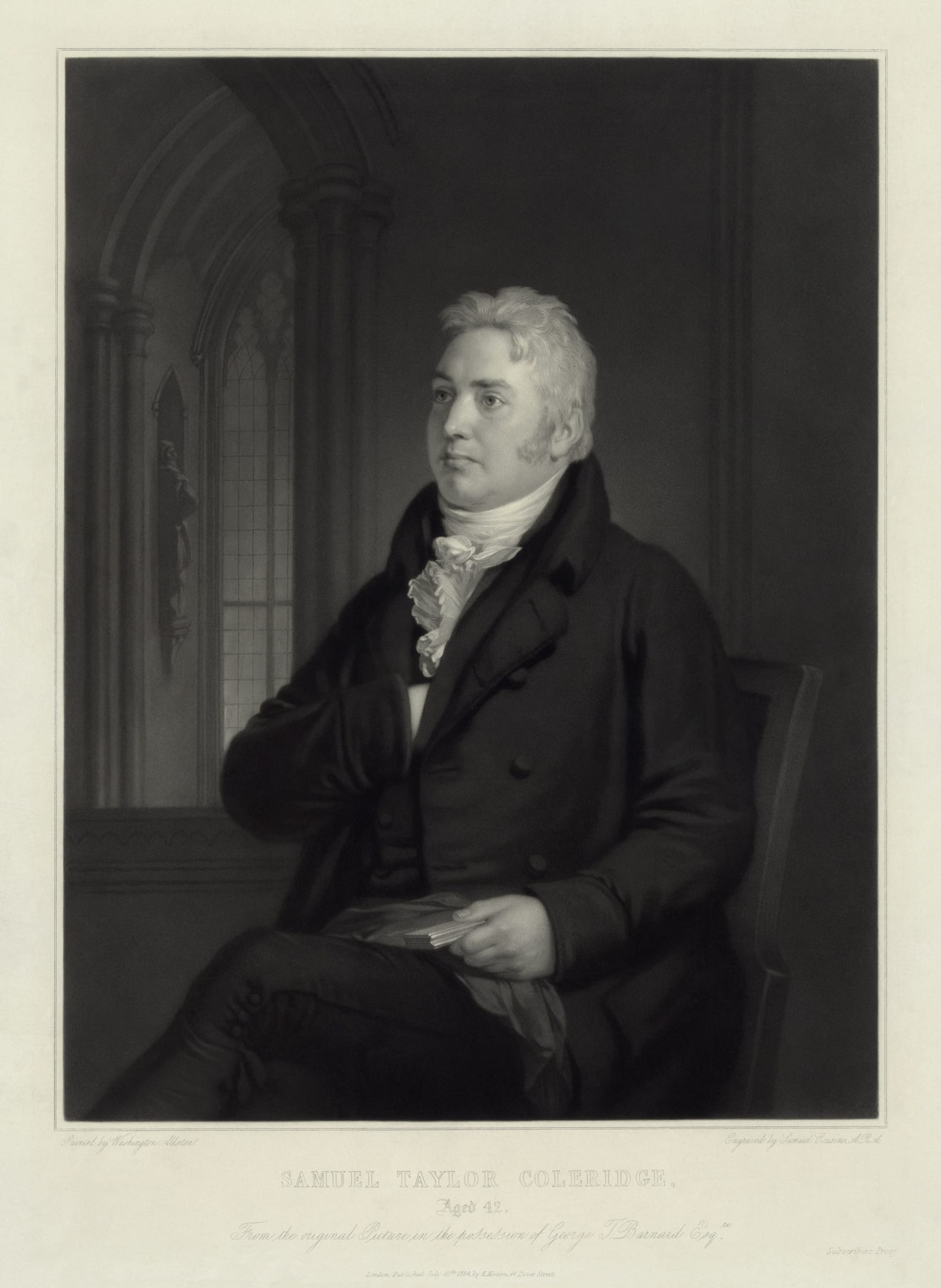
Samuel Taylor Coleridge was an English poet, literary critic, philosopher, and theologian, and one of the founders of the Romantic Movement in England. Born in 1772 and dying in 1834, he wrote in what we now group as the Classic era, a time when poets began to push back against strict forms and rationalism and instead foregrounded emotion, imagination, and the natural world. Coleridge did this with unusual intensity, which is why he still feels like a live wire on the page and in the ear.
He was part of the Lake Poets, a loose circle that also included his close friend William Wordsworth. Their collaborations helped define Romantic poetry for English readers, and Coleridge also shared volumes and worked alongside Charles Lamb, Robert Southey, and Charles Lloyd. If you listen to him today on Spinn Radio, you are not just hearing a solitary genius. You are hearing one voice from a network of writers who were collectively re‑wiring how English poetry could sound.
That context matters when you press play on something like "Rime of the Ancient Mariner." The Romantic era gave Coleridge permission to mix the supernatural with the psychological, the seafaring ballad with moral and spiritual anxiety. Knowing he is a critic, philosopher, and theologian as well as a poet helps explain why a single poem can feel like a ghost story, a nightmare, and a debate about the soul all at once.
“When you press play on Coleridge, you are hearing one voice in the moment English poetry was being re‑wired from within.”
The premise and themes of Rime of the Ancient Mariner
"The Rime of the Ancient Mariner" is Coleridge’s most famous work, and on Spinn Radio it serves as the ideal entry point into his poetry. The premise is simple and strange. An old sailor, the Ancient Mariner, stops a wedding guest and compels him to listen to a story of a disastrous sea voyage. What unfolds is a tale of a thoughtless act, a cursed journey, and a long, painful reckoning.
The key themes come through clearly when you hear them spoken. There is guilt and punishment, as the Mariner pays for killing the albatross. There is isolation, as he drifts alone with dead shipmates and must keep living with what he has done. There is also a deep concern with the natural and spiritual worlds: the sea, the creatures in it, and the unseen forces that seem to judge him. All of this makes sense if you remember Coleridge was a philosopher and theologian as well as a poet. Moral and metaphysical questions are baked into the narrative.
A concrete takeaway for a first listen: treat the poem like a psychological thriller told in verse. Focus on the Mariner’s voice, how it shifts between confession, horror, and weary preaching. That voice is what the audiobook format captures so well, and you can experience it directly via Listen to Rime of the Ancient Mariner on Spinn Radio.
“Treat the Ancient Mariner as a psychological thriller in verse, a single haunted voice that will not let you walk away.”
Spinn Radio
Explore Samuel Taylor Coleridge on Spinn Radio
What makes Work without Hope a perfect companion listen
Alongside the epic sea journey of "Rime, " Spinn Radio also carries "Work without Hope", a shorter poem that shows a different side of Coleridge. Where the Mariner speaks in a dramatic, narrative rush, "Work without Hope" is more compact and interior. It fits comfortably in the poetry and classics shelves, yet it gives you a sharper glimpse of Coleridge’s mood and self‑questioning.
The title alone signals the theme. This is a poem about labor that feels meaningless, effort that lacks purpose, and the emotional paralysis that follows. That makes it an unexpectedly modern listen. Many contemporary listeners will recognize the sense of being out of step with a world that seems busy, productive, and full of growth while you stand apart, unsure how to move. Coleridge’s mix of philosopher and poet heightens that feeling. He does not simply describe despair, he analyzes it in musical language.
If you want a concrete way in, queue "Work without Hope" immediately after the Mariner’s story. The contrast between a vast, supernatural sea voyage and a compact meditation on purposelessness highlights Coleridge’s range, and you can hear it for yourself via Listen to Work without Hope.
“Pair the haunted sea of the Ancient Mariner with the quiet paralysis of Work without Hope to hear the full span of Coleridge’s voice.”
Why Samuel Taylor Coleridge’s poetry still endures today
Coleridge’s work endures because it hits several registers at once. As a founder of the Romantic Movement in England and a Lake Poet, he helped set the terms for how later poets approached nature, the self, and imagination. At the same time, his strongest poems like "The Rime of the Ancient Mariner" and "Kubla Khan" feel oddly timeless. Their images are vivid, their rhythms are memorable, and the emotional stakes are high enough that you do not need a literature degree to feel them.
He also keeps inviting re‑readings and re‑listenings. The moral questions in the Mariner’s narrative, the drifting unease of "Work without Hope, " and the visionary quality associated with "Kubla Khan" all continue to resonate with modern concerns about alienation, ecological awareness, and mental health. That is part of why critics and journalists still return to figures connected to his era, as seen in The Guardian’s renewed interest in Coleridge‑Taylor’s "Song of Hiawatha." Coleridge sits near the root of that whole conversation about Romantic storytelling and its afterlives.
If you want one concrete takeaway, let it be this: Coleridge’s reputation as a classic is not an obligation, it is a promise. You can come to these poems as gripping stories, eerie visions, or philosophical puzzles, and each new listen will let a different layer rise to the surface.
“Coleridge’s reputation as a classic is not an obligation, it is a promise that the poems will still meet you where you live.”
How the audiobook experience reshapes Coleridge’s poems
Coleridge wrote for the page, but his poems flourish when heard aloud. The internal rhymes, repetitions, and rhythmic swells in "Rime of the Ancient Mariner" land differently when you listen rather than silently scan. As the Mariner retells his story, the voice in your headphones becomes that insistent figure grabbing your sleeve. The effect is intimate and slightly unsettling, and that is exactly what the poem wants.
For "Work without Hope, " the audiobook format draws out subtler shifts. Pauses between lines, the weight given to key words like "work" and "hope, " and the pacing of the whole piece can make it feel like a solitary monologue. The brevity of the poem means you can replay it easily and notice fresh emphases with each listen.
A practical tip: explore Samuel Taylor Coleridge on Spinn Radio as a mini‑playlist. Start with "Rime of the Ancient Mariner" for narrative immersion, move to "Work without Hope" for concentrated reflection, and let the sound of his Classic era English carry you. Listening in this order turns a pair of poems into a compact journey through some of the most influential classics in English poetry.
“In audio, Coleridge’s poems stop being museum pieces and become voices speaking directly into your headphones.”
Good to know
Frequently asked questions
Who was Samuel Taylor Coleridge?
Samuel Taylor Coleridge was an English poet, literary critic, philosopher, and theologian who helped found the Romantic Movement in England. He was also a member of the Lake Poets with his friend William Wordsworth and collaborated with writers like Charles Lamb, Robert Southey, and Charles Lloyd.
When did Samuel Taylor Coleridge live?
Samuel Taylor Coleridge lived from 1772 to 1834. He wrote during the Classic era, a period that shaped what we now think of as English Romantic poetry.
What is Samuel Taylor Coleridge known for?
Samuel Taylor Coleridge is known for being a founder of the Romantic Movement in England and for classic poems such as The Rime of the Ancient Mariner and Kubla Khan. His work as a critic, philosopher, and theologian also fed into the depth of his poetry.
What genre did Samuel Taylor Coleridge write in?
Samuel Taylor Coleridge wrote primarily in the genres of classics and poetry. His work is a cornerstone of English Romantic poetry and remains widely studied and recorded as audiobooks.
Which Samuel Taylor Coleridge audiobooks can I listen to on Spinn Radio?
On Spinn Radio you can listen to audiobooks of Rime of the Ancient Mariner and Work without Hope by Samuel Taylor Coleridge. They offer both his epic narrative voice and his more introspective, compact style.
Explore more on Spinn Radio: Samuel Taylor Coleridge on Spinn Radio · Browse the authors directory · Listen to Rime of the Ancient Mariner · Listen to Work without Hope
Sources