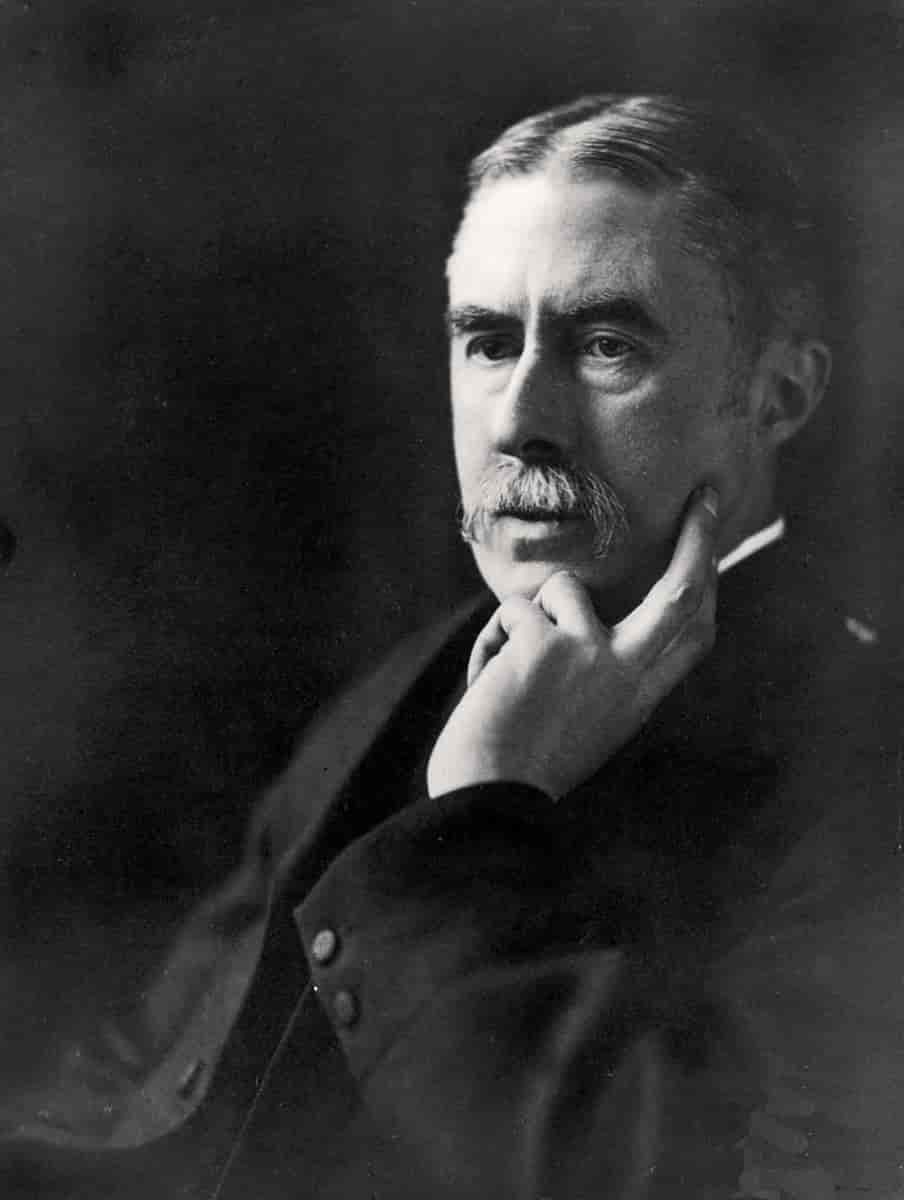
A. E. Housman sounds deceptively simple on the page, which is exactly why he works so well in your headphones. His lyrics of lost youth, rural England, and stoic heartbreak carry a musical rhythm that feels made for a voice in your ear rather than a text on your desk.
Best known for A Shropshire Lad, Housman was a fiercely exact classical scholar before he was a famous poet. That precision runs through his verse, and in audiobook form you can hear every tight rhyme and clipped cadence, the craftsmanship that turned a quiet 19th‑century Englishman into a classic voice of regret and remembrance.
Key facts
- Era
- Classic
- Genres
- classics, poetry
- Country
- England
- Lived
- 1859-1936
- Notable works
- A Shropshire Lad
What is A. E. Housman’s A Shropshire Lad actually about?
Start with the premise: A. E. Housman’s most notable work, A Shropshire Lad, is a cycle of lyric poems that circle around youth, countryside, and mortality. The world is recognisably rural England, and the emotional weather is permanently changeable: brief flashes of joy, long stretches of melancholy, and a steady undercurrent of fate closing in. This is not plot-driven storytelling, it is a sequence of moods that gradually add up to a portrait of young lives lived under a low, beautiful sky.
On audio the themes come into sharp focus. You hear Housman’s fascination with time passing too quickly, with friendships and love that never quite settle, and with the gap between what might have been and what is. One poem can sound like a folk song you half remember, the next like a private farewell. That mix is the heart of A Shropshire Lad, and it is the reason listeners still seek him out more than a century after he wrote it.
“This is not plot-driven storytelling, it is a sequence of moods that gradually add up to a portrait of young lives lived under a low, beautiful sky.”
How Housman’s life as a scholar shaped his poetry
Housman did not arrive as a fully formed poet. Born in England in 1859, he showed early academic promise at the University of Oxford but famously failed his final examination in literae humaniores. That failure pushed him into a day job as a patent examiner in London in 1882. His real work happened after hours, when he immersed himself in classical Greek and Latin texts and began publishing as an independent researcher.
Those solitary evenings of textual criticism matter for the listening experience. Housman trained his ear and eye on the fine grain of language, weighing every word against centuries of classical tradition. The result is verse that sounds straightforward but is built with the rigor of a scholar who would later become a professor of Latin at University College London in 1892, then Kennedy Professor of Latin at the University of Cambridge in 1911. When you listen, you are hearing someone who edited Juvenal, Manilius, and Lucan so carefully that his editions are still considered authoritative. That same discipline tightens every line of his poetry.
For listeners coming to him through A. E. Housman on Spinn Radio, this backstory explains the mix of feeling and formality in his work. The sadness is genuine, but it is never sloppy. Even the most emotional poem is shaped by a mind trained to argue with ancient texts until every syllable lands exactly where it should.
“The sadness is genuine, but it is never sloppy.”
Spinn Radio
Explore A. E. Housman on Spinn Radio
Why A. E. Housman’s classic poetry still hits today
Housman lived from 1859 to 1936, in an England that has vanished, yet the preoccupations in his poetry are stubbornly current. He writes about young men facing futures they cannot quite control, about the pressure of expectation, about love that does not fit the available language. Strip away the country lanes and you are left with anxieties that would feel at home in any era.
That is why his work endures in audio. The English countryside becomes less a postcard and more a soundstage for very familiar feelings. When you hear these poems voiced, the classical restraint becomes a kind of intensity: the more Housman holds back, the more you lean in. His place as one of the foremost classicists of his age adds another layer. This is someone steeped in the tragedies and elegies of antiquity, reworking those emotional patterns into a more modern, compressed lyric mode.
The practical takeaway for a new listener is simple: if you care about how language carries feeling, Housman repays attention. Queue A Shropshire Lad and you get a concentrated hit of classic English poetry that speaks to grief, desire, and the way youth looks different when seen from its far edge.
“The more Housman holds back, the more you lean in.”
What listening to A. E. Housman feels like in audiobook form
Housman’s verse belongs to that rare group of classics that can work as a continuous listen. The poems are short, the diction is clear, and the rhythms are steady enough that you can follow even while walking or commuting. An audiobook of A Shropshire Lad sits comfortably in the "classics, poetry" space: concentrated, lyrical, and best absorbed in segments, but easy to re-play and re-hear.
Runtime matters here. A focused recording of his core work is typically compact compared to a novel, which makes it ideal for a single evening or a few short sessions across the week. That brevity lets you loop back to individual poems without fatigue. You can treat the audiobook like an album, revisiting particular tracks that resonate, rather than a long arc you must remember from chapter to chapter.
For many, the most rewarding way to listen is to alternate between immersion and replay. Let the full sequence wash over you once, then pick out a handful of favourites to hear again with more attention to the rhyme and pacing. On Spinn Radio you can browse other authors in the same shelf through the authors directory, but Housman’s work is a strong place to start if you want to hear how classic English poetry can still feel direct and strangely intimate in a modern listening setup.
“You can treat the audiobook like an album, revisiting particular tracks that resonate.”
Where A. E. Housman fits in your classics shelf today
Housman often sits at a crossroads between literature and scholarship. As an editor of Latin poets like Juvenal and Lucan, he is a towering figure in classical studies. As the author of A Shropshire Lad, he occupies a more delicate niche in the "classics" and "poetry" canon: less flamboyant than some contemporaries, but quietly influential and persistently read.
For a modern listener building a queue of classic authors, he pairs naturally with anything that values clean lines and emotional clarity. His background as Kennedy Professor of Latin at Cambridge is not trivia, it is context for why his English lyrics feel as precise as inscriptions. When you listen to him alongside other classic voices, you hear how a scholar of antiquity translated that long heritage into compact, singable modern poems.
If you are mapping out a listening plan, Housman works best as a touchstone. Return to A Shropshire Lad when you want to reset your ear to clarity and restraint, then branch out to denser or more experimental work. His place in the canon is secure because he still delivers that reset for each new generation of readers and listeners.
Good to know
Frequently asked questions
Who was A. E. Housman?
A. E. Housman was an English classical scholar and poet who lived from 1859 to 1936. He is regarded as one of the greatest classical scholars and is best known for his poetry collection A Shropshire Lad.
What is A. E. Housman known for?
A. E. Housman is known for his poetry collection A Shropshire Lad and for his authoritative editions of classical authors Juvenal, Manilius, and Lucan. He combined a career as a leading Latin scholar with writing influential English lyrics.
Where did A. E. Housman teach?
A. E. Housman taught Latin at University College London and later at the University of Cambridge as Kennedy Professor of Latin. His academic posts cemented his reputation as a foremost classicist of his era.
How did A. E. Housman start his career?
A. E. Housman started his career as a patent examiner in London in 1882 after failing his final Oxford examination. In his spare time he published classical scholarship that earned him a high academic reputation and led to his professorships.
What genres did A. E. Housman write in?
A. E. Housman wrote in the genres of classics and poetry. His work spans rigorous Latin scholarship and English lyric verse such as A Shropshire Lad.
Explore more on Spinn Radio: A. E. Housman on Spinn Radio · Browse the authors directory
Sources