Psycho keeps popping up in headlines as shorthand for danger, obsession and the unhinged, whether it is a "Psycho" reliever in Heavy. or a "Psycho Saiyaan" fallout in the Times of India and beyond. That cultural stickiness goes back to Alfred Hitchcock’s 1960 original, a horror, thriller and mystery hybrid that turned a quiet roadside stop, the Bates Motel, into one of cinema’s most infamous addresses.
On Spinn Radio you get the tight, 109 minute shock dose that changed what a studio horror film could be. Fronted by Anthony Perkins, Janet Leigh, Vera Miles, John Gavin and Martin Balsam, Psycho starts as a sweaty heist escape and ends somewhere far stranger, with Hitchcock calmly pulling the rug every time you think you know what kind of movie you are watching.
Key facts
- Released
- 1960
- Runtime
- 109 min
- Genres
- Horror, Thriller, Mystery
- TMDB rating
- 8.4/10
- Director
- Alfred Hitchcock
- Starring
- Anthony Perkins, Janet Leigh, Vera Miles, John Gavin, Martin Balsam
What is Psycho about without giving away the big twists?
Psycho opens not with a monster but with a bad decision. Marion Crane, played by Janet Leigh, is a real estate clerk who runs off with a wad of cash and a hazy plan for a new life. The setup feels like a straight crime picture: stolen money, guilt, the fear of being caught. Hitchcock leans into that tension long enough that you settle into a noir groove.
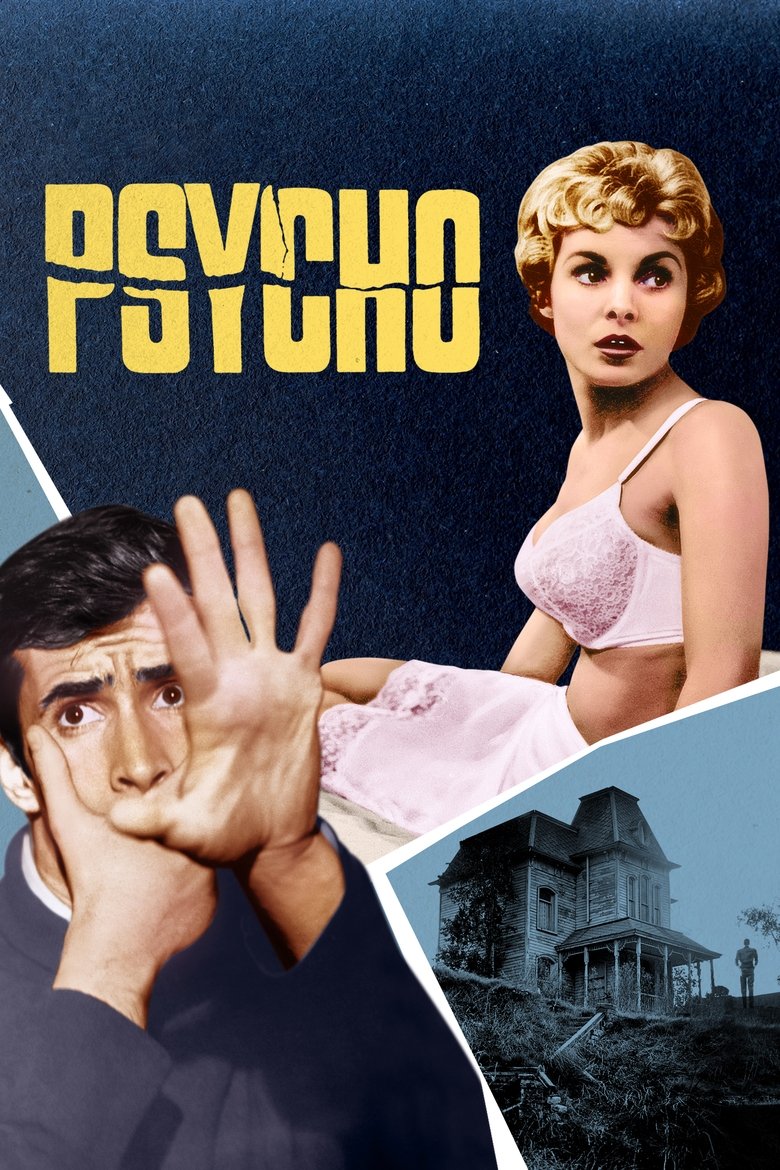
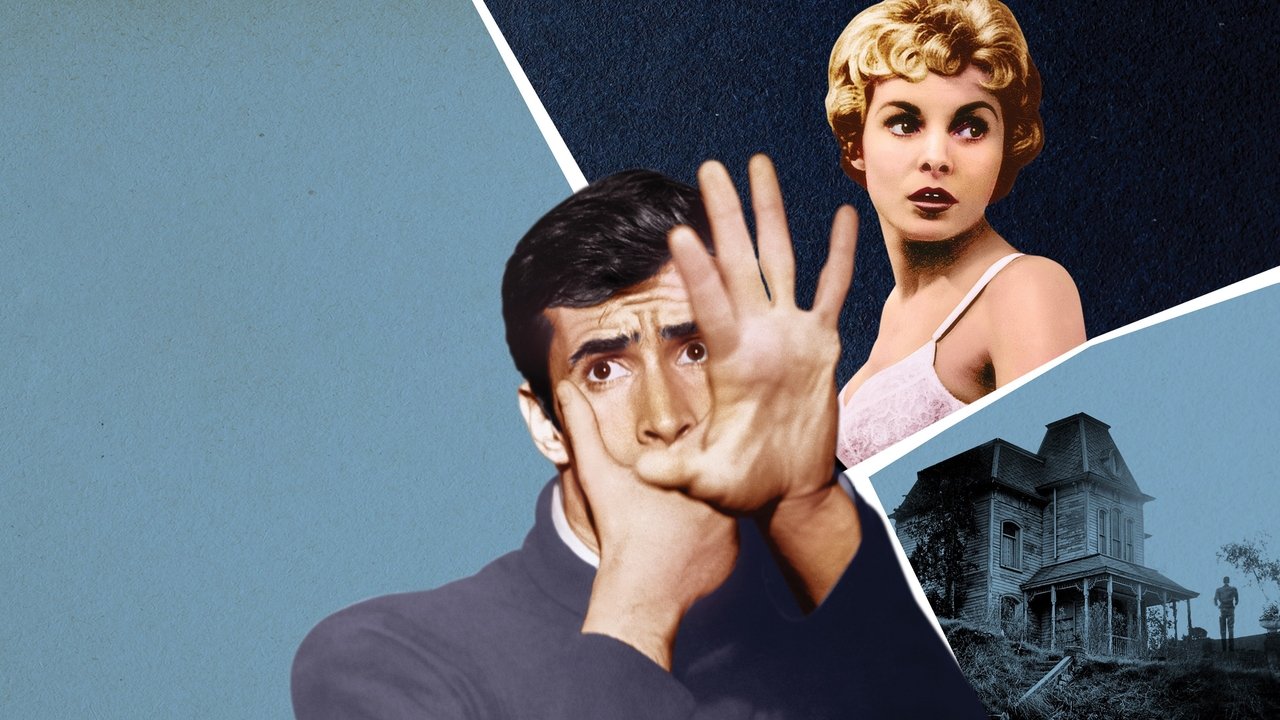
On the road, a storm and her fraying nerves push Marion to pull off at the near-empty Bates Motel, managed by the gentle, awkward Norman Bates, played by Anthony Perkins, who says he lives nearby with his housebound mother. What follows is a slow, uneasy dance of small talk, strange noises from the looming house, and the sense that Marion’s problems might be about to change shape. The less you know beyond that, the better. Psycho’s shocks still land because it keeps shifting genre gears under your feet.
“Psycho starts as a sweaty heist escape and ends somewhere far stranger.”
Why Alfred Hitchcock made Psycho feel so unsafe
By 1960 Alfred Hitchcock already had a reputation for elegant suspense, so Psycho’s jaggedness came as a jolt. He shoots the Bates Motel as a nowhere place, a handful of rooms in the shadow of a strange, isolated house, then strips away the usual comforts of a studio thriller. Anyone can be vulnerable here, even a star like Janet Leigh. That decision alone changed how audiences looked at movie casts.
Hitchcock works inside three genres at once: horror, thriller and mystery. The horror is in the violence and the unnerving domestic life around Norman’s mother. The thriller spine comes from Marion’s theft and the investigation that follows. The mystery lies in who Norman really is and what exactly is happening in that house on the hill. Across 109 minutes he keeps cutting between these modes, then ramps them together into some of the most imitated sequences in film history.
If you have seen tightly contained suspense in later work like Hitchcock’s own stagey experiment Rope, the seeds are here too. Psycho just puts that formal control in the service of something much more feral, which is why it still feels unnervingly unsafe.
“Hitchcock strips away the usual comforts of a studio thriller and makes the Bates Motel feel like the edge of the map.”
Spinn Radio
Watch Psycho on Spinn Radio
The performances that make Psycho’s Bates Motel unforgettable
Psycho works because the cast makes its strangest ideas feel ordinary at first. Anthony Perkins gives Norman a shy, almost eager-to-please manner, chatting about birds and his lonely life at the motel. It is not a big, showy performance at the start. His Norman seems like a young man stuck looking after his mother, which makes the unease creep in sideways rather than as a blast of evil.
Janet Leigh’s Marion, meanwhile, carries much of the film’s early weight. We watch her make a terrible choice, then watch the panic close around her as she imagines every cop and car salesman reading her guilt. Leigh gives those stretches a sweaty, human tension that grounds everything that comes later. When the story’s focus shifts, you still feel Marion’s absence hanging over every room at the Bates.
In the second half, Vera Miles, John Gavin and Martin Balsam enter as people trying to make sense of the disappearances and the strange little motel. Each one brings a different kind of pressure to bear on Norman, from blunt confrontation to dogged investigation. If you are the sort of viewer who watches classic horror for performances as much as for scares, Psycho is basically an acting seminar disguised as a genre movie.
“If you watch classic horror for the acting, Psycho is an ensemble piece hiding inside a nightmare.”
Who will love Psycho in 2026?
If you are curious where modern slashers, twisty thrillers and “unreliable narrator” mysteries got so many of their tricks, Psycho is essential viewing. At 109 minutes it is brisk by contemporary standards, but its patience with character and atmosphere will appeal if you enjoy slow-burn tension more than jump scares. Fans of character-driven thrillers like Radius, which also toys with identity and threat in contained spaces, will find familiar pleasures here in a more classical key.
Genre fans who gravitate to horror, thriller and mystery tags will appreciate how cleanly Psycho braids those modes together. There is a crime story, a whodunnit puzzle, and a chilling portrait of a lonely man in a strange domestic setup, all in one film. It is also a perfect entry point if you want to test older black-and-white horror but worry it might feel dated. The imagery and the core relationship between Norman and his unseen mother still feel deeply wrong in a way that transcends its era.
If your tastes skew broader, Psycho also rewards anyone interested in film history. The way it treats star power, violence and narrative focus influenced decades of movies that followed, from cop thrillers to siege pictures like Die Hard: With a Vengeance. Watching it now, you can trace a lot of that DNA back to a quiet, rain-soaked motel off the highway.
“If you like slow-burn tension, character work and one sinister roadside motel, Psycho is still a perfect fit.”
How Psycho fits into Hitchcock’s legacy without deep spoilers
You do not need to know Alfred Hitchcock’s full filmography to feel Psycho’s impact, but it helps to see how he pivots here. Earlier thrillers like Rope experimented with form inside upscale apartments and drawing rooms. Psycho leaves the city behind and plants us with working-class characters, a struggling motel owner and a clerk who makes a desperate choice, which makes the horror feel closer to everyday life.
The film’s TMDB rating of 8.4/10 reflects how widely it still lands with audiences used to more explicit horror. The restraint in what Hitchcock shows, combined with his precision about what we hear and when we see the looming house, gives the film a queasy staying power. You might go in for its historical reputation, but the real legacy is how it keeps nagging at you afterward every time you pass a shabby roadside motel. For anyone exploring Hitchcock on Spinn Radio, Psycho is a central stop, not a deep cut.
“You might press play for Psycho’s reputation, but its real legacy is how it haunts every shabby roadside motel you see afterward.”
Good to know
Frequently asked questions
When was Psycho released?
Psycho was released in 1960. It arrived at the start of a decade that would push horror and thriller films into darker, more psychologically focused territory.
Who directed Psycho?
Psycho was directed by Alfred Hitchcock. His control of suspense, point of view and setting turns the Bates Motel into one of cinema’s most unsettling locations.
Who stars in Psycho?
Psycho stars Anthony Perkins, Janet Leigh, Vera Miles, John Gavin and Martin Balsam. Their performances give the film its eerie mix of vulnerability and menace.
How long is Psycho?
Psycho has a runtime of 109 minutes. It uses that tight length to move from crime story to horror and mystery without ever losing momentum.
What genre is Psycho?
Psycho is a horror, thriller and mystery film. It blends all three, starting with a theft and a getaway before sinking into the secrets of the Bates Motel.
Explore more on Spinn Radio: The Five Fingers of a Dog · Radius · Die Hard: With a Vengeance · Rope