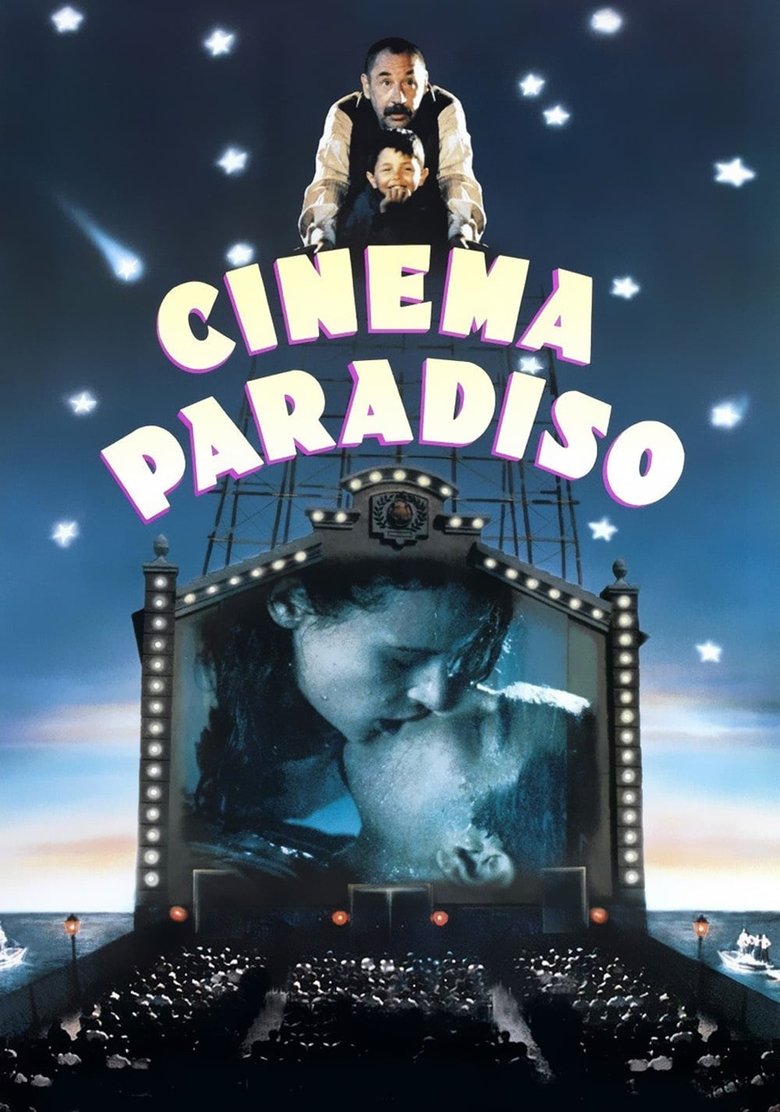
Cinema Paradiso is the rare film about movies that feels as intimate as a childhood memory. Released in 1988 and directed by Giuseppe Tornatore, it turns a small Sicilian cinema into the emotional center of a whole life, then quietly asks how any artist ever leaves home behind.
Across 124 minutes, the story follows a filmmaker looking back on his boyhood friendship with the local projectionist and his first flickers of romance. It is warm, funny, sometimes unsparing about loss, and it has become a go‑to recommendation for anyone who has ever been moved to tears in the dark of a theater.
Key facts
- Released
- 1988
- Runtime
- 124 min
- Genres
- Drama, Romance
- TMDB rating
- 8.4/10
- Director
- Giuseppe Tornatore
- Starring
- Philippe Noiret, Jacques Perrin, Marco Leonardi, Salvatore Cascio, Agnese Nano
What is Cinema Paradiso about, without spoilers?
At its core, Cinema Paradiso is a memory piece. A successful filmmaker returns in his mind to the small village where he grew up, to the worn seats and flickering screen of the local movie house. As a child, he sneaks into screenings, plays pranks, and gradually falls under the spell of cinema itself.
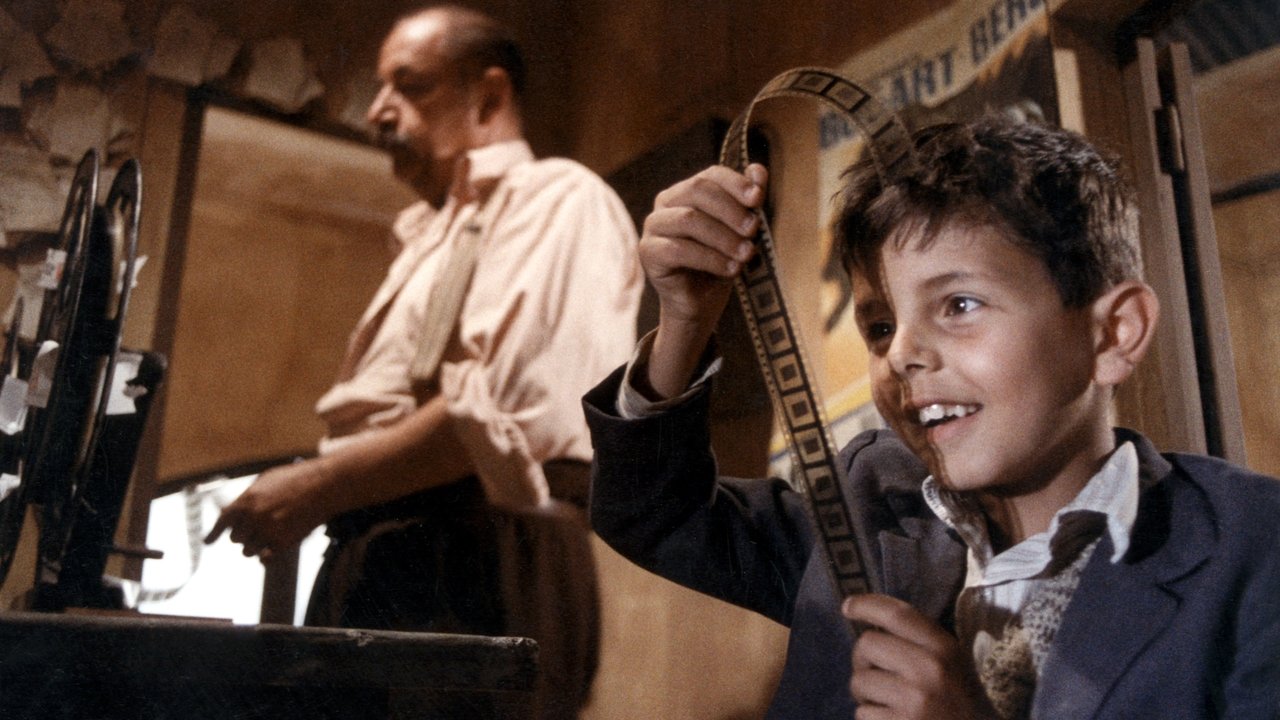
The heart of the film is his bond with the projectionist who runs the theater, a gruff but tender figure who lets the boy peek into the booth and learn how light, reels, and sound turn into a story. Around them, the whole village reacts to whatever is on screen: lovers, priests, children, old men all crowd the room, and their faces become part of the show.
Layered over this friendship is a coming‑of‑age romance that fits the film’s Drama, Romance billing. Without giving specifics away, those first feelings of love are set against the glow of film projectors and the pull of a wider world. The concrete takeaway: if you want a plot that interweaves childhood mischief, mentorship, and a bittersweet first love, this is that movie.
“The cinema is the village’s beating heart, and the projection booth is where a boy’s life quietly changes course.”
Giuseppe Tornatore, the cast, and the late‑80s Italian context
Cinema Paradiso is directed by Giuseppe Tornatore, an Italian filmmaker with a clear affection for small communities and the stories that grow out of them. If you are curious about how he expands that fascination later on, Spinn Radio also carries his multi‑generational Sicilian saga [Baaria](https://spinnradio.com/movies/25846), which makes a fitting companion piece.
The film’s emotional punch depends on its cast. Philippe Noiret plays the projectionist with a mix of grumpy humor and quiet wisdom, while Salvatore Cascio embodies the wide‑eyed curiosity of the boy who haunts the aisles and the booth. As the character grows older, Marco Leonardi and Jacques Perrin take over, each capturing a different stage of restlessness and longing. Agnese Nano adds the romantic spark that complicates everything the boy thinks he wants.
Released in 1988, Cinema Paradiso arrives at the tail end of a decade when Italian cinema was shifting, looking back on mid‑century life with nostalgia and skepticism. It is a period piece that speaks to anyone who has seen their hometown change or vanish, even if they have never set foot in Italy. A clear takeaway here: if you are drawn to character‑driven European dramas with rich ensembles, this cast and era deliver exactly that.
“Tornatore populates one small cinema with an entire emotional universe, then lets a handful of actors carry decades of memory.”
Spinn Radio
Watch Cinema Paradiso on Spinn Radio
Why Cinema Paradiso hits film lovers so hard
Cinema Paradiso connects so strongly with film fans because it treats moviegoing as a communal ritual, not just a pastime. The theater is where the village laughs, cries, and gossips together, and where a child learns that stories can feel more real than the streets outside. The film lingers on the rituals of projection: threading reels, the beam of light, the moment when an audience gasps in unison.
The movie is also unusually honest about how that love of cinema can both give and take away. The boy’s obsession with films propels him toward a life beyond the village, but it also complicates his ties to home and to the people who first believed in him. This tension between artistic ambition and personal loyalty is what sticks with many viewers long after the credits.
If you are the kind of person who watches something like [The Last Picture Show](https://spinnradio.com/movies/25188) and immediately feels nostalgic for theaters that no longer exist, Cinema Paradiso will likely feel like a kindred spirit. The concrete hook: it is a film about why we fall for the movies in the first place and what that devotion can cost.
“For anyone who has ever felt their life tilt in a darkened auditorium, Cinema Paradiso feels uncannily personal.”
How the genre mix of drama and romance shapes the movie
Officially labeled Drama, Romance, Cinema Paradiso balances both without leaning into melodrama. The dramatic spine is the lifelong impact of that childhood mentorship inside the projection booth and the slow erosion of a way of life built around a single screen. These elements give the film weight and a sense of lived‑in history.
The romantic thread, centered on young love, plays out with the heightened emotions you would expect from a teenager whose world revolves around one girl and one theater. At the same time, the film keeps their story grounded in small gestures and missed chances instead of grand speeches. The romance hurts because it feels plausible, not because it is sensational.
The takeaway is simple: if you come for the drama of an older man shaping a boy’s future, you stay for the ache of a first love that defines how that boy, and later man, remembers his past. Both lines of feeling build to an ending that many viewers count among the most emotionally satisfying in modern cinema.
Who should watch Cinema Paradiso on Spinn Radio
If you are a lifelong cinephile, Cinema Paradiso is almost required viewing. Its 8.4/10 TMDB rating reflects how consistently audiences respond to its blend of sentiment and sharp observation. It plays like a cinematic comfort blanket, but one that is not afraid to sting.
It is also a smart pick if you like intergenerational stories and small‑town settings, whether that is Italian villages or other communities where everyone knows everyone else. Fans of character‑driven dramas and sincere romances will find a lot to latch onto here, especially given its relatively accessible 124 min runtime.
Once you have watched Cinema Paradiso, you can stay in that mood on Spinn Radio by queuing up [Baaria](https://spinnradio.com/movies/25846) for more Tornatore, or pairing it with other relationship‑heavy dramas like [Say 'I Love You'](https://spinnradio.com/movies/277806) for a different angle on love and memory. The practical takeaway: if you want a movie night that celebrates why we care so much about stories and each other, this is an ideal starting point.
“Cinema Paradiso is the film you put on when you want to remember why falling for the movies felt like falling in love.”
Good to know
Frequently asked questions
When was Cinema Paradiso released?
Cinema Paradiso was released in 1988. It captures a filmmaker looking back on his childhood in a mid‑century Sicilian village cinema.
How long is Cinema Paradiso?
Cinema Paradiso has a runtime of 124 minutes. It uses that time to span a boy’s mischief, his first love, and his later life as a filmmaker.
Who directed Cinema Paradiso?
Cinema Paradiso was directed by Giuseppe Tornatore. His affection for Sicilian settings and community life shapes every frame of the film.
Who stars in Cinema Paradiso?
Cinema Paradiso stars Philippe Noiret, Jacques Perrin, Marco Leonardi, Salvatore Cascio, and Agnese Nano. Each plays the same life at different stages or orbits it closely.
What genre is Cinema Paradiso?
Cinema Paradiso is a Drama and Romance film. It blends a moving mentorship story with a bittersweet first love set around a village cinema.
Explore more on Spinn Radio: Baaria · Say 'I Love You' · Son, I Love Your Mouth 2: The Taste of the Forbidden · The Last Picture Show
Sources