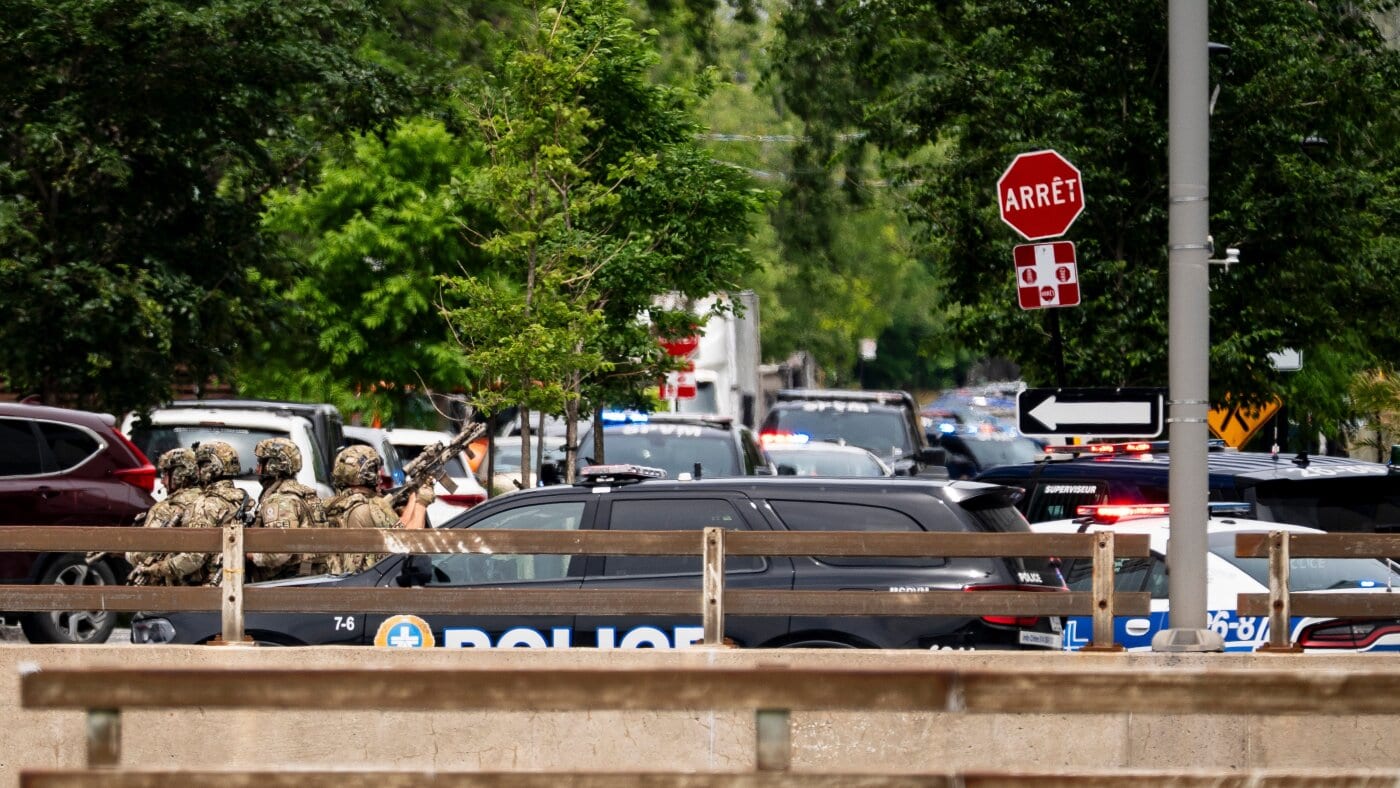
A gunman armed with a long gun opened fire inside a Montreal hotel, killing a police officer before officers returned fire and killed him, NPR reported on Tuesday. The shooting, reported by NPR on June 23, 2026, turned a city landmark into a crime scene and left law enforcement facing fresh questions about officer safety and public security.
Police say the suspect fired first, striking the officer, before other officers on scene shot and killed the attacker. Details on the motive, the officer’s identity and how the confrontation unfolded remain limited, but the incident immediately became one of the most serious attacks on police in Montreal in recent memory.
Key facts
- Source
- NPR
- Reported
- June 23, 2026
- Desk
- general
- Follow the story
- Spinn Radio Talk
What NPR is reporting about the Montreal hotel shooting
According to NPR, the incident began when a suspect carrying a long gun opened fire inside a Montreal hotel. Police say one officer was hit and fatally wounded before colleagues returned fire. The suspect was killed at the scene after officers shot him, ending the immediate threat inside the building.
The basic sequence, as relayed by police and reported by NPR, is stark: an armed suspect, an initial burst of gunfire that left a police officer dead, and a rapid response in which officers used lethal force to stop the attacker. Beyond that, authorities have not yet publicly detailed why the suspect was at the hotel, what prompted the shooting, or whether anyone else was injured or directly targeted.
For now, the core facts are these: there was a gunman with a long gun, a police officer was killed, the gunman was shot dead by police, and investigators are only beginning to piece together what led to the confrontation inside the hotel.
“The sequence so far is stark: an armed suspect, a murdered officer, and a rapid police response that left the gunman dead.”
Where the investigation in Montreal is likely to focus next
With the gunman killed at the scene, the investigation now shifts to understanding his identity, his weapon and his intent. Police will be working to confirm who the suspect was, how he obtained the long gun, and whether he planned the attack or acted in a moment of escalation inside the hotel. Those answers will shape how officials and residents assess the risk of similar incidents in the future.
Investigators will also need to reconstruct the movements of both the suspect and police inside the hotel. That typically involves reviewing surveillance footage, ballistics evidence and radio traffic, and interviewing witnesses who saw or heard the gunfire. The timing of each step from the first shots to the final exchange will be central to any later review of how the response unfolded.
For Montreal residents following this as a breaking story, the key questions are straightforward: who was the gunman, who was the officer he killed, and what drew them into a deadly encounter inside a hotel on a June day. Until investigators share more, those questions remain open and are likely to dominate public attention.
Spinn Radio
Follow live news on Spinn Radio
Why the killing of a Montreal officer matters for police and the public
The death of a police officer in a hotel shooting resonates far beyond a single crime scene. It underscores how quickly a routine presence at a public venue can turn into a fatal confrontation when an assailant has a long gun. For officers, it is a reminder of the risks they face entering enclosed, crowded spaces to confront an armed suspect. For hotel workers and guests, it raises fears about how safe familiar public interiors really are during a sudden attack.
Any killing of an officer tends to trigger reviews of tactics and training, from how quickly backup is dispatched to how officers move through a building when they know a suspect has a higher-powered weapon. The fact that officers did ultimately kill the gunman will likely be seen by some as evidence that their training worked under pressure, while others will want to know whether anything more could have been done to protect the officer who died.
Montreal officials will also have to manage public communication about the case. Residents will be looking for reassurance that there is no continuing threat and for clear, factual updates as more becomes known. The balance between sharing information and preserving the integrity of the investigation will be a recurring challenge in the days ahead.
How this Montreal hotel shooting fits into wider security concerns
A gunman carrying a long gun inside a hotel raises immediate questions about building security and access control. Hotels are designed to be open and welcoming, which can make them vulnerable when someone decides to bring a weapon inside. Security planners in Montreal and elsewhere will likely look closely at this incident as they consider how to protect lobbies, corridors and event spaces without undermining the basic appeal of a hotel as a public-facing place.
For police agencies, the shooting reinforces ongoing debates over how to prepare for armed encounters in complex interiors. Training increasingly focuses on rapid movement, communication and coordination in buildings that have multiple floors and limited lines of sight, all of which apply in a hotel scenario. The involvement of a long gun also highlights concerns about how effectively officers and standard equipment can counter higher-powered weapons in close quarters.
At a city level, the incident will join a broader conversation about gun access and public safety. Even with limited details, the outline is familiar to residents who have watched other cities grapple with sudden violence by armed suspects in everyday settings, from workplaces to entertainment venues. Montrealers now face a version of that story centered in their own hotel district.
“Hotels are meant to be open and welcoming, which is exactly what makes a sudden attack with a long gun so destabilizing.”
Where to follow ongoing updates on the Montreal shooting
As of NPR’s report on June 23, 2026, many critical details about the Montreal hotel shooting remain undisclosed, including the identities and backgrounds of both the officer and the gunman. Those facts are likely to emerge gradually as police hold briefings and local authorities release more information about what happened inside the hotel and why.
For listeners and readers trying to keep track of a fast-moving story, it helps to follow outlets that specialize in live formats. On Spinn Radio, continuing coverage and reaction will be available on Follow live news and talk on Spinn Radio, where hosts and guests will track each confirmed development as it is reported. That is where you can expect to hear updates on the investigation, community response and any official reviews that follow.
This is a developing case, and details may shift as investigators learn more. Staying tuned to curated, real-time coverage will make it easier to distinguish confirmed facts from speculation as Montreal and its police force absorb the impact of losing an officer in a hotel shooting.
Good to know
Frequently asked questions
What happened in the Montreal hotel shooting?
A gunman armed with a long gun opened fire at a Montreal hotel and killed a police officer before officers returned fire and killed him. Authorities have not yet released further specifics about the sequence beyond those basic facts reported by NPR.
Who was killed in the Montreal incident?
A police officer was killed in the Montreal hotel shooting, according to NPR. The gunman was also killed when responding officers shot him.
What do police say about the suspect in the Montreal shooting?
Police say the suspect in the Montreal shooting was armed with a long gun and opened fire inside a hotel. They report that he was shot and killed by officers who returned fire.
Where can I follow updates on the Montreal hotel case?
You can follow updates on the Montreal hotel shooting through NPR’s reporting and live coverage on Spinn Radio Talk. Spinn Radio will track new details as investigators release them.
Explore more on Spinn Radio: Follow live news and talk on Spinn Radio
Sources