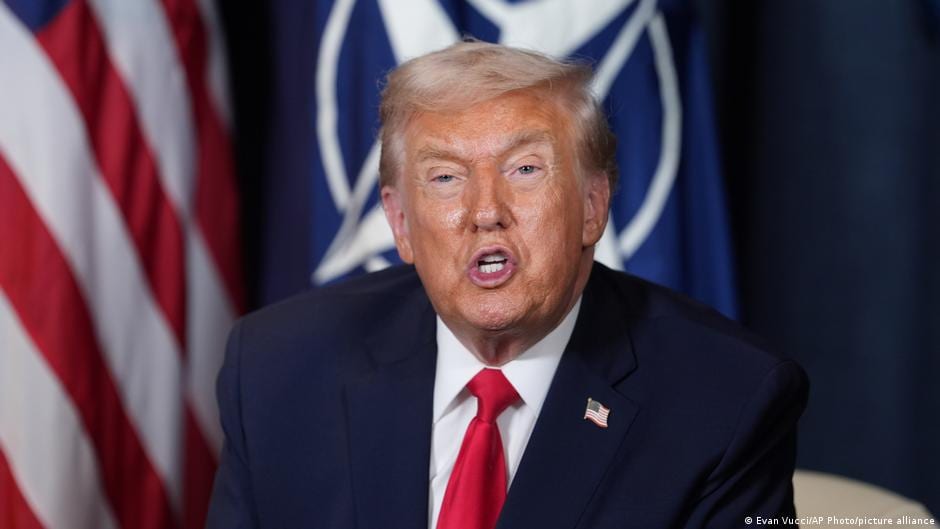
Donald Trump is expected to put NATO unity under intense pressure at an upcoming summit in Turkey, DW.com reported on July 5. The meeting will test how far the alliance can stay together as Secretary-General Mark Rutte works to keep both skeptical members and the former US president engaged.
At issue are long‑running disputes over military burden sharing, the reliability of US security commitments, and deep divisions over the Iran war, according to DW.com. The outcome will shape how cohesive NATO looks at a moment when its political center of gravity is already under strain.
Key facts
- Source
- DW.com
- Reported
- July 5, 2026
- Desk
- general
- Follow the story
- Spinn Radio Talk
Why Trump’s role at the Turkey summit matters now
DW.com reports that Trump’s presence and influence at the Turkey summit will act as a stress test for NATO’s political cohesion. Allies are bracing for renewed criticism over defense spending and questions about whether Washington will stand firmly behind collective security pledges. Mark Rutte’s challenge is to keep Trump engaged rather than alienated, while avoiding a public clash that could rattle member states. How he balances outreach with reassurance to other leaders is likely to define the tone of the gathering and signal whether NATO can absorb political shocks without fracturing.
“The Turkey summit is less about ceremony and more about whether NATO can absorb another shock to its political core.”
Burden sharing: the spending fight that will not go away
According to DW.com, burden sharing is once again front and center as leaders head to Turkey. For years, Washington has pressed European allies to increase defense budgets, and Trump has been one of the most vocal critics of governments seen as spending too little on their own security. Those tensions are expected to surface at the summit, where some allies want recognition for stepped‑up commitments while others are wary of being singled out. The argument over who pays what goes to the heart of NATO’s credibility, because any perception of free‑riding can fuel domestic skepticism in the United States about long‑term military commitments abroad. How Rutte manages this debate will be closely watched. If he can frame higher contributions as a shared investment rather than a concession to Trump, the summit could calm nerves. If the discussion turns accusatory, it risks overshadowing other business and reinforcing doubts about the alliance’s fairness.
“The burden‑sharing fight is not just about spreadsheets, it is about whether publics still see NATO as a fair deal.”
Spinn Radio
Follow live news on Spinn Radio
US military commitments and allies’ trust in Washington
DW.com notes that uncertainty around US military commitments is another fault line heading into the Turkey meeting. Trump has questioned the value of long‑standing security guarantees in the past, and any hint that Washington might step back from its obligations would reverberate across European capitals. For NATO, the credibility of US power is not an abstract issue; it underpins planning, troop deployments and deterrence strategies. If allies begin to doubt that American forces would be available in a crisis, they may rethink their own policies or push more urgently for alternative arrangements. Rutte’s effort to keep Trump engaged is partly about protecting that sense of reliability. Even symbolic gestures of support, if clearly communicated at the summit, could help steady nerves. Conversely, signs of drift or mixed messaging from the US side would deepen the very anxieties the meeting is supposed to ease.
“Every question about US commitments lands like a tremor under NATO’s security architecture.”
How the Iran war complicates NATO unity
DW.com highlights the Iran war as a major complicating factor for alliance unity. Member states do not all share the same threat perceptions or preferred strategies toward Tehran, and that divergence is already feeding broader disagreements about NATO’s role beyond its core territory. The Turkey summit is expected to expose those splits. Some governments want firmer coordination on how the Iran conflict affects regional security and energy routes. Others worry about being drawn deeper into a war they see as outside NATO’s primary mission. These differences intersect with the debate over US leadership. If Washington and Trump push more forceful positions on Iran, Rutte will need to manage concerns from allies that favor caution. The balance between solidarity with a key power and avoiding escalation will be one of the most delicate pieces of diplomacy on the table.
“The Iran war is turning into a stress test of whether NATO can think and act together beyond its own borders.”
What to watch as leaders gather in Turkey
With the summit approaching, several indicators will show how well Rutte’s strategy is working. Observers will look first at whether public statements from Trump and other leaders project a basic commitment to unity, particularly on mutual defense and long‑term cooperation. Second, the tone of any agreement or communique on burden sharing will matter. Language that shares responsibility across all members would signal progress, while sharp language pointing fingers at specific countries could deepen rifts. The way the Iran war is framed, whether as a shared challenge or a divisive out‑of‑area conflict, will also reveal where consensus really lies. Spinn Radio will be tracking these developments as they unfold. For continuing analysis, reactions and live debate around the summit, listeners can Follow live news and talk on Spinn Radio and stay with Spinn Radio Talk as the story develops.
“The measure of success in Turkey will not be fanfare but whether allies leave with fewer doubts than they brought.”
Good to know
Frequently asked questions
What is at stake at the upcoming NATO summit in Turkey?
The Turkey summit will test NATO unity over defense spending, US security guarantees and the Iran war. The way leaders handle these disputes will shape perceptions of the alliance’s strength.
Why is Trump’s involvement seen as a test for NATO?
Trump’s role is a test because he has challenged allies on burden sharing and US military commitments. How he engages at the summit could either steady or unsettle the alliance.
How is Mark Rutte trying to keep NATO united?
Mark Rutte is working to keep the alliance united by engaging Trump while reassuring other members, DW.com reports. His goal is to prevent disputes over spending and the Iran war from fracturing political cohesion.
How does the Iran war affect NATO allies at this summit?
The Iran war affects allies by sharpening differences over NATO’s role beyond its core territory. Those divisions risk spilling into broader debates about strategy and solidarity at the Turkey meeting.
Explore more on Spinn Radio: Follow live news and talk on Spinn Radio
Sources