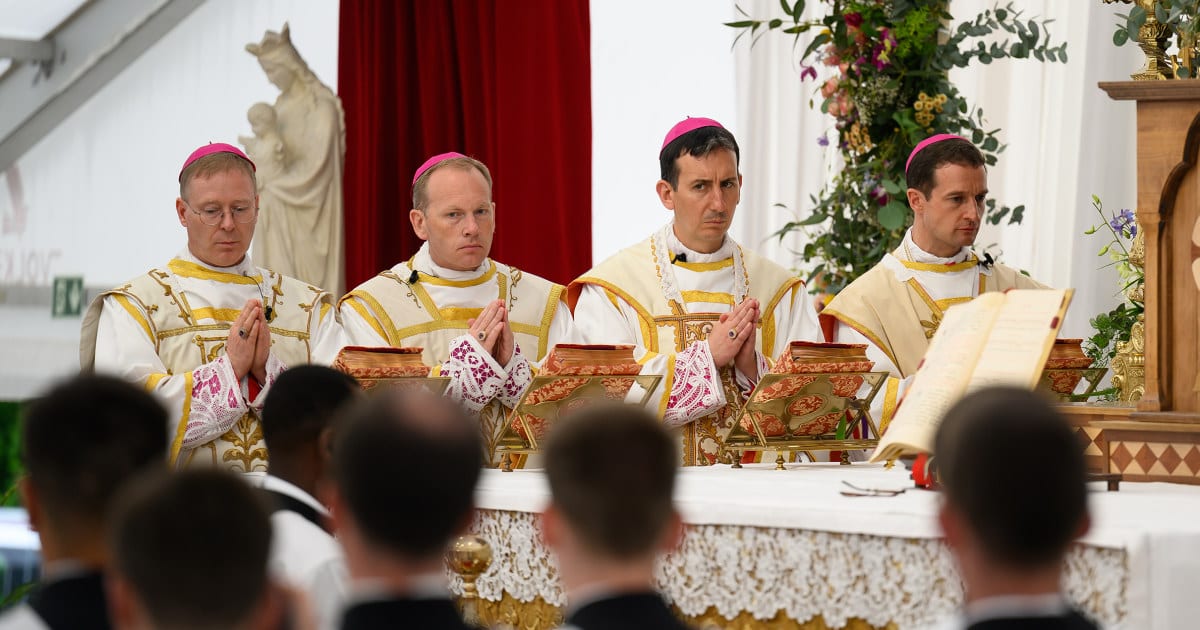
A priest in Zurich from a Catholic splinter sect that was formally excommunicated earlier this week told worshippers that a future pope would “welcome us back, ” according to reporting from NBC News. The remark, delivered on Sunday, came only days after the Vatican’s move to cut the group off from the Roman Catholic Church.
The claim of an eventual reconciliation, made while the excommunication is still fresh, highlights an immediate clash between official church discipline and the sect’s belief that its break with Rome will one day be reversed.
Key facts
- Source
- NBC News
- Reported
- July 5, 2026
- Desk
- general
- Follow the story
- Spinn Radio Talk
What NBC News reported about the excommunicated Catholic sect
NBC News reported on July 5, 2026, that a Catholic splinter sect based in Zurich was excommunicated earlier in the week. Excommunication is the Catholic Church’s most serious form of censure. It formally excludes people or groups from receiving the sacraments and from full participation in the life of the church, and it is usually reserved for what church authorities consider especially grave offenses or persistent defiance.
The priest’s comments described in the NBC News report came only days after that decision, from the pulpit and in front of worshippers. That timing matters. It shows the group is not retreating into silence in response to Rome’s judgment, but instead is trying to frame the break as temporary and ultimately reversible.
For listeners and observers, the key fact is simple: the Vatican has acted, the sect is officially outside church structures as of this week, and yet one of its priests is already signaling confidence that the act will not be the final word.
“Rome has spoken for now, but the sect is already speaking about what comes next.”
Why a priest would predict a future pope will ‘welcome us back’
The priest’s statement that a future pope will welcome the sect back into the Catholic Church is more than a hopeful aside. It is a theological and political claim about how authority works in Catholicism. Popes can lift excommunications, shift pastoral priorities, and reopen talks with groups that have broken away, and history includes examples of reconciliations that took place years after a formal split.
By speaking this way to worshippers so soon after the excommunication, the priest is offering a storyline that keeps the group’s Catholic identity alive in the minds of followers. The message suggests that, in the sect’s view, their dispute is with current decision makers, not with the core of the Catholic faith, and that a change in church leadership could change their status.
For members hearing this in Zurich, the most immediate takeaway is reassurance: despite the church’s severest penalty, their priest is telling them they are not permanently cut off, and that they should imagine a future where they again stand inside the Catholic fold under a different pope.
“The penalty is framed not as a dead end, but as a waiting room for a different pontificate.”
Spinn Radio
Follow live news on Spinn Radio
How excommunication reshapes daily life for a Catholic splinter group
Excommunication has practical and spiritual consequences for any Catholic community, especially a splinter sect. At the sacramental level, it means the group is officially barred from the central rituals that define Catholic life, including the reception of Communion within the recognized structures of the church. For ordinary worshippers, that can create confusion over which services “count” as authentically Catholic and which do not, even when the liturgy in their chapel looks and sounds familiar.
Institutionally, excommunication also signals to bishops, priests, and laypeople across the world that they should not participate in the sect’s activities or treat it as a legitimate Catholic body. This can affect everything from shared use of church buildings to cooperation in local charities or schools. It can also isolate the group geographically and socially, as parishioners weigh loyalty to their community against their relationship with the wider church.
In Zurich, the priest’s vow that a future pope will reverse course is one way to blunt those effects. It gives worshippers a narrative that allows them to stay with the sect while still imagining themselves as part of a larger Catholic story, even as official channels insist they are now outside that frame.
What is at stake for the Vatican and for ordinary Catholics
For the Vatican, an excommunication of a Catholic splinter sect is always about more than a local dispute. It is a public statement about where the boundaries of acceptable teaching or practice lie. Acting against a group in a European city like Zurich sends a signal to Catholics worldwide about what church leaders are prepared to tolerate from breakaway movements and what they are not.
At the same time, the priest’s public confidence in future rehabilitation raises questions about the long-term effectiveness of such penalties. If a group believes that a later pope will restore communion, the current excommunication might be seen as a temporary storm to ride out rather than a call to change course. That can complicate the Vatican’s efforts to maintain doctrinal unity or rein in practices it considers out of bounds.
For ordinary Catholics watching from afar, the story puts front and center the tension between church authority and personal loyalty. Some will recognize familiar debates from other recent church conflicts, where discipline from Rome clashes with deep attachment to local communities, priests, or particular interpretations of Catholic teaching.
“The clash is not only between a splinter sect and Rome, but between different visions of what Catholic unity should look like.”
What to watch next in the dispute over the excommunicated sect
Because NBC News has only just reported the excommunication and the priest’s response, this story is at an early stage. The next key questions are whether Rome will address the priest’s claim of an eventual return, whether any formal dialogue opens between the sect and church officials, and how many members stay with the group in Zurich after the initial shock of excommunication fades.
Another thing to watch is how other Catholic leaders, both in Switzerland and beyond, speak about the case. Their sermons, statements, and pastoral decisions will help shape whether the sect remains isolated or becomes a touchpoint in wider debates about authority and reform in the church. For observers who track religion as closely as politics or sport, this will be a test case of how the Vatican responds to open defiance when that defiance is wrapped in the language of future reconciliation.
Spinn Radio will continue following how this unfolds across Europe and in wider church conversations. For updated context and real-time reaction, you can Follow live news and talk on Spinn Radio as more details and responses emerge.
Good to know
Frequently asked questions
What happened to the Catholic splinter group in Zurich?
The Catholic splinter group in Zurich was excommunicated earlier this week. NBC News reported the move on July 5, 2026, as a fresh formal break with Rome.
Why is a priest from the sect talking about a future pope?
A priest from the excommunicated sect told worshippers that a future pope will welcome the group back into the Catholic Church. The remark suggests the sect sees the penalty as temporary and dependent on who leads the church.
What does excommunication mean for worshippers in the sect?
Excommunication formally places worshippers outside full participation in the Catholic Church and its sacraments. For many, it forces a choice between loyalty to their community and alignment with official church structures.
What should observers watch for next in this church dispute?
Observers should watch for any Vatican response, signs of dialogue with the sect, and how many members remain after the excommunication. Reactions from other Catholic leaders will also signal how isolated the group becomes.
Explore more on Spinn Radio: Follow live news and talk on Spinn Radio
Sources