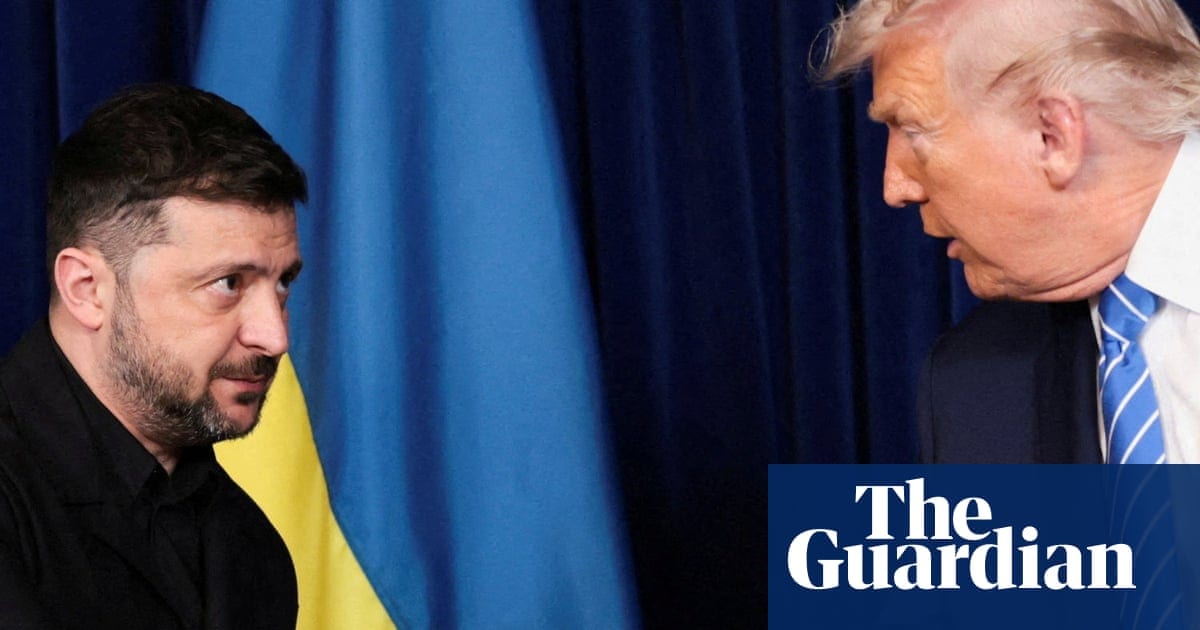
Ukraine war briefing: Trump to meet Zelenskyy at a Nato summit as US officials describe battlefield progress as “frozen”, The Guardian reported on Monday, setting up a potentially pivotal encounter between Donald Trump and Volodymyr Zelenskyy after months of stalemate between Kyiv and Moscow.
According to The Guardian’s summary, a senior American official says Trump feels a growing urgency about ending the war as Russia hits Kyiv again and the conflict reaches day 1,594, raising fresh questions about how US policy might shift and what any drive for a deal could mean for Ukraine’s position on the ground.
Key facts
- Source
- The Guardian
- Reported
- July 6, 2026
- Desk
- general
- Follow the story
- Spinn Radio Talk
Why Trump’s Nato summit meeting with Zelenskyy matters now
The Guardian reports that Trump plans to meet Ukraine’s president Volodymyr Zelenskyy on the sidelines of a Nato summit, a setting that puts the war at the center of allied diplomacy. Nato gatherings concentrate Ukraine’s military backers in one place, so any direct conversation between Trump and Zelenskyy instantly becomes a focal point for governments trying to gauge the next phase of US leadership on the conflict.
The same reporting notes that an American official describes Trump as feeling an urgency to end the war after a prolonged stalemate between Kyiv and Moscow. That mix of venue and mood is significant. A leader who is focused on ending the war, sitting down with the Ukrainian president in a room full of Nato allies, inevitably triggers speculation about whether Washington might press for talks, push for a stronger bargaining position on the battlefield, or both.
For listeners following the war through rolling coverage, this summit encounter is the development to watch first. It combines three threads from The Guardian’s summary: Trump’s stated urgency, Zelenskyy’s search for sustained support, and a conflict that has ground on for more than 1,500 days without a clear breakthrough for either side.
“A Nato summit puts Trump, Zelenskyy and every major backer of Ukraine in the same building, at the very moment Washington is calling the front line ‘frozen’.”
What the US means by calling battlefield progress ‘frozen’
The Guardian cites US officials describing battlefield progress in Ukraine as “frozen” after months of stalemate between Kyiv and Moscow. In practical terms, that language signals a front line where neither side is making meaningful territorial gains, even as Russia continues to strike targets such as Kyiv with missiles and drones.
A frozen battlefield does not mean a quiet one. The report notes that Russia has attacked Kyiv again, a reminder that long-range strikes and daily attrition continue even when front-line maps barely shift. For Ukraine, this creates a grinding contest of endurance: it must absorb repeated attacks while trying to husband resources for any future attempt to break the stalemate.
From a diplomatic angle, the US characterisation of the fighting as frozen frames the urgency that American officials say Trump feels about ending the war. If the line of contact barely moves, outside powers often begin to talk more openly about ceasefires or political deals. That is why this single word, chosen by US officials and relayed by The Guardian, has quickly become one of the most scrutinised details of the latest briefing.
“A frozen front line is still a live war: the maps do not move, but cities like Kyiv remain under Russian attack.”
Spinn Radio
Follow live news on Spinn Radio
How the long Kyiv, Moscow stalemate shapes Trump’s urgency
The Guardian’s briefing places particular weight on the length of the deadlock between Kyiv and Moscow, describing months of stalemate that have now stretched to day 1,594 of the full-scale conflict. That duration helps explain why an American official would say Trump feels urgent about finding a way to end the war. After more than four years of fighting, political patience, financial resources, and military stockpiles are all under pressure.
A long stalemate typically hardens positions on the ground while softening them in foreign capitals. For Kyiv, entrenched lines mean defending current territory while arguing for more support. For Moscow, the absence of dramatic losses can be portrayed at home as resilience. For Washington, the lack of movement gives weight to arguments that a new approach is needed, whether that is stepped-up aid, stronger pressure on Russia, or an increased focus on negotiations.
The Guardian does not spell out what Trump might propose, and there is no detail on specific plans or timelines. What it does make clear is the context: an American leader described as keen to end a grinding war that shows little sign of changing course on the battlefield. That framing turns every word and body language cue from the upcoming Trump, Zelenskyy session into a potential signal of policy direction.
“After 1,594 days of war, a frozen front and a fresh push to ‘end it’ sit uneasily side by side.”
Russia’s renewed attacks on Kyiv and what they signal
Alongside the diplomatic maneuvering, The Guardian notes that Russia has attacked Kyiv again. These strikes against Ukraine’s capital keep the war present for millions of civilians and underline that, despite talk of a frozen front, Russia still has the capacity and intent to hit critical cities far from the line of contact.
Each new attack on Kyiv reinforces two messages. Inside Ukraine, it highlights the need for continued air defenses and international support to protect infrastructure and population centers. For outside observers, it complicates any discussion of compromise. When missiles are still falling on a capital city, calls to rapidly wind down the conflict become harder to separate from questions about justice, accountability, and Ukraine’s right to defend itself.
This is the military backdrop to the Nato summit conversation. Trump and Zelenskyy will meet not in a theoretical freeze but in the shadow of fresh Russian strikes. Listeners who want to hear immediate reaction and expert analysis can Follow live news and talk on Spinn Radio, where the latest attacks and diplomatic moves are tracked side by side.
“The front may be frozen, but missile alerts in Kyiv keep the war brutally current.”
What to watch next from the Nato summit and Washington
With The Guardian setting the stage, the next key developments are likely to come in three areas. First, any public readout of the Trump, Zelenskyy meeting will be parsed for signs of pressure on Kyiv to consider talks, or, alternatively, for new pledges of support tied to breaking the stalemate. Even a short statement on shared goals or timelines will be taken as a clue to Washington’s current thinking.
Second, Nato’s broader posture will matter. Although the report centers on Trump and Zelenskyy, the summit context means other leaders will be reacting in real time. If the US is speaking of a frozen battlefield and a desire to end the war, allies will want to know whether that translates into changes in training, equipment deliveries, or diplomatic messaging toward Moscow.
Third, watch how Russian actions respond to any shift in tone. The Guardian already notes another attack on Kyiv, a pattern that suggests the Kremlin is intent on maintaining pressure. If the summit signals a move toward talks, Moscow’s military behavior, from the tempo of strikes to any probes along the front, will be read as its own form of commentary on the prospects for negotiation.
“Any brief readout from Trump and Zelenskyy at Nato will be treated as a roadmap, even if it is only a sketch.”
Good to know
Frequently asked questions
What is the key development in the latest Ukraine war update?
The key development is that Trump is set to meet Ukraine’s president Volodymyr Zelenskyy at a Nato summit, according to The Guardian. That encounter comes as US officials describe battlefield progress as “frozen” after months of stalemate.
Why are US officials calling the fighting in Ukraine ‘frozen’?
US officials describe the battlefield as “frozen” because they see little meaningful territorial change after months of stalemate between Kyiv and Moscow, The Guardian reports. The term highlights a front line that barely moves even as strikes and casualties continue.
Why does Trump reportedly feel urgency to end the war?
Trump is said by an American official to feel urgent about ending the war because the conflict has dragged on for more than 1,500 days without a clear breakthrough, The Guardian notes. A long-running stalemate raises pressure on leaders to consider new military or diplomatic approaches.
What is happening in Kyiv as these Nato talks approach?
Russia has attacked Kyiv again, The Guardian reports, even as US officials talk about a frozen battlefield. The renewed strikes on the capital underscore that civilians remain under threat while leaders discuss the conflict at a Nato summit.
Explore more on Spinn Radio: Follow live news and talk on Spinn Radio
Sources