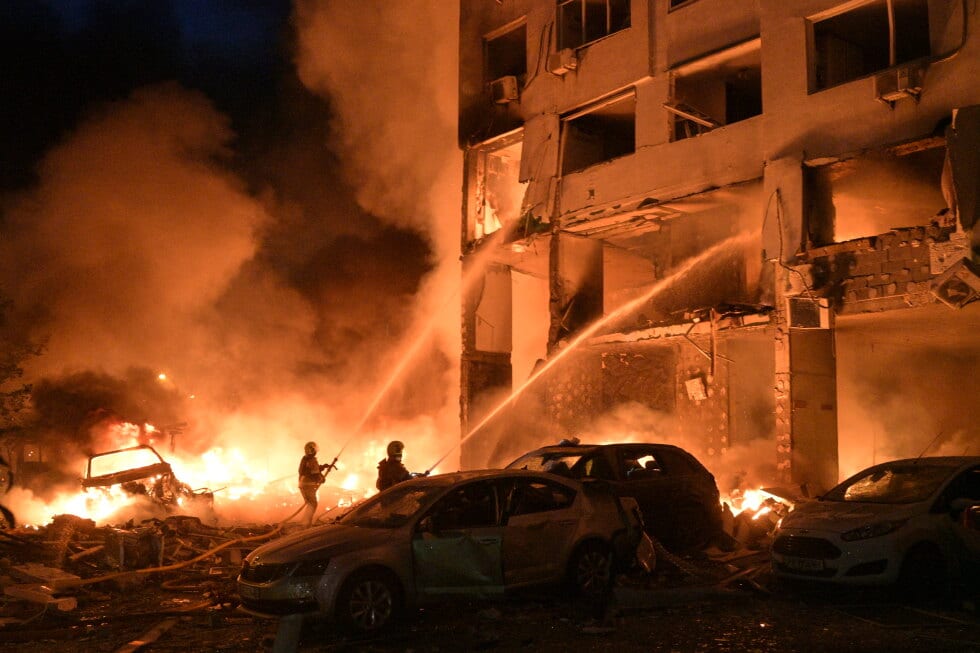
A Russian attack on Ukraine's capital has killed at least seven people, AP News reported, after missiles and drones were launched in waves over Kyiv early Monday. The strike underscores how vulnerable the city remains more than two years into the full-scale invasion, even with layered air defenses in place.
The casualty toll from the latest barrage was still being assessed, and officials in Kyiv were sorting through damaged sites and shaken neighborhoods. The attack, reported by AP News on July 6, 2026, reinforces that the capital is still very much on the front line of Russia's campaign against Ukraine's cities.
Key facts
- Source
- AP News
- Reported
- July 6, 2026
- Desk
- general
- Follow the story
- Spinn Radio Talk
What we know about the latest strikes on Kyiv
According to AP News, Russia launched waves of missiles and drones aimed at Ukraine's capital, and at least seven people were killed. The wording points to a coordinated barrage rather than a single isolated strike, the sort of attack that typically forces residents into shelters and strains air-defense systems as they try to intercept multiple incoming threats at once.
The report describes missiles and drones used in the same operation, which matches the pattern of recent Russian tactics that mix fast, high-altitude weapons with slower, low-flying drones. Even without a full public accounting of the damage, a death toll in the mid-single digits from a single morning of attacks is a stark reminder that Kyiv, a city of millions, remains exposed to long-range fire.
AP News placed the attack on July 6, 2026, which means emergency services and city authorities are still deep in response mode. In a developing situation like this, early numbers often change, but the confirmation that at least seven lives have been lost already makes this one of the more serious recent hits on the capital.
“A coordinated mix of missiles and drones left at least seven people dead in Ukraine's capital, AP News reported.”
Why attacks on Ukraine's capital matter far beyond Kyiv
Strikes on Kyiv carry military, political, and psychological weight that goes beyond the immediate damage. The capital is the seat of Ukraine's government and a major hub for logistics and decision-making, so any successful hit there sends a message to leaders, civilians, and international partners alike. When AP News reports a fatal barrage against the city, it signals that Russia is still willing and able to test the capital's defenses.
Civilian casualties in Kyiv resonate internationally because many foreign embassies, aid organizations, and media outlets are based there. News of at least seven people killed will be read in capitals across Europe and beyond as they weigh their own support for Ukraine's air defense and reconstruction. Even when military targets are claimed, the urban nature of the city means that residents in apartment blocks, workplaces, and transit routes often bear the brunt.
For people following the conflict through radio and streaming, attacks on the capital often mark turning points in public attention. Moments like this tend to drive fresh debate about sanctions, weapons deliveries, and diplomatic efforts. That is why platforms that carry breaking talk and analysis, including Follow live news and talk on Spinn Radio, become key places to track how narratives and policies might shift after a deadly strike.
Spinn Radio
Follow live news on Spinn Radio
How missile and drone waves shape the war for Ukraine
The AP News account of "waves of missiles and drones" points to a method of attack designed to overwhelm defenses. Ukraine has invested heavily in air-defense systems around Kyiv, with Western backing, precisely because Russia has repeatedly used cruise missiles and unmanned aircraft to target infrastructure and civilian areas. When multiple projectiles are launched in sequence, defenders must quickly judge which to intercept and which might pose less risk, a choice that can decide where casualties occur.
The combination of drones and missiles also affects how people in the city live. Drones can linger and change course, extending air-raid alerts and keeping residents in shelters for long stretches, while missiles generally arrive faster and leave only seconds or minutes for warning. Even on days when interceptions are successful and debris does most of the damage, the repeated alarms, shattered windows, and closed schools cut into daily life and the city's economy.
In military terms, each large-scale barrage forces Ukraine to expend precious interceptors and maintain constant readiness. The attacking side, in this case Russia, signals that it can continue to mount long-range strikes despite losses and international pressure. The human impact in Kyiv, captured in AP News' report of at least seven dead, is the immediate cost. The longer-term cost is the grinding pressure on Ukraine's resources and morale.
“Every wave of missiles and drones forces Ukraine to choose where to focus its finite air defenses, and civilians live with the consequences of those split-second decisions.”
What this attack could mean for the next phase of the conflict
A deadly strike on the capital often foreshadows shifts on the battlefield or in the diplomatic arena. While AP News has not yet detailed Russia's stated objectives for this particular barrage, attacks on Kyiv sometimes coincide with moves on other fronts, such as offensives in eastern or southern Ukraine, or with political milestones like international summits. Observers will be watching closely to see whether this latest assault is followed by increased pressure elsewhere.
The timing, reported as July 6, 2026, also places the attack in a period when both sides are trying to secure long-term support from allies and partners. Civilian deaths in a major European capital tend to harden positions. For Kyiv, highlighting the toll could help make the case for additional air defenses and economic assistance. For Moscow, showing it can still hit the city might be meant to deter deeper Western involvement or to influence negotiations indirectly.
For now, the most immediate question is whether the casualty count will rise and how quickly services in Kyiv can restore damaged infrastructure. The answer will shape how residents, and Ukraine's leadership, interpret this latest attack: as a tragic but contained incident, or as a sign that an even more intense phase of the air campaign is underway.
How to follow updates as the situation in Kyiv develops
AP News framed this as a developing story with an early casualty figure of at least seven people killed, and that number may change as authorities in Kyiv continue search, rescue, and assessment work. In the coming hours, officials are likely to provide more detail on which districts were hit, how many projectiles were intercepted, and whether key infrastructure was damaged or spared.
For readers and listeners tracking the war through rolling coverage and expert commentary, real-time updates will be crucial. Radio and live talk formats often bring in on-the-ground voices and analysts who can connect the dots between a single morning's barrage and the broader shape of the conflict. You can Follow live news and talk on Spinn Radio to stay across new details from Kyiv, reactions from international capitals, and what this latest deadly attack could mean for the months ahead.
“Early casualty figures are only the first snapshot; how Kyiv and its allies respond will tell us what this attack means for the wider war.”
Good to know
Frequently asked questions
What happened in the latest attack on Kyiv?
Russia launched waves of missiles and drones at Ukraine's capital and killed at least seven people, according to AP News. The attack appears to have been a coordinated barrage against the city.
How many people were killed in the strike on Ukraine's capital?
At least seven people were killed in the latest strike on Ukraine's capital, AP News reported. That toll could change as authorities continue rescue and recovery work.
Why are missile and drone attacks on Kyiv significant?
Attacks on Kyiv are significant because the city is Ukraine's political and logistical center, so any successful strike carries military, political, and psychological impact. Civilian deaths there also shape international debates over support for Ukraine.
How can I follow ongoing coverage of the attack on Kyiv?
You can follow ongoing coverage by tuning in to breaking talk and analysis on platforms that carry live news. Spinn Radio hosts rolling discussions and updates on its Follow live news and talk on Spinn Radio channel.
Explore more on Spinn Radio: Follow live news and talk on Spinn Radio
Sources