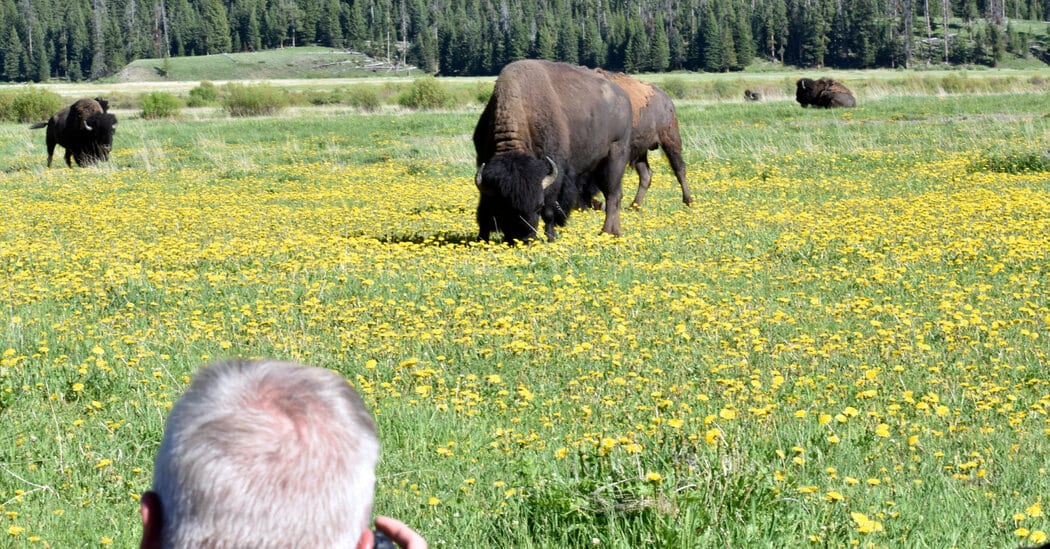
A bull bison charged a group of campers at Yellowstone National Park and sent a tourist to the hospital, The New York Times reported on July 12. In a few violent seconds near a campground road, the visibly agitated animal flipped the visitor about eight feet into the air, turning an ordinary stop into a medical emergency.
The incident, described by The Times as unfolding near a road by a campground, comes at the height of the summer travel season when crowds and wildlife cross paths most often. It is the latest reminder that Yellowstone’s iconic bison are wild, unpredictable animals, not roadside attractions.
Key facts
- Source
- The New York Times
- Reported
- July 12, 2026
- Desk
- general
- Follow the story
- Spinn Radio Talk
What we know about the Yellowstone bison charge so far
According to reporting from The New York Times, a visibly agitated bull bison charged near a campground road at Yellowstone and struck a tourist who had stopped in the area. The animal flipped the person roughly eight feet into the air, hard enough that the visitor required hospitalization afterward. No additional injuries or fatalities were reported in the initial account.
Key details, including the exact campground, the tourist’s condition after hospitalization, and whether any citations or investigations followed, have not yet been made public. What is clear from the Times report is that this was a brief but intense encounter on or near a roadway that many visitors might assume is a safe buffer from large wildlife. The setting underscores how quickly a seemingly controlled roadside stop can become dangerous when a stressed bull is nearby.
For anyone trying to picture the scene, the essential takeaway is this: a bull bison near a campground road, already showing signs of agitation, closed the distance to a visitor fast enough that the person had no effective time to react. That combination of an agitated animal, close proximity, and a busy visitor area is exactly what park safety campaigns try to prevent.
“A calm-looking bison beside the road can become a charging, agitated bull in the time it takes a visitor to lift a camera.”
Why bison near campgrounds and roads are so risky
Yellowstone’s bison are massive, muscular animals that can move far quicker than most people expect, especially over short distances. Even though the New York Times report does not include technical figures, the basic physics are still obvious when a bull flips a person about eight feet into the air. A charging animal of that size turns human bodies into projectiles, which is why similar incidents often end with emergency care, as happened here.
Roads and campground approaches may feel like controlled spaces, yet they often cut directly through habitat used by bison herds. Visitors step out for photos, walk dogs, or linger near parked vehicles while wildlife move past. When a bull is visibly agitated, any of those normal vacation behaviors can suddenly look like a challenge or a threat to the animal. The closer the mix of people and bison, the less margin for error if the animal decides to charge.
The core lesson from this incident is that proximity is the real hazard. Whether you are on a narrow campground road or a main highway pullout, standing too close to a keyed-up bison sharply increases the chance that a routine sighting turns into an ambulance call.
“Proximity, not scenery, decides how quickly a wildlife encounter becomes an emergency.”
Spinn Radio
Follow live news on Spinn Radio
How Yellowstone visitors can read danger signs around bison
The Times report notes that the bull bison involved in this charge was "visibly agitated" before it struck the tourist. That phrase is a critical clue for anyone planning a trip. While specific body language was not detailed in the coverage, park officials commonly warn that bison show agitation before they charge. An animal that looks keyed up rather than calm, especially a lone bull, should be treated as a do-not-approach warning sign.
Near campgrounds and roads, visitors often focus on cameras, kids, or camping gear and miss those early cues. Even without a checklist of behaviors, the safe rule is to back away as soon as a bison’s behavior changes from relaxed to restless. That might mean more movement, sudden attention toward people, or any posture that looks less like grazing and more like watching or pacing.
This latest hospitalization is a reminder that the safest wildlife viewing often comes from inside a vehicle or from a distance that clearly respects the animal’s space. If a bison is close enough that you are debating whether it seems agitated, you are already too close.
“If you are close enough to wonder whether a bison looks agitated, you are close enough to be in danger.”
What this incident means for summer travel at Yellowstone
The New York Times reported the charge and hospitalization on July 12, right in the heart of Yellowstone’s busy season. That timing matters. More tourists, more vehicles, and more activity around campgrounds all increase the odds that people and bison will mingle in tight quarters. Even a single high-profile incident can ripple through how visitors think about safety during their trips.
Although there is no indication in the reporting of new restrictions or closures in response to this specific charge, episodes like this tend to sharpen attention on visitor behavior rather than on the animals themselves. Park messaging often stresses that bison are doing exactly what wild bison do, and that it is up to people to maintain safe distances and avoid crowding them for photos or a better look.
For travelers mapping out routes and campsites, the practical takeaway is that any area where roads and wildlife habitat overlap requires extra caution. That includes campground loops, access roads, and popular scenic pullouts. A safer trip begins with assuming that large animals may appear at any time, even in places that look like extensions of a parking lot.
Where to follow updates and ongoing safety discussion
At this stage, publicly available information about the injured tourist’s condition and any follow-up action by authorities remains limited to what The New York Times reported on July 12. As with many breaking safety stories in national parks, more details may emerge from officials or eyewitnesses in the days ahead, especially if this incident becomes part of a broader conversation about wildlife interactions around campgrounds.
For listeners and readers who want to track how this story evolves, including any changes in park messaging or visitor guidelines, Spinn Radio is following the developments through its news and conversation streams. You can Follow live news and talk on Spinn Radio to hear the latest updates, safety context, and expert perspectives as more reporting becomes available.
The larger question of how to balance close-up wildlife viewing with visitor safety will not end with this single bison charge. It will continue to surface every time crowds gather along a roadside or campground edge to watch a massive animal move past, and it is a debate worth following as park use keeps growing.
“The story does not stop with the charge; it continues every time a crowd edges closer to a massive animal for one more photo.”
Good to know
Frequently asked questions
What happened in the recent bison incident at Yellowstone?
A bull bison charged near a campground road at Yellowstone and flipped a tourist about eight feet into the air, and the person was hospitalized afterward.
Where did the bison charge the tourist in Yellowstone?
The bison charged the tourist near a campground road inside Yellowstone National Park, in an area where visitor traffic and wildlife habitat overlap.
How badly was the tourist hurt in the Yellowstone bison charge?
The tourist was hurt seriously enough to require hospitalization after being flipped into the air by the bull bison, though no further medical details were reported.
Why is the Yellowstone bison charge being reported now?
The incident is in the news now because The New York Times reported it on July 12, during Yellowstone’s busy summer season when visitor safety is a major concern.
Explore more on Spinn Radio: Follow live news and talk on Spinn Radio
Sources