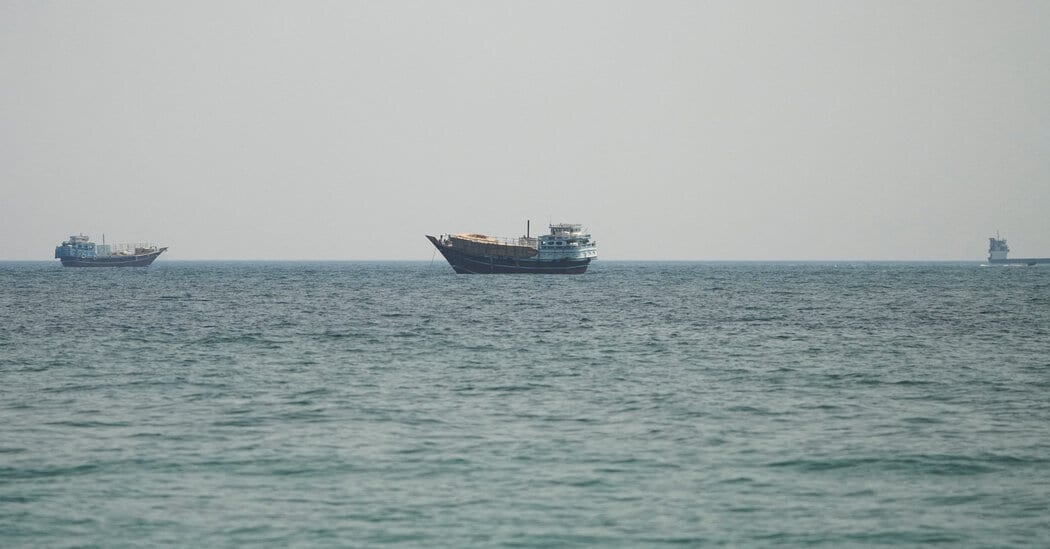
Oil prices pushed higher after a weekend of back‑and‑forth strikes between the United States and Iran, The New York Times reported, as renewed hostilities injected fresh anxiety into one of the world’s most sensitive energy corridors. The latest flare‑up, detailed on July 12, 2026, immediately focused traders’ attention on the narrow Strait of Hormuz, the key passage for tankers leaving the Gulf.
The paper reported that the new round of attacks raised the dangers facing commercial ships trying to navigate the strait, which carries a large share of global seaborne crude. Even without precise casualty counts or damage tallies, the simple fact of escalating U.S., Iranian military action near such a chokepoint was enough to send a new shudder through energy and shipping markets.
Key facts
- Source
- The New York Times
- Reported
- July 12, 2026
- Desk
- general
- Follow the story
- Spinn Radio Talk
Why the Strait of Hormuz matters for oil prices today
The latest New York Times report makes clear that the real pressure point in the current U.S., Iran flare‑up is the Strait of Hormuz. When hostilities pick up around this narrow waterway, the perceived risk to tankers rises, and so do oil prices. Traders do not need a confirmed hit on a ship for markets to move. The possibility that vessels could be delayed, diverted, or targeted often shows up first in futures prices.
The strait functions as a maritime funnel for crude leaving the Gulf. When military forces on either side exchange strikes, the calculus for shipping companies changes. Insurers may rethink coverage, captains may slow transits or reroute, and buyers further afield start to factor in the chance of tighter supply. The New York Times summary that "renewed hostilities posed fresh risks to ships" captured the core of that market fear and explains why prices reacted so quickly.
“When tensions spike around Hormuz, the risk premium in every barrel leaving the Gulf tends to climb fast.”
How U.S. and Iranian strikes escalated into a market shock
The New York Times headline, published July 12, framed the weekend as a sequence of back‑and‑forth strikes involving U.S. and Iranian forces. That phrasing signals a dynamic situation rather than a single isolated incident. For markets, the pattern matters. A lone strike can be written off as a limited operation. A reciprocating cycle suggests the risk of miscalculation and a longer period of instability around shipping lanes.
With details still emerging, what is clear from the reporting is that both sides engaged in military action significant enough to move oil prices. The absence of a cease‑fire or de‑escalation announcement keeps traders on edge. Each fresh report of activity in or near the Gulf feeds into expectations about whether this will be a brief flare‑up or the start of a more entrenched confrontation that complicates tanker movements for weeks or months.
“Markets are not just reacting to what was hit, but to the sense that U.S. and Iranian forces are now locked into a dangerous rhythm.”
Spinn Radio
Follow live news on Spinn Radio
What is at stake for global energy and shipping routes
Any renewed threat to ships in the Strait of Hormuz instantly becomes a global story because of how much crude depends on that route. The New York Times report stressed the specific risk to vessels navigating the strait, which is why this is not a purely regional military incident. Higher transit risk can translate into higher shipping costs and a risk premium built into every cargo leaving the Gulf.
For energy importers far from the Gulf, the stakes are about reliability. Even a modest price rise can pressure governments managing inflation at home, while refiners and fuel distributors weigh how much risk is baked into their future deliveries. For the shipping industry, the questions are more immediate: whether to keep regular schedules, how insurers will respond, and whether navies will increase patrols or escorts for commercial vessels. All of that flows from the basic fact that hostilities are active again near a chokepoint that the global economy cannot easily bypass.
“The danger is not just a single disrupted voyage, but a lingering sense that the world’s energy lifeline is once again exposed.”
How markets typically respond to Gulf security flare‑ups
The price action described by The New York Times fits a familiar pattern from previous scares around the Strait of Hormuz. When reports surface of military activity involving the United States and Iran, traders usually add a risk premium to oil and, in some cases, to tanker freight rates. Even if physical supply continues to flow, the market price reflects a world in which that flow could be interrupted with little warning.
Investors and analysts will now watch for signs that the weekend strikes are either subsiding or spreading. Clear signals of restraint can take some of the heat out of crude benchmarks, while fresh reports of attacks or threats near shipping lanes tend to sustain or increase the premium. In the absence of detailed casualty or damage data, sentiment and perceived risk, shaped by on‑the‑ground reporting, drive the early stages of the market response.
“In the first hours after a Gulf scare, prices often move on fear and probability rather than on barrels actually lost.”
What to watch next as the U.S., Iran confrontation unfolds
With the New York Times reporting that weekend strikes have already pushed oil higher, the next phase of this story will hinge on whether the exchange of fire continues. Market participants will track any official statements from Washington and Tehran for hints of de‑escalation, as well as further reporting on the security posture around the Strait of Hormuz. Another spike in hostilities near shipping lanes could trigger fresh gains in crude and new concerns for tanker operators.
For readers trying to keep pace with a fast‑moving situation, it will be crucial to separate confirmed developments from rumor. As more details filter out about where the strikes occurred and how close they were to shipping traffic, expectations for oil and shipping costs could shift again. To hear real‑time analysis and reaction as the U.S., Iran confrontation develops and its impact on energy markets becomes clearer, you can Follow live news and talk on Spinn Radio.
“The trajectory of oil from here depends less on today’s price move and more on whether the weekend’s strikes mark an endpoint or the start of a longer cycle.”
Good to know
Frequently asked questions
What happened to oil prices after the latest U.S. and Iran strikes?
Oil prices rose after a weekend of back‑and‑forth strikes involving U.S. and Iranian forces, according to The New York Times. Traders reacted to renewed military risk around the Strait of Hormuz, a crucial route for crude tankers.
Why does renewed fighting near the Strait of Hormuz matter?
Renewed hostilities near the Strait of Hormuz matter because they pose fresh risks to ships navigating a key global energy chokepoint. Any threat to safe tanker passage can quickly ripple into higher costs and anxiety across oil and shipping markets.
How are ships in the Strait of Hormuz affected by this flare‑up?
Ships in the Strait of Hormuz now face higher perceived risk as U.S. and Iranian forces trade strikes, The New York Times reported. Even without confirmed attacks on specific vessels, the danger of operating near active hostilities can influence routes, insurance and scheduling.
What should energy watchers look for next in this confrontation?
Energy watchers should look for signs of either de‑escalation or further strikes involving the United States and Iran near Gulf shipping lanes. Official statements and on‑the‑ground reporting about security in and around the Strait of Hormuz will guide expectations for future oil price moves.
Explore more on Spinn Radio: Follow live news and talk on Spinn Radio
Sources