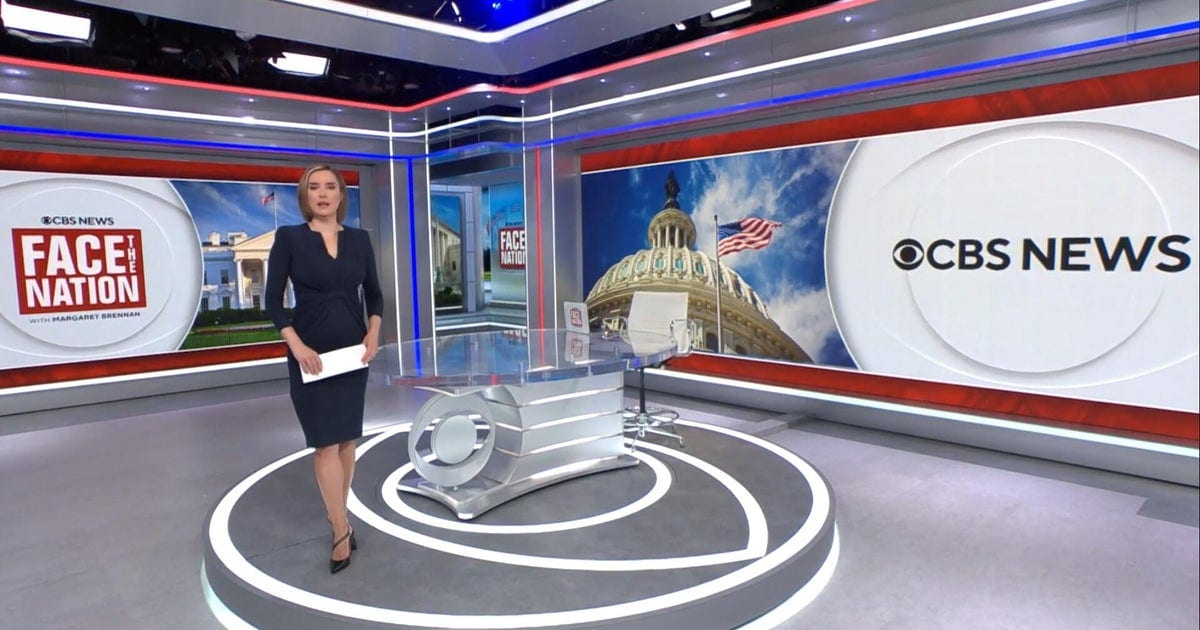
CBS News used its July 12 broadcast of "Face the Nation with Margaret Brennan" to tackle two fronts at once: the shock of Sen. Lindsey Graham’s absence in Republican politics and the growing anxiety over Iran and regional security. The full transcript, released by CBS News the same day, captures a conversation that is as much about political identity as it is about hard military calculus.
In a tightly framed hour, Republican Sen. Tim Scott reflected on Graham’s legacy, while Israeli Ambassador Michael Leiter and retired Gen. Frank McKenzie dug into how the Iran threat is reshaping security planning. For anyone trying to understand where Washington’s mood is right now, this episode is a clear snapshot.
Key facts
- Source
- CBS News
- Reported
- July 12, 2026
- Desk
- general
- Follow the story
- Spinn Radio Talk
Why Tim Scott’s tribute to Lindsey Graham matters in GOP politics
The headline segment in the July 12 edition centers on Republican Sen. Tim Scott publicly remembering Lindsey Graham. CBS News positions this as more than a personal eulogy. It is a way into the question of what Graham’s absence means for the Republican Party’s foreign policy and Senate dynamics, especially on issues where he was a loud and persistent voice.
Graham built his national profile on hawkish stances and close engagement with military and intelligence debates. Scott’s remembrance, aired on a marquee Sunday show and preserved in the full transcript, underlines how that voice shaped intra‑party debates on everything from defense spending to the use of force. Viewers scanning the transcript will see a Republican senator grappling in real time with the loss of a colleague who often set the tone for the party on national security.
For GOP watchers, the key takeaway is that this is not just about one senator’s passing. It is a marker of possible shifts ahead, as Republicans decide whether to echo Graham’s approach to intervention and alliances or chart something different without him steering the conversation.
“Scott’s remembrance doubles as an early test of who, if anyone, will fill Graham’s national security role inside the GOP.”
How "Face the Nation" framed the Iran threat on July 12
Alongside the tribute, CBS News highlights an extended conversation with Israeli Ambassador Michael Leiter and retired Gen. Frank McKenzie on what it calls “the Iran wa, ” a shorthand for the Iran war risk that now hangs over every Middle East briefing in Washington. The show uses that pairing to connect U.S. political debate with the calculus inside Israel’s security establishment and the Pentagon’s retired brass.
Leiter brings the view from Israel, where Iran’s regional posture is watched minute by minute, while McKenzie offers a former commander’s assessment of escalation, deterrence, and what military options actually look like in practice. Even without granular details, the very choice of guests signals the focus: a possible confrontation with Iran and what it would mean for U.S. forces, Israel’s security, and regional allies.
For viewers and readers working through the transcript, the useful detail is the juxtaposition itself. You have an ambassador speaking to immediate Israeli concerns alongside a retired general talking in broader strategic terms. That contrast helps frame the stakes of any move that could tip a tense standoff into open conflict.
“The program treats Iran not as an abstract “problem state” but as a live war risk tying Washington, Jerusalem, and U.S. commanders together.”
Spinn Radio
Follow live news on Spinn Radio
What McKenzie’s and Leiter’s roles tell us about U.S. and Israeli planning
Retired Gen. Frank McKenzie’s appearance signals that CBS News wants viewers thinking about force posture and planning, not just rhetoric. McKenzie, identified in the broadcast as a retired general, represents the cohort of former commanders who still shape how policymakers and the public imagine a conflict with Iran: missile defenses, maritime chokepoints, and the tempo of any air campaign.
Israeli Ambassador Michael Leiter functions as the diplomatic counterpart in the same conversation. By putting him in the chair opposite Brennan, the show cues audiences to pay attention to how Israel is messaging its concerns to Washington. The transcript offers a traceable record of where Israel publicly sets its red lines and how it wants the United States to respond.
The takeaway is that this is not a speculative talk show panel. The two guests sit at critical junctions in U.S. and Israeli decision‑making circles. Their exchange on national television, then captured word‑for‑word in the transcript, becomes part of the signal both governments send to Tehran about resolve and restraint.
“When a retired U.S. general and Israel’s ambassador talk Iran on a flagship Sunday show, it doubles as a message to Tehran.”
Why this "Face the Nation" episode is a snapshot of U.S. power and loss
Taken together, Tim Scott’s remembrance and the Iran segment make this July 12 broadcast a compact study in American power and vulnerability. On one side is the internal loss of an influential senator, Lindsey Graham, whose views helped shape years of war votes and oversight hearings. On the other side is an external adversary, Iran, that still tests U.S. and Israeli planning.
CBS News uses the familiar Sunday talk format to stitch these storylines into a single narrative. The political memory of Graham’s career shades the ongoing debate about how aggressively the United States should confront threats like Iran. That link is what makes this specific episode resonate: domestic political change and foreign risk are presented as part of one continuum.
For news followers, the practical value of the full transcript is simple. It offers a searchable, quotable record of how senior political and security figures are talking right now about loss, succession, and the possibility of war. It is the kind of document reporters, staffers, and engaged viewers will revisit as decisions unfold.
“The episode reads like a bridge between the era Graham helped define and the next phase of U.S. confrontation with Iran.”
Where to follow the fallout and continuing debate
The CBS News transcript dates this conversation to July 12, 2026, but the arguments inside it will keep echoing as Washington adjusts to Lindsey Graham’s absence and keeps watch on Iran. Party figures will continue to stake out how closely they align with Graham’s old positions, while security officials keep updating their playbooks for any sudden change on the Iran front.
For listeners who want to hear how those debates evolve in real time, Spinn Radio is tracking the story across politics and national security shows. You can follow live news and talk on Spinn Radio to hear fresh reaction, new interviews, and analysis that builds on the same themes Margaret Brennan put on air.
The key thing to watch next is not one specific vote or strike but the tone of the conversation. As more Republican voices step forward and more military and diplomatic players weigh in, transcripts like this one become an early guide to how the next chapter in U.S. foreign policy will be written.
“The story will not end with one Sunday show, and the July 12 transcript is likely to become a reference point as events move.”
Good to know
Frequently asked questions
What was the focus of the latest "Face the Nation" episode?
The episode centered on Tim Scott’s remembrance of Lindsey Graham and an in‑depth discussion of Iran and regional security. CBS News framed both as linked tests of U.S. leadership.
Who appeared on the program to talk about Iran?
Israeli Ambassador Michael Leiter and retired Gen. Frank McKenzie appeared to discuss Iran and its security implications. Their pairing connected Israeli concerns with a former U.S. commander’s perspective.
Why is Lindsey Graham’s absence significant in this broadcast?
Lindsey Graham’s absence is significant because he long shaped Republican foreign policy debates that intersect with issues like Iran. Tim Scott’s tribute highlighted the gap his passing leaves in GOP national security circles.
How can I follow ongoing reactions to the issues raised on the show?
You can follow ongoing reactions by tuning into news and talk programming on Spinn Radio. The platform continues to track political tributes and Iran coverage as the story develops.
Explore more on Spinn Radio: Follow live news and talk on Spinn Radio
Sources