Italy’s decision to put all its major cities on the highest heat health alert, reported Thursday by Yahoo, signals how severe Europe’s latest heatwave has become. On the same day, Hungary responded by turning off lights to save power, a visible sign that the heat is now straining infrastructure as well as public health.
The twin moves, reported on August 6 from Rome and Budapest, turn a spell of extreme weather into a region‑wide stress test for emergency systems, energy grids and daily life across the continent.
Key facts
- Source
- Yahoo
- Reported
- August 6, 2026
- Desk
- general
- Follow the story
- Spinn Radio Talk
What Italy’s unprecedented red alert actually means
Yahoo reports that on Thursday Italy took the unprecedented step of placing all its major cities on the highest level of health alert because of high temperatures. That single detail matters: authorities are not treating this as a normal hot spell but as a nationwide health emergency affecting every major urban center.
A full red alert typically triggers the most serious public‑health messaging and contingency planning, from warnings to stay indoors during peak heat to extra readiness for hospitals and emergency services. The key takeaway for anyone watching Italy is that this is not a patchwork of local advisories, it is a coordinated national response across the country’s biggest population hubs.
For residents and travelers, the practical reading is simple. If you are in a major Italian city right now, officials are operating on the assumption that the heat is dangerous for everyone, not only for vulnerable groups, and are calibrating their response accordingly.
“Italy has shifted from scattered advisories to a nationwide emergency footing across every major city.”
Why Hungary is turning off the lights during the heatwave
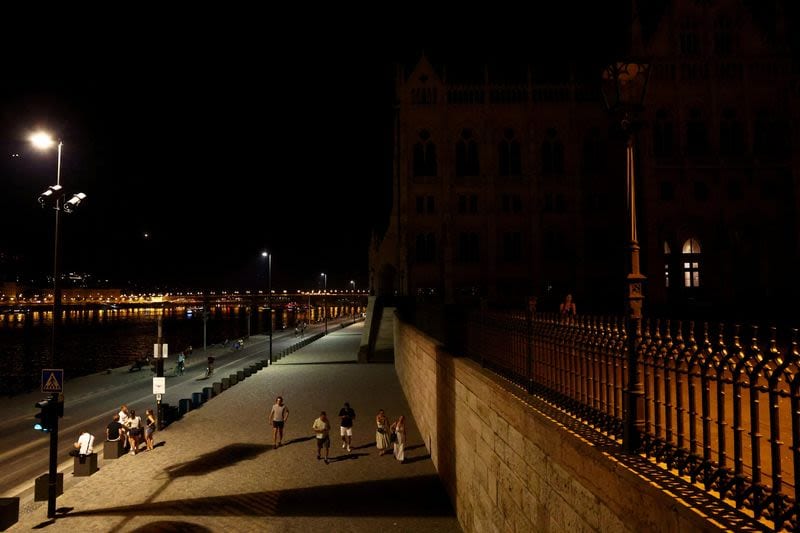
Alongside Italy’s health alerts, Yahoo reports that Hungary has responded to the heatwave by turning off lights. That is a strikingly visible move, and it points to a different kind of pressure: the impact of extreme temperatures on energy demand and infrastructure.
When a country starts cutting lighting during a heatwave, it usually reflects concern about electricity use and the capacity of the power system to cope with sustained, high demand. Even without specific figures, the signal from Budapest is that authorities are willing to dim public spaces or government buildings to keep the wider grid stable.
For people on the ground, the most noticeable change may not be the thermometer but the night‑time environment, from darker streets to less‑lit landmarks. It is a reminder that prolonged heat can reshape how a city feels and functions well beyond the hottest hours of the day.
“Hungary’s decision to turn off lights makes the heatwave visible even after dark.”
Spinn Radio
Follow live news on Spinn Radio
How Europe’s heatwave is testing health systems and grids
Read together, the measures in Italy and Hungary show how a single heatwave can hit countries in different but connected ways. Italy is putting its focus on health risk in densely populated cities, while Hungary is signaling stress on energy use by cutting back on lighting.
This kind of split response matters because it highlights two fronts where extreme heat is most likely to cause immediate damage: to people and to infrastructure. On the health side, the concern is heatstroke, dehydration, and the cumulative impact of nights that never really cool down. On the energy side, the risk is that sustained demand for cooling and basic services edges closer to what the grid can safely supply.
Even with limited public detail so far, the shared lesson across Europe is clear. When one government moves to a full urban red alert and another turns off lights, the heatwave has shifted from a weather story into a systems story that affects hospitals, transport, workplaces and households at the same time.
“This is no longer just about hot afternoons, it is about whether health systems and power grids can keep up.”
What is at stake now for Italy, Hungary and the wider region
The Yahoo reporting out of Rome and Budapest lands in early August, a peak holiday and travel period across Europe. That timing raises the stakes for both Italy and Hungary, where tourism, commuting patterns and public events all collide with the stress of extreme heat.
For Italy’s major cities, the highest alert level suggests that local authorities may be adjusting how they run public spaces, events and services, especially in central urban areas that trap heat. For Hungary, trimming lighting can have knock‑on effects for how people move around and use city centers after dark, as well as how comfortable they feel in public spaces during a period of strain.
Regionally, these early signals from two different capitals will be watched by other European governments that may be facing similar conditions. Any escalation, such as tighter limits on outdoor work or more aggressive power‑saving steps, would underline just how disruptive this heatwave has become for everyday life across the continent.
What to watch next as Europe’s heatwave story develops
From here, the key questions are whether Italy keeps every major city at the top alert level, and whether Hungary deepens or relaxes its lighting and power‑saving measures. Any shift in either direction will reveal how authorities judge the trajectory of the heatwave in the coming days.
Travelers, residents and anyone with family or friends in the region should keep an eye on updates from local officials, especially in Italy’s biggest cities and across Hungarian urban centers where public lighting is being cut. Changes can come quickly when conditions are deteriorating or finally easing.
For ongoing coverage, analysis and community discussion of how this heatwave is reshaping daily life, you can Follow live news and talk on Spinn Radio. Our news and talk stream will track new alerts, policy moves and the lived experience of listeners as Europe adjusts to another punishing spell of extreme heat.
“The next moves on health alerts and power use will show whether Europe is stabilising or bracing for an even tougher phase of this heatwave.”
Good to know
Frequently asked questions
What has Italy done in response to the latest heatwave?
Italy has placed all its major cities on the highest level of health alert due to high temperatures. Yahoo reports it as an unprecedented nationwide move for urban centers.
How is Hungary reacting to the extreme heat?
Hungary has turned off lights as part of its response to the heatwave. That visible step signals concern about energy use and infrastructure under heat stress.
Why are these European heatwave measures significant?
The Italian red alert and Hungary’s lighting cuts show the heatwave is hitting both public health and power systems. It has become a region‑wide stress test, not just a weather event.
Where can I follow live updates about the heatwave impact?
You can follow ongoing coverage on Spinn Radio’s talk programming. The story is flagged under breaking news so listeners can track new alerts and responses.
Explore more on Spinn Radio: Follow live news and talk on Spinn Radio
Sources