Leipzig/Halle airport is back in the headlines after Euronews reported on August 6 that an explosive drone was involved in a fresh sabotage scare at the site, one of Europe’s most important cargo hubs. The latest incident has renewed questions about how a single airfield has become such a recurring target.
Because Leipzig/Halle doubles as both a commercial freight platform and a key node for military transport, each reported attempt to disrupt it reverberates far beyond eastern Germany. Security, logistics and defense planners are now reassessing why saboteurs keep circling the same runway and what a successful strike could mean for supply chains and military operations.
Key facts
- Source
- Euronews
- Reported
- August 6, 2026
- Desk
- general
- Follow the story
- Spinn Radio Talk
Why Leipzig/Halle airport matters so much to cargo traffic
Leipzig/Halle is described as one of Europe’s most important cargo airports, which explains why any incident there instantly resonates across the logistics sector. Cargo hubs like this concentrate high volumes of freight, connecting manufacturers, retailers and express carriers through dense networks of flights. When something disrupts a node of that scale, even briefly, it risks delays and rerouted shipments far beyond the airport’s immediate catchment area.
The airport’s status as a major cargo platform makes it a valuable and visible target. Sabotage attempts, or even the threat of them, can ripple through time-sensitive delivery chains, from consumer goods to industrial components. That vulnerability is exactly why incidents such as the reported explosive drone are treated as more than local security stories; they are tests of how resilient Europe’s freight arteries really are.
For listeners tracking how news intersects with business and policy, Leipzig/Halle is a reminder that what happens at a single runway can shape everything from just‑in‑time manufacturing to online retail timelines. Saboteurs appear to understand that leverage.
“What happens at a single runway in Leipzig can echo across Europe’s entire delivery timetable.”
How the airport’s military role raises the stakes
Euronews highlights another reason the airport keeps attracting hostile attention: Leipzig/Halle is not only a cargo heavyweight, it is also a key hub for military transport. That second role significantly raises both its strategic value and its exposure. Aircraft moving troops, equipment or humanitarian supplies rely on predictable, secure operations, and any sabotage attempt can complicate that calculus.
Targeting a site linked to military transport turns what might otherwise be a local infrastructure issue into a matter of national and allied security. Even if an explosive drone is intercepted or neutralized, the message is clear: adversaries or agitators see this airport as a pressure point in military logistics. That perception alone can force security upgrades, route diversions or shifts in how sensitive cargo is staged and handled.
The overlap between cargo and military functions also means the airport sits at the intersection of commercial and defense planning. When an incident hits Leipzig/Halle, it is not only aviation authorities who pay attention; military logisticians and political leaders are also recalculating their risk maps in real time.
“At Leipzig/Halle, every crate and every military pallet share the same runway, and that shared surface is exactly what saboteurs try to exploit.”
Spinn Radio
Follow live news on Spinn Radio
Why explosive drones are a growing tool for saboteurs
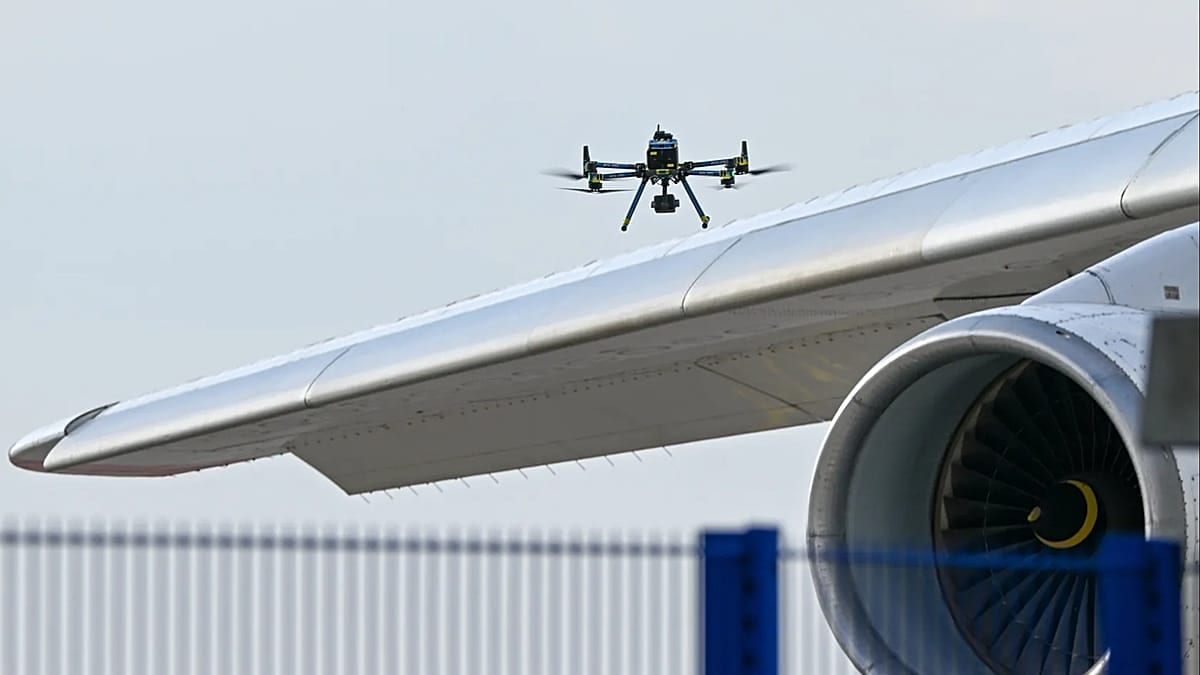
The reported use of an explosive drone around Leipzig/Halle fits a wider pattern in which small, remotely operated devices have become a preferred tool for sabotage. Drones allow attackers to probe airspace, test defenses and potentially reach sensitive zones without being physically present. For a sprawling cargo and military hub, that creates a diffuse perimeter problem: threats may not come through fences or checkpoints but from above and at a distance.
Even when such devices are detected early, the operational impact can be significant. Airspace restrictions, temporary closures or diverted flights can follow, all of which strain cargo scheduling and military timetables. Repeated incidents also have a psychological effect, signaling to crews and planners that the site is under sustained scrutiny by hostile actors.
The Leipzig/Halle case underscores that drone-based sabotage is no longer a hypothetical risk to major airports linked to military activity. It is an operational concern that authorities, carriers and armed forces have to factor into how they run and protect critical hubs.
“An explosive drone is cheap, remote and disruptive, which is exactly why a site like Leipzig/Halle has to assume it will see more of them.”
Why Leipzig/Halle keeps returning as a sabotage target
The Euronews reporting notes that this is not the first time Leipzig/Halle has become a focus for sabotage attempts, which raises a blunt question: why this airport, and why so often? Its twin identity as a leading European cargo hub and a key military transport node makes it both symbolically and practically attractive. Disrupting such a site sends a message about economic vulnerabilities and about the exposure of military logistics, all in one move.
Repeated attention also suggests that saboteurs believe they can keep testing the airport’s defenses. Large facilities that handle round‑the‑clock freight and military operations must balance tight security with the need to move goods and aircraft efficiently. That balance can create gaps or at least the perception of gaps. Each new reported incident at Leipzig/Halle becomes a kind of stress test, not only for the airport’s own safeguards but for broader European aviation and security coordination.
For observers, one concrete takeaway is that the pattern itself is now a storyline. Leipzig/Halle is no longer just a one‑off case of sabotage risk. It is a recurring example that policymakers and analysts will cite when debating how to protect dual‑use infrastructure across the continent.
“Leipzig/Halle is not an outlier anymore; it is the case study everyone reaches for when talking about sabotage of dual‑use airports.”
What to watch next at Leipzig/Halle and across Europe
With Euronews flagging the latest explosive drone scare, the next phase of this story will center on how authorities adapt. Observers will be watching for changes in drone detection systems, airspace rules and the way cargo and military movements are scheduled to limit potential disruption. Any sustained shift in how Leipzig/Halle operates would signal that planners see this as a long‑term problem, not a one‑off incident.
The airport’s experience also feeds into a wider European conversation about how to secure essential transport hubs that serve both civilian and military needs. Other cargo and military airports will be looking at Leipzig/Halle as a warning and as a template for response, whether that means coordinated exercises, legal changes around unmanned aircraft or greater sharing of intelligence on emerging threats.
For real‑time discussion of how this and other breaking stories evolve, you can Follow live news and talk on Spinn Radio. The situation around Leipzig/Halle is still developing, and the way security and logistics communities respond will shape how resilient European air transport looks in the months ahead.
“How Europe responds to Leipzig/Halle will tell us how ready it is for a future where drones and sabotage are routine risks, not rare shocks.”
Good to know
Frequently asked questions
What is special about Leipzig/Halle airport?
Leipzig/Halle is one of Europe’s most important cargo airports and a key hub for military transport, which gives it major strategic weight for both commerce and defense.
Why are saboteurs targeting this German cargo hub?
Saboteurs target Leipzig/Halle because hitting a major cargo and military transport hub can disrupt supply chains and military logistics at the same time, amplifying the impact of any attack or attempted attack.
How do explosive drones fit into the airport incidents?
Explosive drones are reported as part of the latest incident at Leipzig/Halle, reflecting a broader shift toward small, remotely operated devices as tools for sabotage around large, complex transport hubs.
What should we watch for next after the latest drone scare?
After the latest drone scare, watch for changes to security and airspace rules at Leipzig/Halle and similar European airports, as authorities try to harden critical cargo and military transport nodes against repeat attempts.
Explore more on Spinn Radio: Follow live news and talk on Spinn Radio
Sources