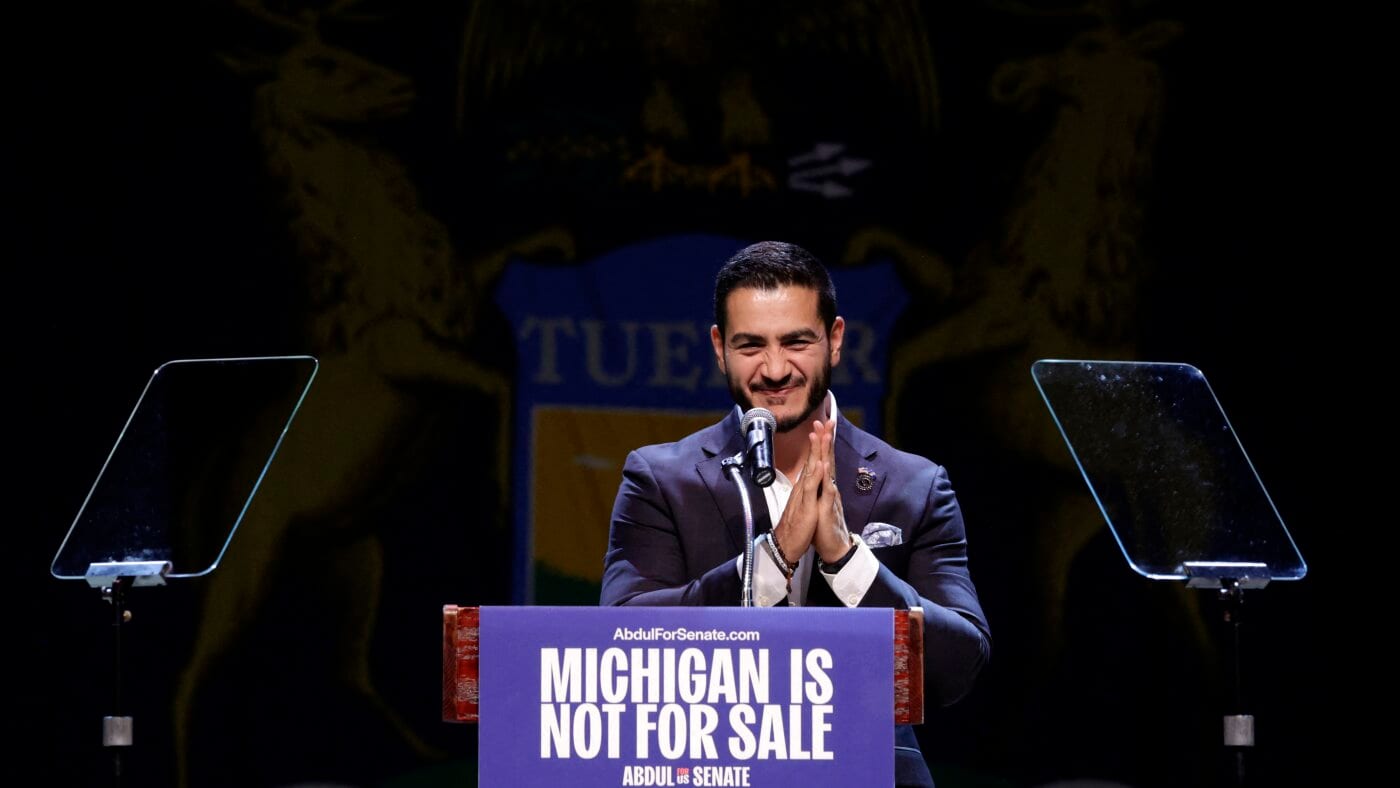
NPR reports that Abdul El-Sayed has captured Michigan’s Democratic Senate primary, securing a place on the November ballot against Republican Congressman Mike Rogers and reshaping one of the country’s key midterm contests.
On the same day, NPR says Dr. Anthony Fauci is confronting a contempt of Congress vote, a move that keeps pandemic-era politics at the center of Washington and underscores how health policy, partisanship, and the coming elections remain tightly intertwined.
Key facts
- Source
- NPR
- Reported
- August 6, 2026
- Desk
- general
- Follow the story
- Spinn Radio Talk
What Abdul El-Sayed’s Michigan primary win sets up for November
According to NPR, Abdul El-Sayed has won Michigan’s Democratic Senate primary, giving Democrats a clarified standard-bearer in a state that both parties treat as a midterm priority. His victory means he will now face Republican Congressman Mike Rogers, a matchup that pits a Democratic newcomer to the Senate race against a sitting member of the House with an established political profile. Voters who care about the Senate balance of power will want to watch how El-Sayed introduces himself statewide and how Rogers responds now that his opponent is official.
The Michigan result matters beyond state lines because every competitive Senate seat shapes what the next Congress can do on spending, judicial nominations, and oversight. With El-Sayed now locked in, both parties can pour money and messaging into a contest that will help determine which side controls the Senate agenda after the midterms. For listeners tracking national politics, this is the race to circle on the midterm map, especially as both candidates test messages on the economy, health care, and national direction.
If you want to stay current on how the El-Sayed vs. Rogers race evolves between now and the midterms, you can Follow live news and talk on Spinn Radio for updates and analysis as the campaigns shift into general-election mode.
“El-Sayed’s win turns Michigan from a guessing game into a head-to-head fight that will shape the next Senate map.”
Who Mike Rogers is in Abdul El-Sayed’s new general election fight
NPR notes that El-Sayed will face Republican Congressman Mike Rogers in November, which instantly defines the Michigan Senate contest as a clash between a Democratic challenger and a Republican already serving in the House. While NPR’s reporting does not detail Rogers’ committee posts or issue priorities, the simple fact that he is a sitting congressman gives him national connections, fundraising networks, and a voting record that Democrats are likely to scrutinize as the campaign unfolds.
For voters, the contrast now becomes clearer: a Democratic nominee emerging from a primary contest against a Republican with existing name recognition and a Washington footprint. That dynamic usually forces both sides to sharpen their arguments early. Expect national groups to frame the race as a referendum on the next Senate’s stance toward the White House agenda and on how Michigan wants to be represented in key debates over federal policy.
“With Mike Rogers on the ballot, Michigan’s Senate race moves from abstract speculation to a concrete choice between a fresh nominee and a sitting congressman.”
Spinn Radio
Follow live news on Spinn Radio
Why Anthony Fauci is facing a contempt of Congress vote today
On the same news day, NPR reports that Dr. Anthony Fauci is facing a contempt of Congress vote, a rare and politically charged step that keeps him at the center of partisan disputes long after the early pandemic response. While NPR’s summary does not spell out the underlying allegations, a contempt vote typically arises when lawmakers say a witness has failed to comply with their demands in an investigation or hearing. The move signals that key members of Congress want to escalate their confrontation with a figure who became a household name during the COVID era.
The timing of the vote matters because it overlaps with the ramp-up to the midterms, when lawmakers frequently use high-profile oversight battles to energize their base voters. A contempt vote involving Fauci is likely to be used as a symbol, either of accountability for government decision-making or of what critics will call political score-settling. For listeners, the key takeaway is that this is not just about one official’s behavior, it is about how Congress wants to define its investigative powers around health policy and executive-branch experts.
“A contempt vote on Fauci is as much about Congress flexing its oversight muscle as it is about one man’s testimony.”
How these twin storylines shape the midterm political climate
The NPR report ties together two storylines that point in the same direction: increasingly combative politics as the midterms draw closer. Abdul El-Sayed’s primary win gives Democrats a clear Senate hopeful in Michigan, while the Fauci contempt vote shows how health and science debates still animate partisan conflict in Washington. Both developments will influence how campaigns talk about trust in institutions, from the Centers for Disease Control and Prevention to Congress itself.
Voters weighing their choices in Michigan and beyond will hear constant references to the economy, public health, and accountability in Washington. Even though NPR’s summary does not detail specific policy plans, it is reasonable to expect that candidates in competitive races will cite the Fauci proceedings as either proof that oversight is working or evidence of political excess. The Michigan Senate race, sitting alongside the Fauci controversy, becomes a barometer of how much appetite there is among voters for confrontation versus compromise in the next Congress.
“Michigan’s Senate fight and the Fauci contempt clash are not separate threads, they are part of the same fabric of hard-edged midterm politics.”
What to watch next in Michigan, Congress, and national coverage
From here, the next big questions are whether Abdul El-Sayed and Mike Rogers turn their contest into a referendum on national issues or keep it anchored in Michigan-specific concerns, and how the House handles the outcome of the Fauci contempt vote. NPR’s reporting marks today as a key pivot point, but it will take weeks for polling, fundraising, and additional hearings to show how the public is reacting.
For now, the firm takeaway is that both the Michigan Senate race and the Fauci confrontation in Congress are moving into more intense, public-facing phases. As campaigns sharpen their contrasts and congressional leaders decide what to do after the contempt vote, listeners who want context beyond the headlines can keep Follow live news and talk on Spinn Radio bookmarked for real-time conversation, expert interviews, and ongoing coverage across politics and policy.
“Today’s developments are an opening salvo, not the final word, on how voters and lawmakers will navigate a volatile midterm season.”
Good to know
Frequently asked questions
Who won the Michigan Democratic Senate primary?
Abdul El-Sayed won the Michigan Democratic Senate primary. NPR reports that his victory sets up a general election matchup with Republican Congressman Mike Rogers.
Who will Abdul El-Sayed face in the general election?
Abdul El-Sayed will face Republican Congressman Mike Rogers in the general election. That pairing turns Michigan’s Senate race into a head-to-head battle with national implications.
Why is Anthony Fauci facing a contempt of Congress vote?
Anthony Fauci is facing a contempt of Congress vote because lawmakers have moved to escalate a dispute over his cooperation with their oversight, according to NPR. The vote reflects how pandemic-era policy fights are still playing out in Washington.
How are the Michigan Senate race and the Fauci vote connected politically?
Both the Michigan Senate race and the Fauci contempt vote highlight rising political tension as the midterms approach. They show how elections, health policy, and congressional oversight are converging into a single, high-stakes national debate.
Explore more on Spinn Radio: Follow live news and talk on Spinn Radio
Sources