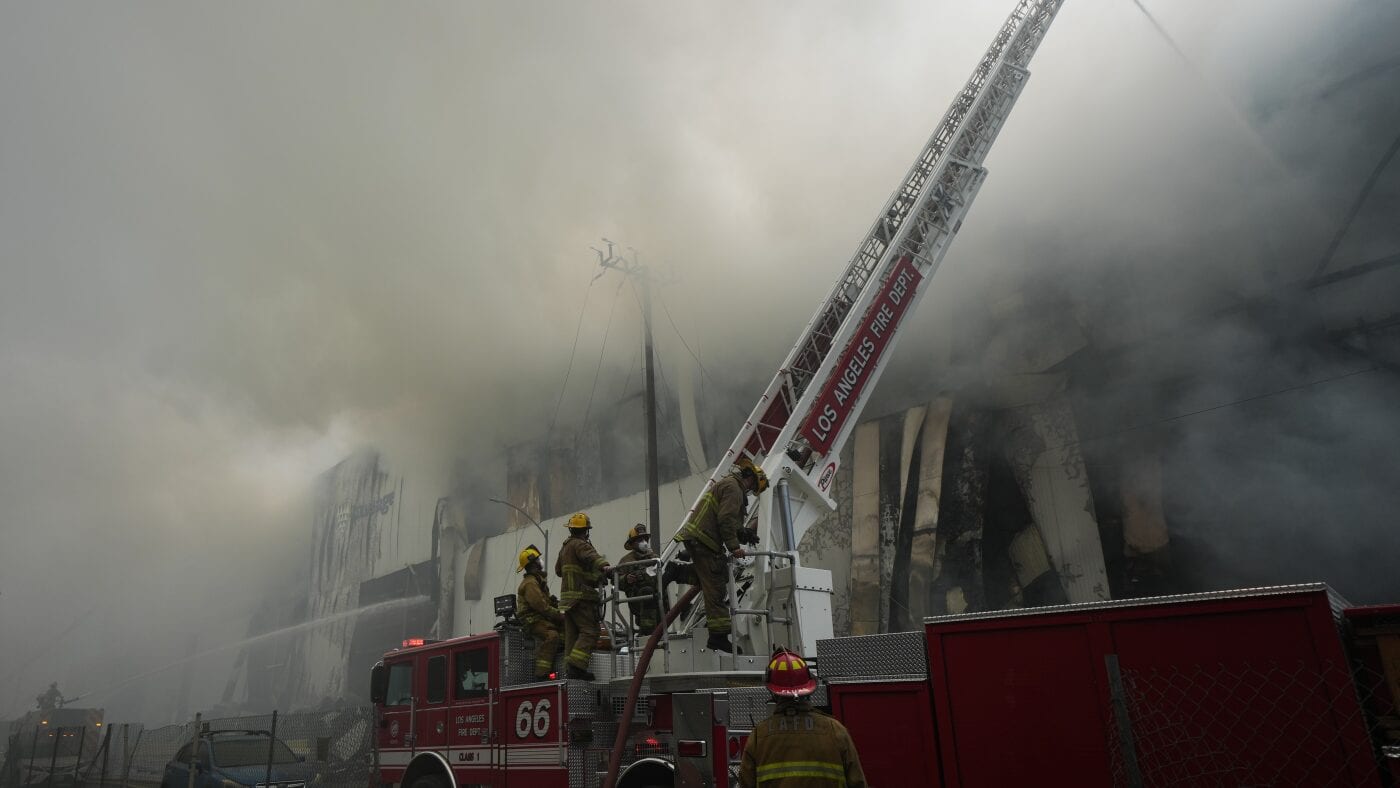
A cold storage warehouse fire in Los Angeles is still burning six days after it began, with NPR reporting that firefighters remain on scene at a massive frozen-food facility near downtown. The long-running blaze has turned a routine industrial incident into a protracted emergency that is drawing national attention.
Syndicated headlines from outlets including the Boulder Daily Camera, The Boston Herald, the Norfolk Virginian-Pilot and the Hartford Courant on Monday signal how widely the story has traveled as authorities work to fully control the fire and assess its impact.
Key facts
- Source
- NPR
- Reported
- June 23, 2026
- Desk
- general
- Follow the story
- Spinn Radio Talk
Where the LA cold storage warehouse fire stands after six days
According to NPR, firefighters are still actively battling the blaze at the frozen-food storage complex near downtown Los Angeles six days after it first broke out. That time frame is the clearest sign of how difficult the fire has been to knock down inside a facility built to keep products at extreme cold and packed with industrial infrastructure.
Cold storage warehouses can trap heat and smoke in areas that are hard for crews to reach, which helps explain why the incident has stretched nearly a week and remains a live public-safety concern. The continued response means nearby residents and workers are still seeing fire engines, equipment and smoke around the site rather than a quick return to normal.
National reprints of NPR’s coverage in papers such as The Boston Herald and the Hartford Courant underscore that this is no routine warehouse fire but a stubborn, newsworthy event that has yet to be fully wrapped up.
“Six days on, the fire is still a live incident, not a tidy after-action report.”
Why a frozen-food warehouse fire is so hard to fight
The facility at the center of this incident is a large frozen-food storage warehouse, a type of building that can pose unusual challenges for firefighters. Cold storage spaces are typically compartmentalized and tightly sealed to preserve low temperatures, which can make it harder to ventilate heat and smoke once a fire takes hold.
Inside, there are likely miles of racking, insulation and refrigeration systems that complicate access for hose lines and aerial streams. Even when the most visible flames are knocked down, crews can spend days tracking down smoldering pockets inside walls, ceilings or stacked goods, which aligns with NPR’s description of a firefight still underway after six days.
The fact that Los Angeles crews remain on scene nearly a week in is a strong signal that they are still hunting and cooling those hotspots so they do not flare back up once they leave the site.
“In a refrigerated maze of sealed rooms and stacked goods, hotspots can hide long after the first flames die down.”
Spinn Radio
Follow live news on Spinn Radio
What this means for nearby businesses and food supply
A massive frozen-food warehouse near downtown Los Angeles is not just another industrial building. It is a key node in the regional logistics chain, and its ongoing fire likely affects how products move into restaurants, groceries and institutional kitchens that rely on large-scale storage.
With firefighters still working the site six days in, it is reasonable to expect disruption for companies that used the facility, whether that means rerouting shipments, leaning on smaller backup warehouses or absorbing delays. While NPR’s initial reporting focuses on the firefight itself, the national pickup by outlets like the Norfolk Virginian-Pilot and Boulder Daily Camera reflects broader concern about how an incident like this can ripple out beyond city limits.
For now, the main story remains the active emergency response, but as the smoke clears, the status of frozen inventory, structural damage and long-term business impacts will become central questions for Los Angeles and its food distribution network.
What investigators will look for once the fire is out
NPR’s report establishes the scale and duration of the blaze. The next phase will belong to fire and building investigators who will want to understand how a fire in a cold storage environment grew into a nearly weeklong incident near the heart of Los Angeles.
They will typically examine where in the warehouse the fire appears to have started, how it spread through refrigeration systems, insulation or stored goods and whether any mechanical or human factors played a role. The prolonged firefight also raises questions about how existing fire protection systems inside the warehouse performed and whether they slowed the incident or left gaps that crews had to overcome.
Because syndicated coverage has appeared from the Boston Herald to the Hartford Courant, any findings about warehouse safety standards or recommended changes are likely to draw national interest, not just local scrutiny. Those details will shape future debates over how cold storage facilities are engineered and inspected in dense urban areas.
“The nearly weeklong battle guarantees that what happened inside this warehouse will be studied far beyond Los Angeles.”
What to watch next and where to follow updates
For now, the central fact is that Los Angeles firefighters are still on the scene of a massive frozen-food warehouse blaze six days after it began, as first highlighted by NPR and echoed in outlets across the country. The next key developments to watch are when officials declare the fire fully out, whether any injuries or major structural failures are reported and how city leaders describe the impact on nearby neighborhoods and businesses.
Once the immediate firefight ends, attention will shift to damage assessments, cleanup and any early findings on how the incident started. Those pieces usually emerge over days or weeks rather than hours, especially with a complex industrial site. Because the story has already broken out of the local news cycle into national syndication, follow-up reporting on causes and consequences is likely to continue.
For listeners who want to track those updates in real time and hear broader analysis of how this kind of industrial fire affects cities and supply chains, keep an ear on Follow live news and talk on Spinn Radio. Our news and talk stream will spotlight new developments as officials release them.
Good to know
Frequently asked questions
What is happening at the Los Angeles cold storage warehouse?
Firefighters are still battling a fire at a massive frozen-food storage facility near downtown Los Angeles six days after it started, according to NPR. The prolonged response shows how difficult this particular industrial blaze has been to fully extinguish.
Why has the warehouse fire in LA lasted nearly a week?
The fire has stretched to six days because it is burning inside a large, complex frozen-food warehouse that is challenging to access and fully cool. Cold storage layouts and materials can hide hotspots, which keeps firefighters on scene long after initial flames are knocked down.
Who first reported the ongoing LA warehouse fire?
NPR reported that firefighters are still battling the blaze at the massive frozen-food storage facility near downtown Los Angeles. That account has since been picked up by outlets including the Boulder Daily Camera, The Boston Herald, the Norfolk Virginian-Pilot and the Hartford Courant.
How can I follow updates on the LA frozen-food warehouse fire?
You can follow developments in the LA warehouse fire by tracking NPR’s coverage and syndicated reports in regional newspapers. For ongoing audio coverage and analysis, you can also listen to news programming on Spinn Radio.
Explore more on Spinn Radio: Follow live news and talk on Spinn Radio