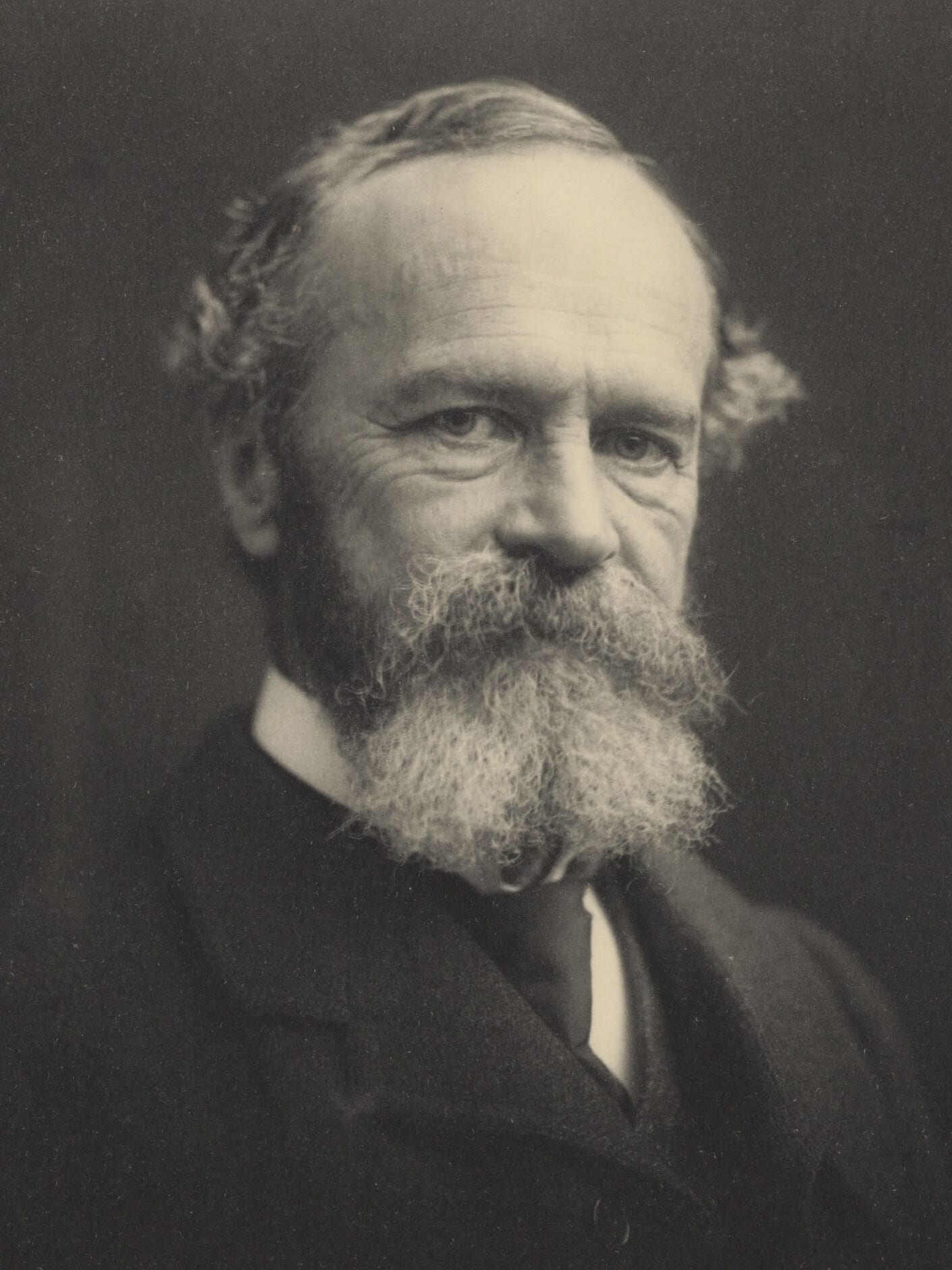
William James might seem far from this week’s headlines, yet his questions about how we experience reality and make sense of chaos feel strangely tuned to the present. Listening to him in audiobook form, you hear a classic American voice working through doubt, belief and perception with a clarity that cuts through today’s noise.
Spinn Radio hosts James not as a museum piece but as a living interlocutor. An American philosopher and psychologist, often called the father of American psychology, he speaks from a late 19th‑century moment when science, religion and philosophy were colliding, and his work still feels made for listeners who like to argue with what they hear.
Key facts
- Era
- Classic
- Genres
- classics, philosophy
- Country
- USA
- Lived
- 1842-1910
- Notable works
- The Varieties of Religious Experience
- Audiobooks on Spinn Radio
- Essays in Radical Empiricism
Who William James was and why his voice matters
William James lived from 1842 to 1910, working in the United States at a time when psychology was just crystallising into a formal discipline. He was the first educator to offer a psychology course in the country, which already tells you something about his instinct to explain, to teach and to invite ordinary readers into complex ideas. That impulse carries directly into the audiobooks you can stream today, where his prose feels built for a patient, attentive listener rather than a specialist locked in a seminar room.
James moves between classics and philosophy, between case study and almost literary scene. In print he is one of the leading thinkers of the late 19th century, and in audio you can hear why he became one of the most influential philosophers of his era. His sentences unfold like someone thinking aloud at your kitchen table, weighing options, testing examples, revising himself in real time. That intimacy is exactly what makes a William James audiobook feel oddly contemporary, even when the subject is radical empiricism or religious experience.
If you are new to him, start by browsing William James on Spinn Radio. Seeing his work gathered in one place helps you grasp the sweep of a career that ranged from psychology lectures to searching philosophical essays.
“His sentences unfold like someone thinking aloud at your kitchen table, weighing options and testing examples in real time.”
The big ideas behind William James’s classic works
William James is widely associated with The Varieties of Religious Experience, a study that approaches belief not from church doctrine but from what people actually feel and report. Even if you only know the title, the phrase captures one of his enduring themes: experience comes first. Dogma, theory and system trail behind what human beings actually live through. In that sense James anticipates modern psychology and the way contemporary listeners talk about “lived experience” as a kind of data.
Across his classics and philosophy writing, James keeps circling a few core questions. What counts as real if all we ever meet are our own experiences of things? How much of what we call truth is tied to the practical consequences of holding a belief? How does the texture of consciousness change when we are absorbed in work, prayer or crisis? These are abstract questions, but in James’s hands they keep resolving into concrete images: a person wrestling with faith, a scientist weighing evidence, a reader trying to decide what to believe next.
For today’s listener, the key takeaway is simple. You do not need to agree with James’s answers to find his questions useful. Queue up any discussion of religious experience or empiricism and you will hear a mind trying to meet experience where it really happens, in the messy middle of ordinary life.
“You do not need to agree with James’s answers to find his questions useful.”
Spinn Radio
Explore William James on Spinn Radio
What to know about Essays in Radical Empiricism on Spinn Radio
Among the audiobooks available on Spinn Radio, Essays in Radical Empiricism is the most direct way to hear James at his most philosophical. The collection gathers pieces where he presses the idea that experience is the basic material of reality, not a thin veil covering some hidden, separate world. For anyone interested in how we stitch together perceptions, memories and expectations into something we call “the world, ” these essays offer a front row seat.
Listening rather than reading, you will notice how often James returns to the same key terms, slightly rephrased or reangled. That repetition, which can feel dense on the page, becomes almost musical in an audiobook. The runtime keeps you with him long enough to follow the rhythm of his argument as it circles and tightens. Without rushing, the narrative voice has room to mark his shifts in tone, from tentative to confident, from speculative to almost conversational.
The practical takeaway: treat Essays in Radical Empiricism as a sustained listening session with a single, large question. Stream it when you have time to follow a chain of thought. Use Spinn Radio’s player controls to pause, rewind a paragraph and let a tricky sentence land, just as you would replay a knotty verse in a favourite song. When you are ready, you can jump straight in via Listen to Essays in Radical Empiricism.
“Treat Essays in Radical Empiricism as a sustained listening session with a single, large question.”
How William James’s era shapes the listening experience
James speaks from a Classic era of 1842-1910, yet he sounds less like an antique voice and more like someone living through the first modern information overload. Electricity, new medical theories, shifting religious authority, all of that turbulence hums in the background of his work. When you listen now, in an age of digital feeds and constant updates, his worry about how we sort and trust our experiences feels instantly legible.
Knowing that he wrote from the United States in the late 19th century also helps you hear his cadence. There is a specific American plainness in his style, even when the subject is metaphysics. He avoids needless ornament, preferring concrete examples and patient exposition. In audio, that plainness is a gift. A good narrator can lean into his pauses and pivots so you feel the weight of a phrase like “radical empiricism” without being pushed out by jargon.
The key listening tip here is to keep his historical context in mind without treating it as a barrier. When he describes religious experience or psychological states, remind yourself that he worked before many modern theories existed. That gap can make the audio more engaging, as you mentally place his insights next to your own 21st‑century vocabulary.
“He sounds less like an antique voice and more like someone living through the first modern information overload.”
Making William James part of your regular listening
William James’s work sits at the crossroads of classics, philosophy and early psychology, which makes it ideal for listeners who like to be slightly challenged by what is in their ears. Rather than treating his audiobooks as one‑off academic assignments, you can fold them into your regular listening the way you would a long podcast series. Take an essay at a time, treat each one as a focused conversation about how and why we believe what we do.
Start with the works that match your current curiosity. If you are drawn to questions of belief and doubt, the spirit of The Varieties of Religious Experience will resonate, even if you encounter it via commentary and reference rather than in a dedicated audiobook. If you are more interested in perception and reality, Essays in Radical Empiricism is waiting on Spinn Radio with a set of carefully arranged arguments that reward close attention.
Either way, keeping James in your listening queue means keeping a Classic era voice in dialogue with your own. Explore more by browsing the wider catalogue through the Browse the authors directory, then come back to James when you want a reminder that philosophy can be a lived, felt experience, not just an exam subject.
“Keeping James in your listening queue means keeping a Classic era voice in dialogue with your own.”
Good to know
Frequently asked questions
Who was William James?
William James was an American philosopher and psychologist who lived from 1842 to 1910. He became one of the leading thinkers of the late 19th century and is often called the father of American psychology.
When did William James live?
William James lived from 1842 to 1910. His lifetime places him in a Classic era when psychology and philosophy were rapidly evolving in the United States.
What is William James known for in philosophy and psychology?
William James is known for being one of the most influential philosophers of the late 19th century and the father of American psychology. He was the first educator to offer a psychology course in the United States and wrote notable works such as The Varieties of Religious Experience.
What are William James’s most notable works?
William James’s most notable work listed here is The Varieties of Religious Experience. On Spinn Radio you can also listen to his Essays in Radical Empiricism as an audiobook.
Where can I listen to William James audiobooks?
You can listen to William James audiobooks on Spinn Radio, including Essays in Radical Empiricism. His author page is available via William James on Spinn Radio in the books section.
Explore more on Spinn Radio: William James on Spinn Radio · Browse the authors directory · Listen to Essays in Radical Empiricism