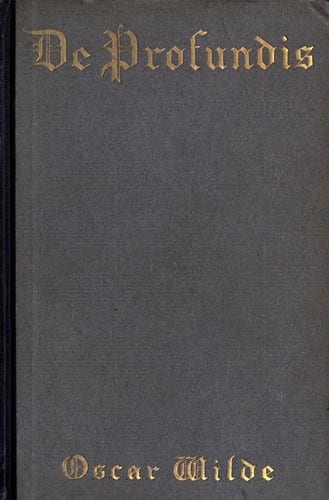
De Profundis by Oscar Wilde is not a typical Victorian classic, it is a private letter that somehow slipped into public life and, in audiobook form, it feels startlingly contemporary. Written during his two-year imprisonment for “gross indecency, ” it captures a mind picking through the ruins of love, fame and self-respect in real time.
He addresses Lord Alfred Douglas directly, sorts through the affair that helped destroy him, and measures the distance between the glittering public figure and the broken man in a cell. As a short work in four chapters, De Profundis becomes an unusually concentrated listen: one voice, one relationship, one catastrophic fall, compressed into a few searing hours of autobiography.
Key facts
- Author
- Oscar Wilde
- Genre
- Biography & Autobiography
- Published
- 1913
- Language
- English
- Chapters
- 4
What is De Profundis actually about?
At its simplest, De Profundis is a long letter from Oscar Wilde to Lord Alfred Douglas, written while Wilde was in prison and published in a 1913 edition. It belongs to Biography & Autobiography, not to fiction or drama, because Wilde is methodically sifting through the facts of his own life and the choices that led him to a cell.
The premise is brutally direct. Wilde uses the letter to "sort out his life" and his love toward Douglas, turning over key moments in their relationship and asking what was real devotion and what was self-deception. It reads as a farewell, a final attempt to speak to Douglas with complete honesty after years of pose and performance.
The key takeaway: go in expecting confession rather than comedy. If you know Wilde from epigrams and drawing-room plays, De Profundis introduces a different register, one where the jokes are mostly gone and what remains is a painstaking self-autopsy of a love affair that has already burned everything down.
“Go in expecting confession rather than comedy: this is Wilde performing a painstaking self-autopsy of a love affair that has already burned everything down.”
Oscar Wilde, 1913, and the shock of a private letter
By the time De Profundis appeared in a 1913 Methuen & Co. edition, Oscar Wilde’s story was already infamous. What this publication added was not new scandal but a new perspective: Wilde in his own voice, looking back at his downfall from inside the wreckage.
The 1913 text that most public-domain audiobooks use is shorter than later versions. Editors later restored more material, but the most complete editions are still in copyright in the U.S.A., which is why many recordings, including this one, stick to that early Methuen text. That limitation creates a particular portrait: less sprawling, more concentrated on the core confession and farewell.
So when you listen, you are not hearing every word Wilde wrote in prison. You are hearing the version that circulated when memories of his trial and imprisonment were still fresh in the public mind. That historical frame matters. It means the audiobook captures not just Wilde’s voice, but the way early twentieth-century readers first encountered it.
“You are not hearing every word Wilde wrote in prison, you are hearing the version that first shocked readers who still remembered the scandal.”
Spinn Radio
Listen to De Profundis on Spinn Radio
Why De Profundis endures as biography and autobiography
De Profundis sits in Biography & Autobiography, and that genre label is part of why it endures. Wilde is not writing abstract essays on art or morality, he is threading those ideas through scenes from his own life and his tangled relationship with Douglas. That blend of confession and reflection feels strikingly modern.
Because it is short and divided into four chapters, the work has a tight arc. You hear Wilde move from anger and accusation into self-critique and, eventually, a kind of weary acceptance. Many readers and listeners return to it not for gossip about Douglas, but to trace that psychological movement: how a brilliant, disgraced man narrates his own fall and tries to salvage meaning from it.
The enduring hook is simple: this is Wilde without the mask. For anyone who knows the plays and wants the person behind the persona, De Profundis is the one text that feels like being shut in a room with him while he finally stops performing.
“For anyone who knows the plays and wants the person behind the persona, De Profundis feels like being shut in a room with Wilde while he finally stops performing.”
What listening to De Profundis feels like as an audiobook
As an audiobook, De Profundis turns from a historical document into something surprisingly intimate. The letter form is key. Wilde is always addressing "you, " which on the page is Douglas, but in your headphones easily becomes you, the listener, pulled into the role of confidant and witness.
The recording based on the LibriVox text uses the 1913 English edition, and its structure in four chapters gives you natural stopping points. You can take it in over a few evenings, one chapter at a time, or let all four play straight through for a more immersive experience, where the emotional progression feels like a single extended conversation.
Because the prose is dense and reflective, it rewards careful listening. This is not background audio for chores. It works best when you can give it active attention, almost as if you were listening to a long voice message from a friend who has finally decided to tell the whole story of a disastrous relationship. The takeaway: if you treat it like live testimony rather than distant literature, the audiobook lands with far more force.
“Treat De Profundis like live testimony rather than distant literature and the audiobook lands with far more force.”
How to approach De Profundis if you know only Wilde’s wit
If your idea of Oscar Wilde is all aphorisms and perfectly polished paradoxes, the tone of De Profundis can be a shock. The humor that made him famous barely surfaces. In its place is a sustained attempt to look at his life and his love with unflinching clarity.
One helpful way in is to remember that this is non-fiction. Wilde is not constructing a clever fictional mask, he is working within the constraints of his own biography and of prison. The letter’s honesty, its repetitions, even its occasional imbalance, become part of that experience. You are listening to a man who has had almost everything taken away and is still trying to make sense of what remains.
The practical takeaway: do not listen to De Profundis looking for the next famous quote. Listen for the shifts in feeling as he moves from blame to responsibility to a kind of spiritual reorientation. That emotional contour is what gives this short work its lasting power in audio.
Good to know
Frequently asked questions
Who wrote De Profundis?
De Profundis was written by Oscar Wilde. It is a deeply personal letter he composed while imprisoned, later published as a short autobiographical work.
What genre is De Profundis by Oscar Wilde?
De Profundis by Oscar Wilde belongs to the Biography & Autobiography genre. It is non-fiction drawn directly from Wilde’s own life and prison experience.
When was De Profundis first published?
De Profundis was published in 1913. That Methuen & Co. edition is the source for many public-domain texts and audiobooks available today.
How many chapters are in De Profundis?
De Profundis has 4 chapters. Those four sections create a natural structure for audiobook listening, with clear points to pause or continue.
What language is De Profundis in?
De Profundis is in English. Most modern audiobook recordings use the English text from the 1913 Methuen & Co. edition.
Sources