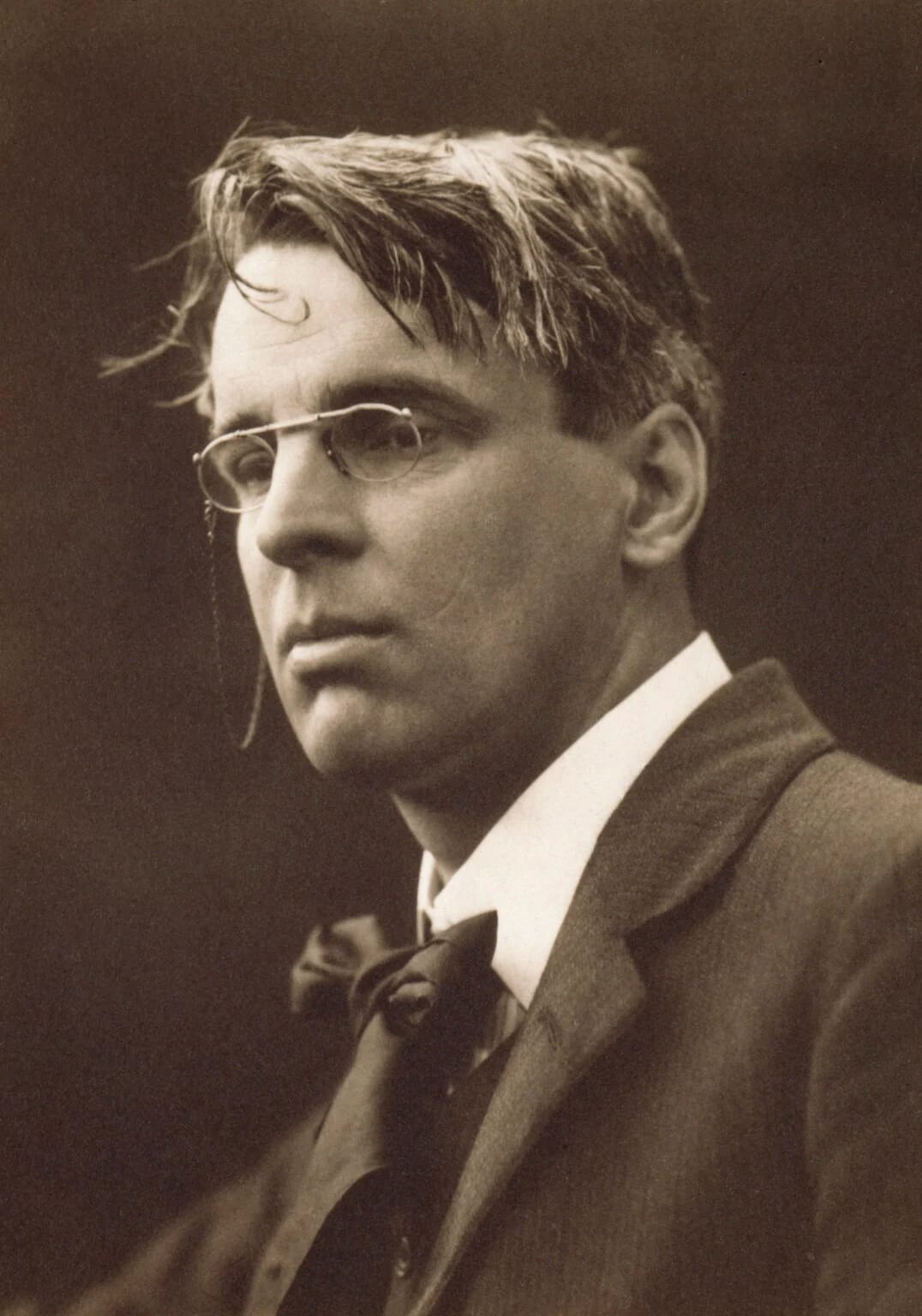
W. B. Yeats is one of those rare classic writers who feel made for audio. His work began as words on a page, but it lives and breathes in the ear: rhythmic, incantatory, and steeped in Irish storytelling tradition.
As you queue up Yeats on Spinn Radio, you are not just revisiting a schoolroom poet. You are stepping into the voice of a 20th‑century Nobel laureate who helped reshape Irish culture, theatre, and politics, and whose poems and plays still feel unsettlingly present.
Key facts
- Era
- Classic
- Genres
- poetry, drama, classics
- Country
- Ireland
- Lived
- 1865-1939
- Notable works
- The Tower, The Wild Swans at Coole
What W. B. Yeats actually wrote: poetry, drama, and the Irish imagination
William Butler Yeats wrote as a poet, dramatist, writer, and literary critic, and his work ranges across poetry, drama, and classics. Two of his most notable collections, The Tower and The Wild Swans at Coole, show the span of his imaginative world: mythic birds and haunted landscapes on one side, and stark meditations on aging, history, and inner conflict on the other.
Listening to Yeats on audio, you hear those shifts as changes in tempo. A lyric about wild swans can move with a slow, almost musical cadence, while a later poem from The Tower will tighten and darken, the rhythm turning flinty and insistent. His dramas draw from the same well of Irish legend and politics, so a play spoken aloud sounds like a cousin to the poems: long vowels, strong stresses, and images that feel carved in stone rather than casually spoken.
The key takeaway: Yeats is not background noise. On audio his genres blur into a single, distinctive voice that moves from intimate lyric to public declaration, always grounded in Ireland’s language and landscape.
“On audio his genres blur into a single, distinctive voice that moves from intimate lyric to public declaration.”
The era that shaped W. B. Yeats, from 1865 to 1939
Yeats lived from 1865 to 1939, a span that runs through the end of the 19th century and deep into the upheavals of the 20th. Hearing his work, you are hearing a Classic era writer respond to an Ireland that is struggling toward independence and a Europe that is changing at terrifying speed.
He was born and rooted in Ireland, and that matters for the listening experience. Place names, political tensions, and folk beliefs slip into the poems and plays as if they are common knowledge. When a narrator voices Yeats, the accents and pacing can underline this sense of a particular country arguing with itself, looking backward to myth and forward to a fragile new state.
The concrete detail to hold on to here is his timeframe: 1865 to 1939. When a poem sounds prophetic or weary or newly defiant, it is coming from someone who watched the old order crack and a new Ireland emerge in real time.
Spinn Radio
Explore W. B. Yeats on Spinn Radio
Inside the Irish Literary Revival and the Abbey Theatre
Yeats was not working in isolation. He was a driving force behind the Irish Literary Revival, which set out to reclaim Irish stories, language, and stagecraft. On audio, this shows up in the density of allusion: fairy lore, heroic cycles, rural speech rhythms, and political undercurrents all jostle inside the lines.
Along with John Millington Synge and Lady Gregory, Yeats founded the Abbey Theatre, which became a landmark for Irish drama. He served as its chief during its early years, so when you listen to his plays you are hearing work designed for actual actors, actual boards, and a living, restless audience. That theatrical DNA makes his monologues, choruses, and stage directions feel unusually alive in audiobook form.
If you want to explore deeper, start with W. B. Yeats on Spinn Radio, then branch out to other Irish dramatists from our authors directory. The big takeaway: Yeats helped build the very stage his words would be spoken from, and you can hear that stagecraft in every line.
“Yeats helped build the very stage his words would be spoken from, and you can hear that stagecraft in every line.”
Why W. B. Yeats still matters: Nobel Prize, politics, and passion
Yeats was awarded the 1923 Nobel Prize in Literature, which already marked him as one of the foremost figures of 20th‑century literature. Listening today, that prestige translates into a kind of authority in the voice: he sounds conscious of speaking to a wide audience, not just to a private notebook.
He later served two terms as a Senator of the Irish Free State, and that political role threads back into the work. On audio you can hear the tension between public duty and private obsession. Love poems sit beside civic laments, mystical dialogues beside sharp commentary on national fate. The effect is of a single mind arguing with itself about what a poet owes to history.
The fact to remember is simple: this is a Nobel laureate and senator from a newly formed state, using poetry and drama to test what a modern Ireland might be. That is why the work still feels urgent rather than antiquarian.
What it feels like to listen to W. B. Yeats on Spinn Radio
Yeats belongs to the Classic era, but his writing was built for the human voice. An audiobook of his work lets you lean into the musicality of the lines, the repeated sounds, the careful pauses that can vanish on the page. When a skilled reader hits the turning points in a poem from The Tower or lingers on the title image of The Wild Swans at Coole, you can feel how he wrote for the ear as much as the eye.
The genres matter here too. His poetry invites close, almost meditative listening, a track or two at a time. The drama benefits from longer sessions, as you settle into rising conflict and character voices that echo the Abbey Theatre. Filed under classics, these recordings reward replays; new images and ironies surface once you know the shape of a poem or scene.
If you are new to Yeats in audio form, pick one notable work to start: a condensed selection from The Wild Swans at Coole for mood and myth, then move to selections from The Tower for the harder, more modern edge. The listening experience is the real reason his reputation lasts: spoken aloud, the work feels uncannily contemporary.
“Spoken aloud, Yeats’s work feels less like a museum piece and more like a live argument about love, faith, and the fate of a country.”
Good to know
Frequently asked questions
Who was W. B. Yeats?
W. B. Yeats was an Irish poet, dramatist, writer, and literary critic who became one of the foremost figures of 20th‑century literature. He helped drive the Irish Literary Revival and shaped modern Irish culture through his poems and plays.
When did W. B. Yeats live?
W. B. Yeats lived from 1865 to 1939. His lifetime spans the transition from the 19th century into the upheavals of the early 20th century.
What genres did W. B. Yeats write in?
W. B. Yeats wrote in the genres of poetry, drama, and classics. His body of work includes lyric poems, plays for the stage, and influential critical writings.
What are some notable works by W. B. Yeats?
Notable works by W. B. Yeats include The Tower and The Wild Swans at Coole. These collections show both his mythic imagination and his stark modern tone.
What awards and roles did W. B. Yeats receive?
W. B. Yeats was awarded the Nobel Prize in Literature in 1923 and served two terms as a Senator of the Irish Free State. He was also a founder and early chief of the Abbey Theatre.
Explore more on Spinn Radio: W. B. Yeats on Spinn Radio · Browse the authors directory
Sources