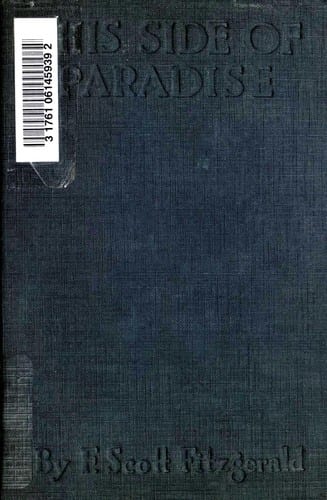
This Side of Paradise by F. Scott Fitzgerald is a debut that still sounds unnervingly like the present. A century after its 1920 publication, its portrait of clever, restless youth trying to turn charm into a future feels made for headphones, not dusty shelves.
Amory Blaine’s path from precocious boy to disillusioned Princeton man gives an audiobook narrator a full emotional register to play with: glittering campus chatter, brittle flirtations, late-night philosophizing, and, finally, the quiet of a mind forced to see itself clearly. Listening, you hear not just a “classic, ” but a young writer testing his own voice at full volume.
Key facts
- Author
- F. Scott Fitzgerald
- Genre
- Published 1900 onward
- Published
- 1920
- Language
- English
- Chapters
- 22
What is the premise of This Side of Paradise?
At its core, This Side of Paradise follows Amory Blaine, a wealthy, attractive Princeton student who believes he is destined for something grand. Raised to think of himself as exceptional, he dabbles in literature, plays at being a serious thinker, and treats romance as both sport and self-definition. The audiobook tracks those early certainties as they come up against the indifferent facts of adulthood.
Across its 22 chapters, the novel examines the lives and morality of post, World War I youth in the United States. Amory’s series of romances are not just love stories, they are experiments in identity and status. Each affair exposes the gap between what he has been promised and what the world can actually give him. By the time disillusionment arrives, it feels earned rather than theatrical.
The title, taken from Rupert Brooke’s poem "Tiare Tahiti, " signals Fitzgerald’s interest in the edge between paradise and reality. Audio brings out that tension in scene after scene: the lively talk of Princeton rooms, the glamour of social events, and the hollow echo that follows when the party ends. A good performance turns Amory’s charm into something you can hear, then slowly strips it away.
“Across 22 chapters, every romance becomes another experiment in who Amory thinks he might be.”
F. Scott Fitzgerald and the 1920 moment behind the novel
Published in 1920, This Side of Paradise arrives right at the start of what we think of as Fitzgerald’s era. It is his debut novel, written by a young author looking at his own generation in the wake of World War I. That timing matters: he is close enough to the lives he describes to capture their slang and swagger, and just distant enough to notice the cracks.
The book is firmly a work of the twentieth century, part of the wave of English-language fiction "Published 1900 onward" that started to question older moral codes. Fitzgerald uses Amory’s privileged route through prep school and Princeton to ask what happens when inherited status collides with modern uncertainty. The audiobook format lets listeners feel those shifts not as historical commentary, but as live conversations and arguments.
Knowing that this is the same writer who would later create The Great Gatsby adds an extra layer. In his later novels, Fitzgerald would keep returning to love warped by greed and status-seeking. Here, in his first outing, you can hear the theme in rougher, more experimental form. For listeners interested in his development as an author, This Side of Paradise is the sound of a career beginning.
“In audio, Fitzgerald’s 1920 questions about status and morality feel less like history and more like overheard debate.”
Spinn Radio
Listen to This Side of Paradise on Spinn Radio
Why This Side of Paradise still feels current
Although it is very much a novel of its time, This Side of Paradise endures because its core anxieties never went away. Amory and his peers are trying to work out what their lives mean in a world that has just survived a global war. They wonder if inherited privilege still counts, if art matters, and whether love can survive the pressure of money and reputation. Anyone finishing university today will recognize versions of those questions.
The novel’s focus on youth morality gives modern listeners something more precise than nostalgia. Chapter by chapter, it shows how a generation can be both cynical and naive, morally ambitious and casually selfish. Audio sharpens this double vision. A narrator can lean into the brightness of Amory’s early self-belief, then allow doubt to creep into the rhythm of his speech and the weight of his silences.
Fitzgerald’s recurring theme of “love warped by greed and status-seeking” also feels pointed in an age of curated images and competitive success. In Amory’s romances, affection is never just affection, it is bound up with social climbing and self-image. Hearing those negotiations aloud makes them feel less like distant Jazz Age melodrama and more like conversations about who gets to belong.
“Amory’s struggle to turn charm into a life is uncomfortably familiar in any era obsessed with status.”
What it is like to listen to This Side of Paradise
As an audiobook, This Side of Paradise plays almost like a series of interconnected performances: campus satire, romantic drama, then philosophical reckoning. The 22 chapters create a natural rhythm for listening, with clear stopping points that still invite one more segment. Each phase of Amory’s life introduces a slightly different tone, which a skilled narrator can mark with pace and emphasis rather than showy voices.
Because the novel is written in English and steeped in talky scenes, it rewards close listening. The fast exchanges of student life, the bravado of young men performing intellect, and the more intimate conversations of Amory’s romances all depend on timing. In print, you might skim those speeches. In audio, you can hear which lines land and which ones fall flat inside the world of the story.
For listeners new to classics, this is also an approachable entry point. The structure moves forward with Amory’s age, from childhood through Princeton and beyond, so there is always a sense of progression. You can track the shift from glamour to disillusionment just by noting how the voice around Amory changes, from indulgent to wary. It is a novel that invites you to keep a pair of headphones handy and follow his miseducation chapter by chapter.
“In audio, the novel feels like a series of live scenes, each one catching Amory at a new angle.”
Where This Side of Paradise sits in classic literature
On a shelf of "classics, " This Side of Paradise holds a specific place as the starting point of one of the twentieth century’s defining American authors. It is tagged among works "Published 1900 onward, " but it is not austere or remote. Instead, it is impulsive, crowded with talk, and eager to impress, much like its main character.
For anyone exploring early twentieth-century fiction, it offers a different angle from later, tighter novels. You hear Fitzgerald trying out techniques, experimenting with structure across those 22 chapters, and setting up themes he would refine later. In that sense, listening is a way of tracing a line from this book to the rest of his work, and to the broader tradition of modern novels about youth and self-invention.
If you are building a listening queue of literary landmarks, this is the book that answers the question: what did Fitzgerald sound like before Gatsby? The answer is: dazzling, messy, and deeply curious about what happens when charm encounters consequence.
“This is Fitzgerald before polish, but not before insight: a classic that still sounds urgent when spoken aloud.”
Good to know
Frequently asked questions
Who wrote This Side of Paradise?
This Side of Paradise was written by F. Scott Fitzgerald. It is his debut novel and an early exploration of themes he would revisit later in his career.
When was This Side of Paradise published?
This Side of Paradise was published in 1920. It captures the mood of post, World War I youth at the very start of Fitzgerald’s literary career.
What is This Side of Paradise about?
This Side of Paradise is about Amory Blaine, a wealthy Princeton student whose romances and ambitions lead to disillusionment. The novel examines the lives and morality of post, World War I youth.
How many chapters are in This Side of Paradise?
This Side of Paradise has 22 chapters. That structure gives the audiobook a clear rhythm and natural listening breaks.
What genre is This Side of Paradise?
This Side of Paradise is a classic English-language novel published in the twentieth century. It appears in the "Published 1900 onward" category of literature.
Shop the story
Reading Essentials
 Editor's Pick
Kindle Scribe Colorsoft (64 GB)
11-inch color E Ink display + pen
$679.99
View on Amazon
Kindle Scribe (32 GB)
11-inch paper-like display + pen
$499.99
View on Amazon Bestseller
Kindle Paperwhite (16 GB)
The fastest Kindle e-reader
View on Amazon
The Hobbit & The Lord of the Rings Boxed Set
Deluxe pocket boxed set
$24.92
View on AmazonAs an Amazon Associate, Spinn Radio earns from qualifying purchases.
Browse the full Spinn Shop →Sources