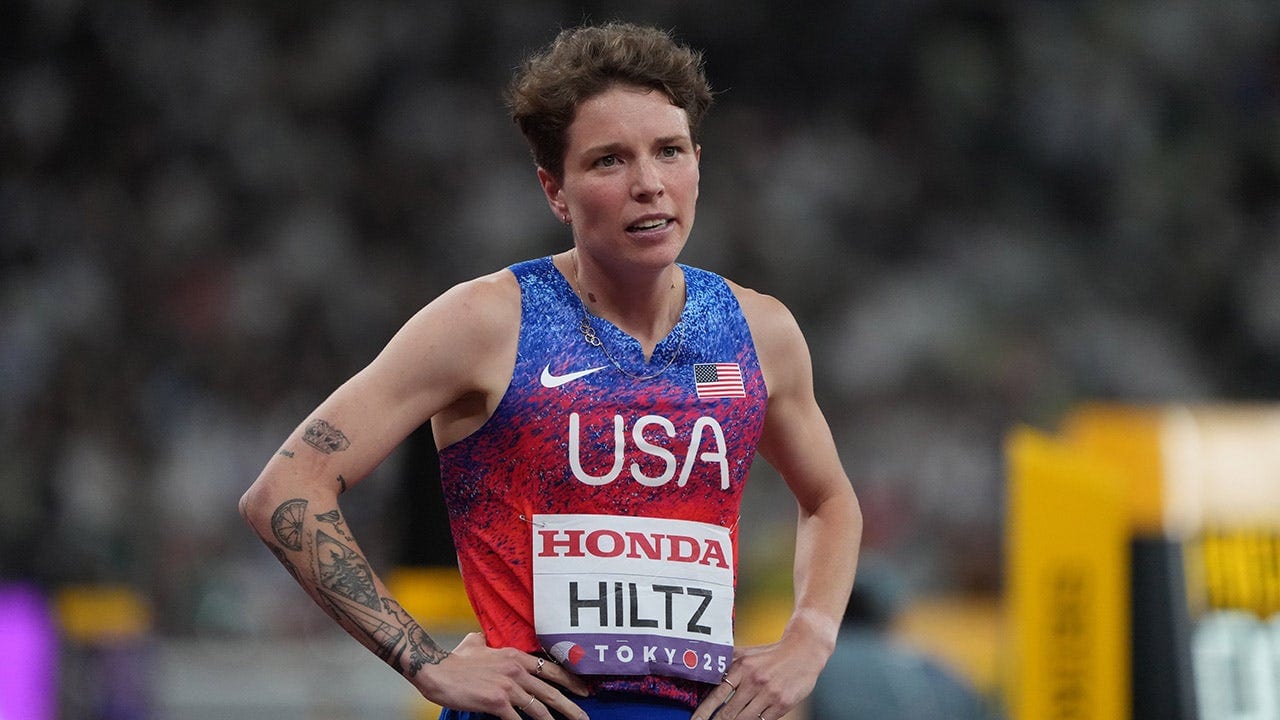
Olympic runner Nikki Hiltz, who identifies as transgender nonbinary, has responded to a new Supreme Court ruling that upholds state laws requiring transgender athletes to compete based on biological sex in girls’ sports, according to Fox News reporting on Sunday. The decision and Hiltz’s reaction push the long-simmering fight over transgender inclusion in athletics back to the center of the U.S. sports conversation.
The Fox News report, dated July 5, 2026, underscores how a legal decision far from the track carries immediate consequences for how athletes like Hiltz are discussed, categorized, and contested as they compete at the highest level.
Key facts
- Source
- Fox News
- Reported
- July 5, 2026
- Desk
- general
- Follow the story
- Spinn Radio Sports
What the Supreme Court ruling means for transgender athletes
According to Fox News, the Supreme Court has upheld state laws that require transgender athletes to compete based on biological sex in girls’ sports. While the report does not detail the specific states or the legal reasoning, the outcome affirms the authority of state-level rules that restrict how transgender athletes are classified in female categories. For athletes, coaches, and governing bodies, that keeps a patchwork of regulations intact rather than replacing it with a single national standard.
The ruling matters because it touches school and youth competitions, where many future Olympians first move through organized sport. Requirements to compete according to biological sex in girls’ sports will shape which events some transgender athletes can enter, how teams are formed, and how state athletic associations write their policies. Even without exhaustive legal detail, the core takeaway is clear: in the affected states, transgender participation in girls’ categories now has Supreme Court backing for stricter definitions based on sex at birth.
“A Supreme Court decision in Washington now reaches all the way to state tracks and school gyms, where the next generation of runners is forming.”
Who Nikki Hiltz is and why their reaction matters
Nikki Hiltz competes as an American Olympic middle-distance runner and publicly identifies as transgender nonbinary. That identity places them directly inside the debate now shaped by the Supreme Court ruling reported by Fox News. Hiltz is not an abstract symbol in this story. They are an active elite athlete whose career unfolds inside federations and events that must interpret laws about sex and gender categories.
Because Hiltz operates in Olympic-level competition, their response is significant for two reasons. First, it gives a personal lens on a legal decision that can otherwise feel distant from the track. Second, it signals to other athletes who identify as transgender or nonbinary that there are high-profile competitors watching and responding to how courts define eligibility. Even without specific language from Hiltz quoted in the Fox News report, the fact of their reaction alone marks them as a key voice in a moment that blends civil rights, sports policy, and public opinion.
“Hiltz is not a hypothetical in a legal brief, but a current Olympic runner navigating rules that speak directly to their identity.”
Spinn Radio
Follow live sports on Spinn Radio
How Hiltz’s response fits into the wider sports policy fight
The Fox News coverage presents Hiltz’s reaction as part of the fallout from a decision that keeps state-level restrictions on transgender athletes intact. That places the runner in a broader tug of war between lawmakers who push for biological sex-based participation rules and athletes and advocates who argue for more inclusive frameworks. Hiltz’s response becomes one more data point in how elite competitors are processing the shift, whether they view it as protection, exclusion, or something in between.
In practical terms, the Supreme Court’s stance gives political momentum to states that have already written laws about transgender participation in girls’ sports and may encourage others to follow. For athletes like Hiltz, that means competing in a landscape where eligibility rules can change from one jurisdiction to another and where each new statute may be tested in court. Their reaction also feeds into how national governing bodies and international federations gauge athlete sentiment as they consider their own rulebooks, which must coexist with, but do not always mirror, state law.
“Every time a court rules on who can line up in a girls’ race, it alters the terrain beneath athletes already training for the next start line.”
What is at stake for future Olympians and school athletes
The Supreme Court decision reported by Fox News is not confined to professional or Olympic sport. It reaches down to school programs and local leagues that often rely on state law for guidance. Young transgender athletes in those systems now face a clearer message: in states covered by such laws, girls’ sports are explicitly defined by biological sex. That shapes who can join which team, how inclusive coaches can be under the law, and whether some athletes must move to boys’ or open categories instead.
For future Olympians, the ruling may help determine who stays in the pipeline to elite competition. If transgender athletes are steered away from girls’ categories early, they may have fewer opportunities to compete in the events and divisions that best fit their identity. Hiltz’s reaction draws attention to that long-term impact. It is not only about current Olympic runners, but about whether the next generation sees a place for itself in track meets, soccer tournaments, and state championships.
“The ruling reaches far beyond today’s Olympians and into weekend meets, where a teenager’s first lane assignment may now be shaped by state law.”
What to watch next in the Nikki Hiltz and Supreme Court story
After this Supreme Court ruling, the next steps will likely unfold in two arenas: policy responses and athlete platforms. State legislatures and athletic associations that favored biological sex-based rules now have fresh legal cover, so observers will be watching to see whether they tighten existing laws or expand them into more sports and age groups. On the other side, athletes like Hiltz who identify as transgender nonbinary are likely to keep using their visibility to frame the human cost or benefit of those decisions.
For fans following Hiltz’s journey, the key questions are how governing bodies in track and field interpret or respond to the legal climate and whether there are further legal challenges that could eventually bring a different configuration of the Court back to the issue. As Fox News highlighted by centering Hiltz’s reaction, the story is as much about how individual runners navigate identity and eligibility as it is about statutes and opinions. You can keep tracking how this debate intersects with major events and athlete responses by following ongoing coverage through Follow live sports coverage on Spinn Radio.
“The legal fight is moving, but so are the runners, and the story now unfolds in courts, statehouses, and on the track at the same time.”
Good to know
Frequently asked questions
Who is Nikki Hiltz in this Supreme Court sports ruling story?
Nikki Hiltz is an American Olympic middle-distance runner who identifies as transgender nonbinary and has reacted to the Supreme Court ruling reported by Fox News. Their response places an active elite athlete at the center of the debate over transgender participation in girls’ sports.
What did the Supreme Court decide about transgender athletes?
The Supreme Court upheld state laws that require transgender athletes to compete based on biological sex in girls’ sports, according to Fox News. This keeps state-level restrictions in place rather than replacing them with a single national standard.
Why does Nikki Hiltz’s reaction to the ruling matter?
Hiltz’s reaction matters because they are an Olympic runner whose identity as transgender nonbinary is directly implicated by laws on sports categories. Their response helps show how legal decisions translate into real consequences for athletes trying to compete at the highest level.
How could this ruling affect young transgender athletes in school sports?
The ruling could limit how young transgender athletes participate in girls’ sports in states with such laws, since it backs rules based on biological sex. That may shape which teams they can join and how easily they move through the pipeline toward elite competition.
Explore more on Spinn Radio: Follow live sports coverage on Spinn Radio
Sources