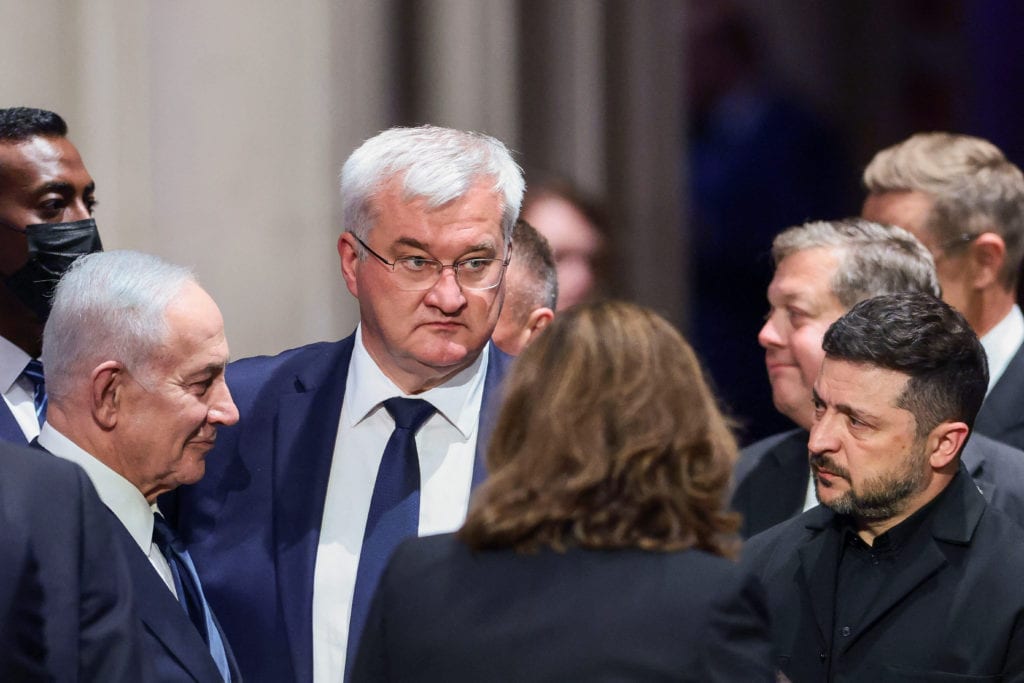
PBS reported this week that Israeli Prime Minister Benjamin Netanyahu and Ukrainian President Volodymyr Zelenskyy have held fresh meetings with Donald Trump, a reminder that foreign leaders are still gaming out how a possible return of Trump to the White House could reshape their wars and alliances.
Coming as Washington marked the late Sen. Lindsey Graham’s legacy as a foreign policy power broker, the outreach by Netanyahu and Zelenskyy underscores how both leaders are trying to secure political backing in a fluid American landscape where Trump remains a central figure.
Key facts
- Source
- PBS
- Reported
- July 28, 2026
- Desk
- general
- Follow the story
- Spinn Radio Sports
Why Netanyahu and Zelenskyy are talking to Trump now
The PBS report on new meetings between Benjamin Netanyahu, Volodymyr Zelenskyy and Donald Trump lands at a moment when U.S. power politics are unusually unsettled. With Trump still dominating the Republican conversation, both leaders have reason to check in, compare notes and test how his positions might affect their own security needs if American policy shifts again.
For Netanyahu, who has long treated U.S. politics as a vital front in Israel’s security strategy, face time with Trump helps gauge what a future Republican approach to Israel might look like and how firmly it would back his government. For Zelenskyy, who depends heavily on U.S. aid and diplomatic support, any insight into Trump’s current thinking can shape Kyiv’s expectations about future military and political assistance.
The common thread is leverage. Each leader is trying to avoid being surprised by a changed Washington and to make sure their core interests are visible to a figure who still commands attention inside the American political system.
“Each leader is trying to avoid being surprised by a changed Washington and to make sure their core interests are visible in U.S. politics.”
What Netanyahu is hoping to gain from renewed Trump contact
Benjamin Netanyahu’s goals in reconnecting with Trump are rooted in Israel’s long-running reliance on U.S. political cover and military cooperation. Engaging Trump directly gives Netanyahu a way to test whether the strong rhetorical support of past years might return in any future administration and how that might translate into backing on security decisions that are often controversial abroad.
Netanyahu also knows that American debates over Israel have grown sharper. By staying in dialogue with Trump, he keeps a line open to a constituency in U.S. politics that has often been more sympathetic to his approach. Even without public commitments, the mere act of meeting can signal to his domestic audience in Israel that he remains plugged into the upper tier of American power brokers.
For observers, the takeaway is simple: Netanyahu’s outreach is less about immediate announcements and more about positioning. He is working to ensure that whoever holds sway in Washington will have heard his case directly, rather than through distant briefings or secondhand accounts.
Spinn Radio
Follow live sports on Spinn Radio
What Zelenskyy needs from his Trump meeting
Volodymyr Zelenskyy’s incentives are different but just as urgent. Ukraine’s war footing means its leadership tracks every hint of where future U.S. support might come from and how it might change. A direct meeting with Trump, as described by PBS, gives Zelenskyy a chance to outline Ukraine’s needs in person and to listen for clues about what kinds of aid or diplomatic engagement might be possible if American politics shift.
Because Ukraine’s position depends heavily on external backing, Zelenskyy has to plan for multiple scenarios in Washington. That includes making sure that key American figures, whether in or out of office, understand what is at stake for Kyiv. A meeting with Trump is part of that broader effort to keep Ukraine’s story in front of power centers that could influence U.S. policy debates down the line.
For readers tracking Ukraine’s prospects, the key detail is that Zelenskyy is not waiting passively on events in Washington. He is actively engaging high-profile American players so that, whatever happens in U.S. politics, Ukraine’s case has been made directly and repeatedly.
How Lindsey Graham’s legacy shadows these Trump meetings
The PBS reporting sits against the backdrop of a Washington memorial for the late Sen. Lindsey Graham, described as a tireless fighter for South Carolina and an influential fixture on the world stage. Graham’s passing leaves a gap in the kind of hawkish, globally engaged Republican voice that often bridged party politics and foreign capitals.
Graham built a reputation as someone who could translate the concerns of leaders like Netanyahu and Zelenskyy into the language of American congressional debates. Without him, those same leaders have even stronger reasons to cultivate direct ties with other figures who command attention inside the Republican Party, including Trump.
The memorial in Washington was also a reminder of how personalities shape foreign policy. As one such personality exits the stage, others become more central. Netanyahu and Zelenskyy courting Trump in this moment highlights how they are recalibrating their networks in a U.S. capital adjusting to the loss of a seasoned foreign policy operator.
“As one foreign policy heavyweight exits the stage, others become more central in the conversations Netanyahu and Zelenskyy are having with Washington.”
What to watch next in U.S. politics and global fallout
The next phase of this story will play out less in formal communiqués and more in signals. Observers will be watching whether either Netanyahu or Zelenskyy adjusts their public tone on U.S. politics, or whether Trump himself references these meetings as he continues to shape Republican arguments on foreign policy.
Any shift in congressional rhetoric about Israel or Ukraine will also matter. While PBS has so far highlighted the fact of the meetings and the context of Graham’s memorial, future reporting will likely focus on how these contacts influence debates over aid, diplomacy and the use of American power abroad.
For readers tracking how politics intersects with global events, it is a reminder that high-level meetings rarely stand alone. They fold into wider arguments about security, alliances and national interest that show up everywhere from Capitol Hill hearings to live game broadcasts and talk shows. To keep up with how this story intersects with wider coverage and commentary, you can Follow live sports coverage on Spinn Radio, where the broader conversation about politics, power and spectacle often spills onto the field and into the booth.
Good to know
Frequently asked questions
Why did Netanyahu and Zelenskyy meet with Donald Trump?
Netanyahu and Zelenskyy met with Donald Trump to seek political leverage and insight into a major American figure’s current foreign policy thinking. Each leader wants to understand how a shifting U.S. landscape might affect support for Israel and Ukraine.
What did PBS report about the latest Trump meetings?
PBS reported that Israeli Prime Minister Benjamin Netanyahu and Ukrainian President Volodymyr Zelenskyy have recently held meetings with Donald Trump. The coverage placed those contacts alongside Washington’s memorial for the late Sen. Lindsey Graham.
How does Lindsey Graham’s death affect this story?
Lindsey Graham’s death removes a long-standing Republican foreign policy voice who often engaged directly with global leaders. His absence gives Netanyahu and Zelenskyy more reason to maintain personal ties with other influential U.S. figures like Trump.
What should observers watch for after these meetings?
Observers should watch for shifts in rhetoric or policy signals from Trump, Netanyahu or Zelenskyy following their talks. Any change in U.S. debates over aid and support for Israel or Ukraine will be an important clue to the meetings’ impact.
Explore more on Spinn Radio: Follow live sports coverage on Spinn Radio
Sources