A magnitude 6.9 earthquake has hit northern Japan, Japantimes.co.jp reported on June 24, registering a rare upper 6 on the national intensity scale in the town of Hashikami in Aomori Prefecture. Authorities have not issued a tsunami warning, focusing attention on local damage and aftershock risk rather than a broad coastal emergency.
The temblor, reported late June 24, is one of the stronger recent shakes in the region, and the unusually high reading in Hashikami underlines how unevenly force can be felt across northern Japan. With details still emerging, residents, officials and seismologists are watching the next few hours for aftershocks and updates from national agencies.
Key facts
- Source
- japantimes.co.jp
- Reported
- June 24, 2026
- Desk
- general
- Follow the story
- Spinn Radio Talk
Where the Japan quake hit hardest: Hashikami in Aomori
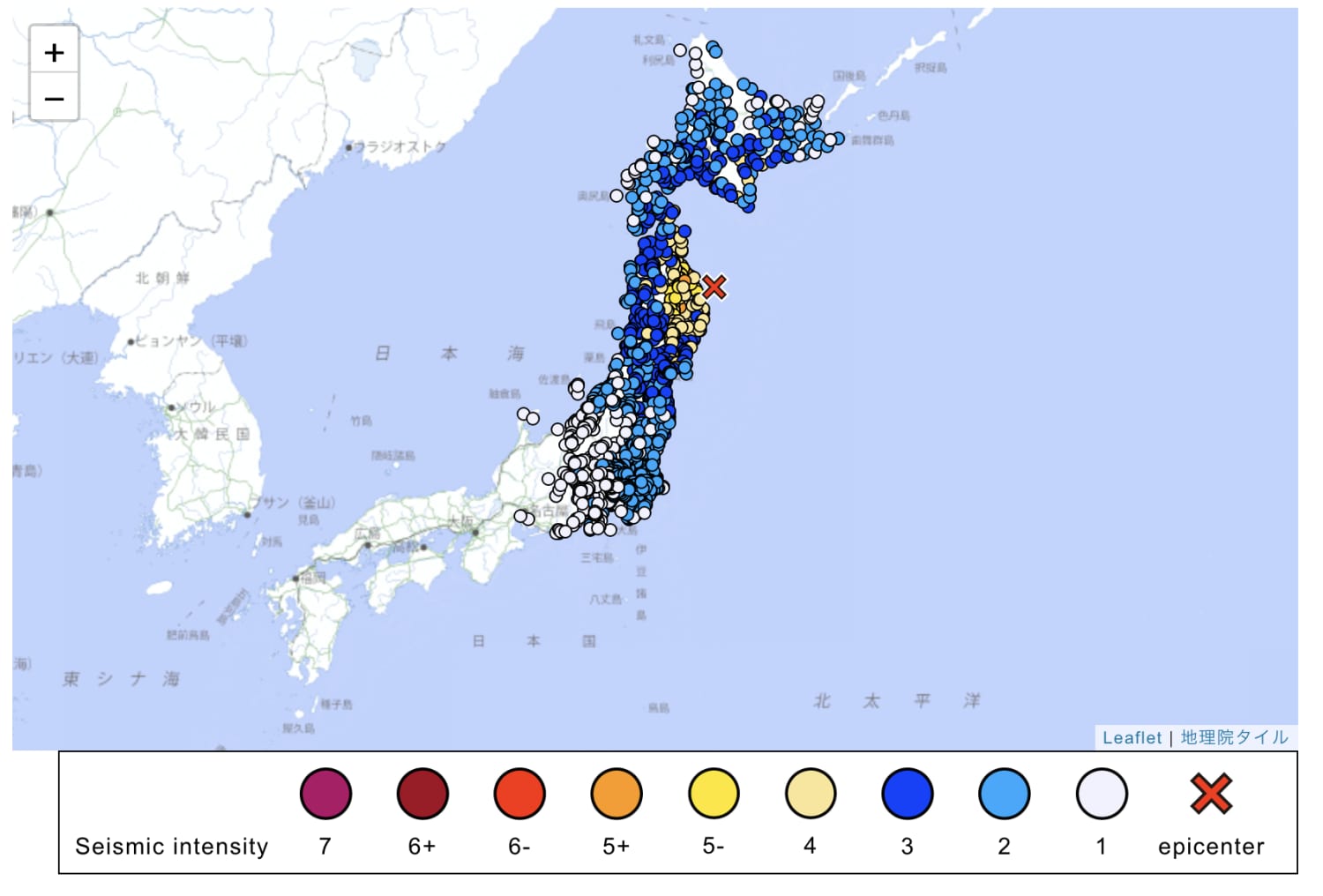
Initial reports from Japantimes.co.jp place the most intense shaking in Hashikami, a town in Aomori Prefecture in northern Japan, where the quake registered an upper 6 on the Japanese seismic intensity scale. That reading is rare and signals very strong ground motion locally, even when the overall magnitude is listed as 6.9. It tells residents and emergency planners that Hashikami is likely to be the community most affected in this event.
Japan uses its own seismic intensity scale to describe how quakes are felt at the surface, rather than only listing magnitude. An "upper 6" on that scale means people in Hashikami would have experienced severe shaking compared with other areas farther from the center of the tremor. For anyone following the story, that town and the wider Aomori Prefecture are the key locations to watch as information on damage and disruptions comes in.
“The rare upper 6 intensity in Hashikami makes Aomori Prefecture the focal point of concern after this magnitude 6.9 quake.”
Why there is no tsunami warning after the magnitude 6.9
Despite the strength of the quake, Japantimes.co.jp reports that no tsunami warning has been issued. In Japan, the absence of such an alert is a crucial early signal that the shaking, while strong on land, is not currently expected to generate large destructive waves along the coast. For coastal communities that regularly drill for tsunami evacuation, this distinction shapes how they respond in the first minutes after a quake.
A magnitude 6.9 event in northern Japan naturally raises fears of a repeat of past coastal disasters, so confirmation that there is no tsunami warning matters for both public safety and public nerves. Even without a warning, authorities and residents will stay alert for official updates, but attention now leans more toward local structural damage, power issues and landslide risks rather than a major ocean surge.
“No tsunami warning shifts the immediate focus from the sea back to the streets, homes and infrastructure of northern Japan.”
Spinn Radio
Follow live news on Spinn Radio
How Japan measures a rare upper 6 on its seismic scale
The report of a rare upper 6 in Hashikami highlights how Japan tracks earthquakes differently from many countries. Instead of only referring to magnitude, which describes the energy released at the source, Japan also uses a detailed seismic intensity scale to describe what people actually experience in each location. An upper 6 sits near the top of that scale and signals very strong shaking that can vary sharply from town to town.
This approach explains why the same magnitude 6.9 quake can feel dramatically different across northern Japan. While Hashikami recorded an upper 6, other areas would have logged lower intensities depending on their distance from the source and local ground conditions. For readers following seismic events from abroad, the key takeaway is that intensity readings like this give a finer-grain picture of risk than magnitude alone.
“Magnitude tells you how big the quake was at its source; intensity readings like upper 6 show how hard it actually hit a place like Hashikami.”
What people in northern Japan face in the hours after the quake
With the quake reported on June 24 and intensity peaking in Hashikami, the next phase for northern Japan is the immediate aftermath: aftershock monitoring, inspections and community checks. Strong quakes are often followed by smaller tremors, and while the Japantimes.co.jp report highlights the lack of a tsunami warning, it also implies that ground safety and local infrastructure now become the main concerns.
Residents in Aomori Prefecture and neighboring regions will be watching announcements from local governments and national agencies as they assess buildings, roads and utilities. For people abroad who have friends or family in northern Japan, the most relevant early indicators are whether intensity readings higher than Hashikami's appear elsewhere and whether authorities issue new advisories through the night.
How to keep following this developing Japan quake story
The magnitude 6.9 quake in northern Japan was first reported by Japantimes.co.jp on June 24, and information is still limited to headline details like the lack of a tsunami warning and the upper 6 reading in Hashikami. As officials gather more data on damage and disruptions in Aomori Prefecture, those early signals will be updated, refined or, if necessary, escalated.
Spinn Radio will track verified updates from Japanese and international outlets as new information comes in. For continuing coverage, listener reactions and expert context on how this quake fits into Japan's broader seismic reality, follow live conversations and news hits on Follow live news and talk on Spinn Radio. It is the fastest way to hear what has been confirmed and what authorities in northern Japan are watching next.
“This story is still in its first hours; the key facts so far are the magnitude 6.9 reading, the rare upper 6 in Hashikami and the absence of a tsunami warning.”
Good to know
Frequently asked questions
Where did the strong quake in northern Japan hit hardest?
The strongest reported shaking hit Hashikami in Aomori Prefecture. The town recorded a rare upper 6 on Japan's seismic intensity scale, making it the focal point of concern.
Was there a tsunami warning after the Japan quake?
There was no tsunami warning issued after the magnitude 6.9 quake. That early signal has shifted attention to local damage and aftershock risk instead of a coastal surge.
How big was the quake that struck northern Japan?
The quake was reported at magnitude 6.9. Despite that strength, the impact varied by location, with Hashikami in Aomori recording the highest intensity reading mentioned so far.
How can I follow updates on the situation in northern Japan?
You can follow updates on the quake through Spinn Radio's news and talk coverage. Live reactions and verified headlines are being tracked on its talk channels.
Explore more on Spinn Radio: Follow live news and talk on Spinn Radio
Sources