NASA has picked three commercial teams to fly four robotic lunar lander missions worth nearly $600 million, SpaceNews reported this week, marking one of the agency’s biggest recent bets on cargo delivery to the Moon. The selections are designed to feed NASA’s longer term goal of building and supplying a permanent lunar base.
The new awards, reported by SpaceNews on June 30, signal that NASA is moving ahead on parallel tracks: human Artemis missions on one side, and a steady cadence of robotic landings on the other that can scout sites, test hardware and lay groundwork for future crews.
Key facts
- Source
- SpaceNews
- Reported
- June 30, 2026
- Desk
- general
- Follow the story
- Spinn Radio Talk
Why NASA’s latest lunar lander awards matter now
The nearly $600 million in contracts ties directly into NASA’s plan to move from short Moon visits to a lasting presence on the surface. Robotic landers can launch faster and cheaper than crewed spacecraft, which lets NASA test base-building ideas without putting astronauts at risk.
By selecting three different companies for four missions, NASA is spreading both opportunity and technical risk. If one lander runs into trouble, others can still fly, keeping science and technology demonstrations on track. This commercial competition also gives the agency more leverage on cost and schedule as its lunar base ambitions scale up.
SpaceNews framed the awards as part of a broader push toward lunar infrastructure, not a one-off science program. That context matters for anyone tracking how quickly the United States can field power systems, communication links and navigation aids that a future base will require.
“These four robotic landers are the early cargo trucks for a future lunar base.”
Which companies are flying NASA’s new lunar lander missions
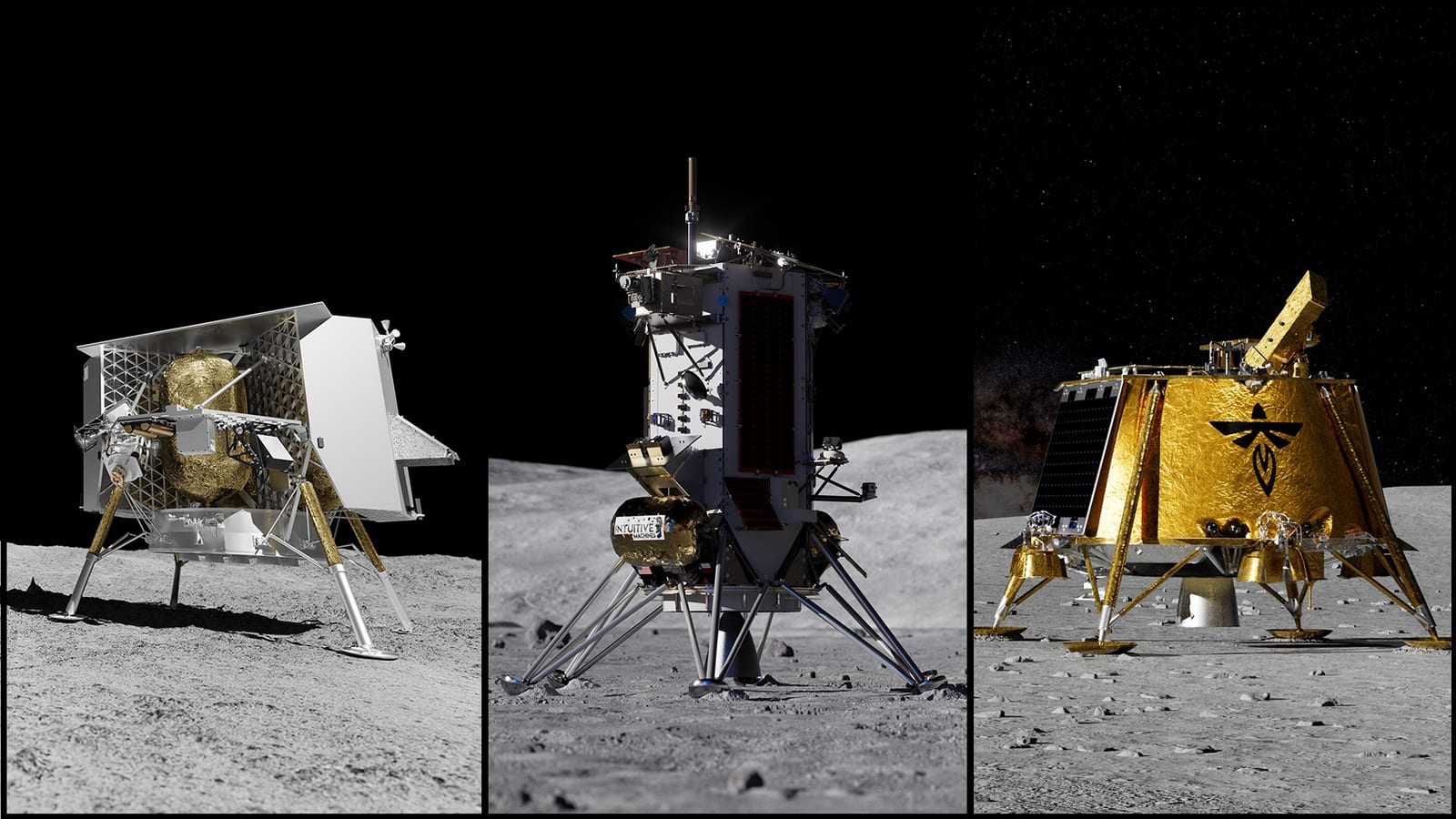
NASA has selected three companies to fly the four lander missions, signaling continued confidence in a commercial partnership model for Moon deliveries. The agency is not relying on a single in-house design, but on a small ecosystem of providers that can tailor landers to different payloads and sites.
Although the SpaceNews report highlights the total value and number of missions rather than naming each contractor, the three winners will be responsible for turning that nearly $600 million into real tonnage on the lunar surface. Each company must design, build, launch and operate its own lander, then prove it can place NASA hardware safely on target.
For space industry watchers, the exact mix of large aerospace primes and newer commercial entrants will be closely watched once NASA releases more details. The balance of those players will shape how quickly new technology flows into future lander designs and how competitive pricing remains over the coming decade.
Spinn Radio
Follow live news on Spinn Radio
How four robotic landers support NASA’s lunar base ambitions
These four missions are more than standalone flights. NASA intends to use robotic landers as the workhorses for everything from prospecting resources to testing habitats that might one day house astronauts at a lunar base.
Cargo-focused landers can deliver instruments to search for water ice, small power units, communications relays or experimental construction materials. Each successful touchdown helps NASA validate landing techniques, surface operations and long-distance control methods that a permanent base will depend on.
With several landers in the pipeline, mission planners can stagger flights to try out different terrains and latitudes, rather than betting everything on a single destination. That variety will help NASA refine its short list of candidate base sites, and it gives scientists repeated chances to collect ground truth that orbiters alone cannot provide.
“Every robotic touchdown teaches NASA something it will need for a permanent foothold on the Moon.”
What is at stake for NASA, industry and lunar science
Nearly $600 million in awards is a major economic signal to the space industry. For the three selected companies, these contracts mean multi-year backlogs of work, opportunities to prove their technology, and potential leverage when competing for future NASA and commercial customers.
For NASA, the stakes are strategic. Reliable robotic landings are essential to showing that the agency can support a lunar base without runaway costs. If these missions perform well, they will bolster arguments in Washington for sustained funding of Moon infrastructure and for continuing to rely on commercial partners.
Lunar scientists have plenty riding on these flights as well. Robotic landers are likely to carry instruments and experiments that cannot fly on orbiters, from in situ resource measurements to seismic packages. Each successful mission helps fill in gaps about the Moon’s composition and environment, knowledge that underpins safe long-term human stays.
What to watch next and where to follow NASA’s lunar push
The SpaceNews report sets the headline figures, but many key details lie ahead. Watch for NASA to release more on which companies won, which lunar regions they will target, and how the four flights are sequenced alongside future crewed Artemis missions.
Schedule will be another critical storyline. The agency will face pressure to move quickly enough to keep its lunar base ambitions credible, while still giving the three companies time to design and qualify their landers. Any major delay or early failure will be scrutinized as a test of NASA’s commercial strategy.
For ongoing coverage, analysis and reaction from scientists and space policy voices, you can Follow live news and talk on Spinn Radio. The station’s talk feeds will track how these robotic missions evolve from contract announcements into hardware on the pad and, eventually, into fresh images and data from the lunar surface.
“The contracts are signed; the next chapter is all about who flies first and how reliably they can reach the Moon.”
Good to know
Frequently asked questions
What did NASA just award for upcoming Moon missions?
NASA has awarded contracts for four robotic lunar lander missions worth nearly $600 million. These flights are intended to support the agency’s long-term lunar base plans.
How many companies are involved in the new lunar lander work?
Three companies have been selected to fly NASA’s four new lunar lander missions. Each contractor will provide its own lander and mission operations under the agency’s broader Moon strategy.
Why are robotic landers important to NASA’s lunar base plan?
Robotic landers let NASA test technologies and deliver cargo to the Moon before sending more crews. They help scout sites, validate operations and support a future permanent base.
Where can I follow updates on these lunar lander missions?
You can follow updates and discussion through Spinn Radio’s talk coverage of space news. Start with the live feeds listed under Spinn Radio Talk.
Explore more on Spinn Radio: Follow live news and talk on Spinn Radio
Sources