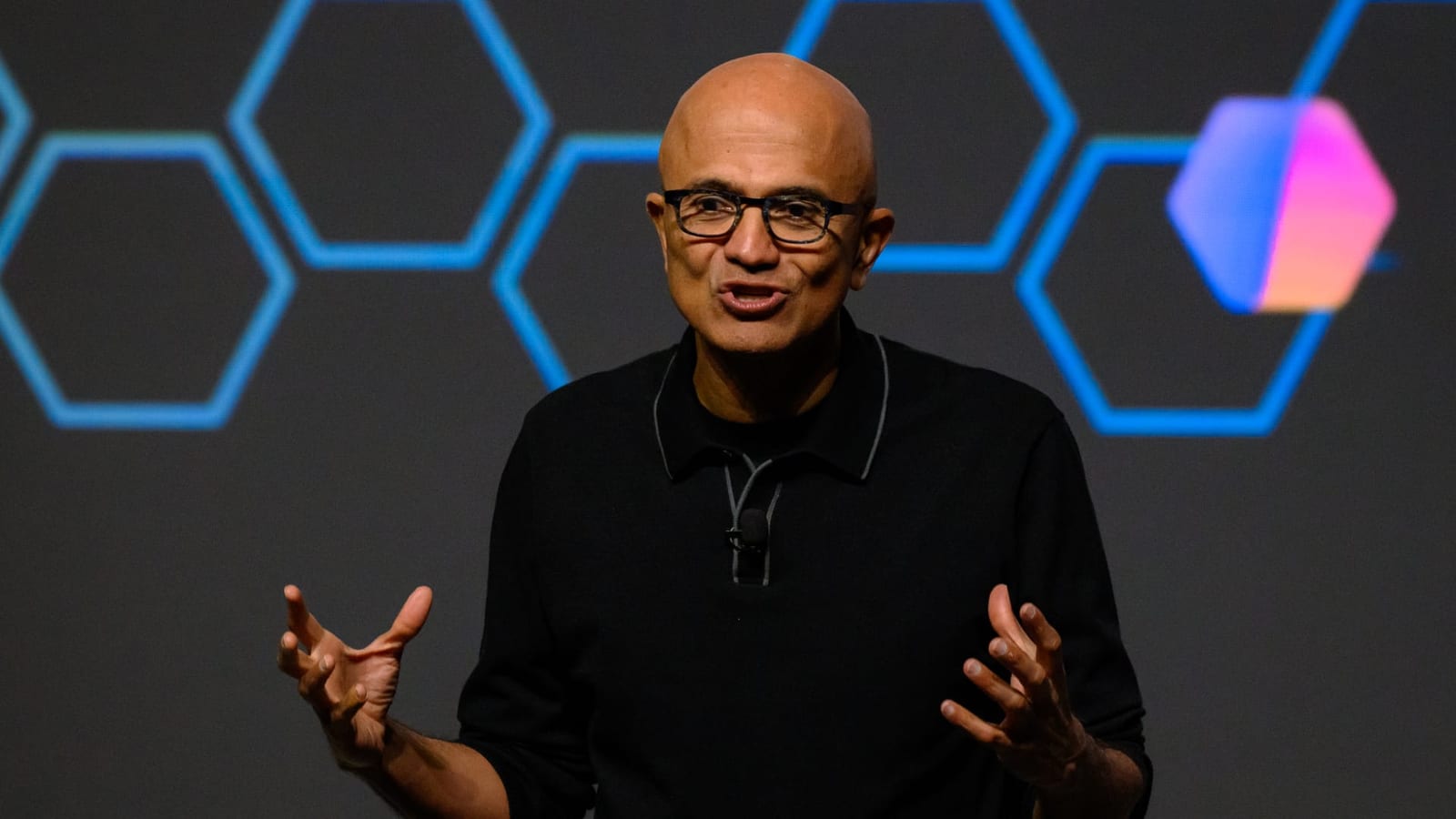
Microsoft is pitching a new AI-powered cybersecurity model that it says can both cut costs and, when paired with OpenAI's GPT-5.4, outperform Anthropic's newly announced Mythos 5, according to reporting from CNBC. The move signals how aggressively the company is leaning on large language models as core infrastructure for digital defense, not only as a premium add-on.
The pitch, reported on July 27, 2026, lands in the middle of a race to apply generative AI to threat detection and response, where reliability and pricing are becoming as important as raw technical capability. By claiming an edge over Mythos 5 and stressing cost savings for customers, Microsoft is positioning its model as a practical workhorse for security teams already under pressure to do more with less.
Key facts
- Source
- CNBC
- Reported
- July 27, 2026
- Desk
- general
- Follow the story
- Spinn Radio Talk
What CNBC reported about Microsoft’s new AI security model
CNBC reported that Microsoft is promoting a new cybersecurity model that integrates with OpenAI’s GPT-5.4 and that the company says it can beat Anthropic’s Mythos 5. Those are two of the highest-profile large language model stacks in the market, so any head-to-head comparison is a direct shot in a rapidly consolidating AI security race.
The key detail from CNBC is Microsoft’s framing: the model is pitched not only as more capable than Mythos 5 when combined with GPT-5.4, but also as cost-saving. That pairing of performance and price speaks to enterprise buyers that have grown wary of AI experiments that inflate budgets without clearly reducing risk. The news surfaced on July 27, 2026, which means customers and competitors are still parsing what “beats” really means in operational terms.
“Performance is only half the story here; Microsoft is selling an AI security model that claims to be both better than Mythos 5 and cheaper to run.”
How GPT-5.4 fits into Microsoft’s cybersecurity strategy
At the center of Microsoft’s pitch is the integration with OpenAI’s GPT-5.4. CNBC reports that the company is explicitly tying its new cybersecurity model to that version of GPT, signaling that the large language model is not just a generic engine but a tuned component of its security stack.
For security leaders, the GPT-5.4 mention is a concrete buying signal. It suggests Microsoft expects customers to trust GPT-5.4 to help interpret logs, summarize alerts, or automate responses, even in sensitive environments where false positives and hallucinations carry real risk. By highlighting this specific pairing, Microsoft is implying that GPT-5.4 is mature enough for frontline cyber operations, not just internal experimentation or developer tools.
“By anchoring its security story on GPT-5.4, Microsoft is framing large language models as core defensive infrastructure, not side projects.”
Spinn Radio
Follow live news on Spinn Radio
Why Anthropic’s Mythos 5 is central to this rivalry
Anthropic’s Mythos 5 appears in CNBC’s reporting as the benchmark Microsoft wants to beat. The comparison is significant because it frames Mythos 5 as a direct competitor in the security domain, not just a general-purpose AI system. If Microsoft is comfortable drawing that line, it suggests Anthropic’s model has enough market visibility that customers are asking how the two stacks compare.
For buyers, “can beat Anthropic’s Mythos 5” is the kind of claim that prompts due diligence. It raises questions about how evaluations were conducted, what kinds of threat scenarios were tested, and how performance translates to real-world incident response. Even without those details yet public, the naming of Mythos 5 in Microsoft’s pitch, as reported by CNBC, is a clear signal that Anthropic is on the company’s competitive radar in cybersecurity specifically.
“Naming Mythos 5 as the yardstick is Microsoft’s way of telling customers that Anthropic is the rival it expects to meet in security deals.”
Why cost-saving claims matter in AI-powered cybersecurity
The cost-saving angle highlighted in CNBC’s coverage matters because AI security tooling has often been criticized for driving up cloud and licensing bills without a proportional drop in incidents. By foregrounding price in the same breath as performance, Microsoft is aiming at security teams whose budgets are flat even as threats evolve.
If Microsoft can substantiate claims that its model integrated with GPT-5.4 both outperforms Mythos 5 and lowers total spend, that becomes a compelling boardroom argument. It would potentially justify consolidating tools or shifting workloads into Microsoft’s ecosystem. Until independent benchmarks appear, the concrete takeaway is that cost will be a central theme in how this model is marketed and evaluated, not just accuracy or speed.
“Security teams do not just want smarter AI; they want AI that does not blow up their budget.”
What to watch next as Microsoft and Anthropic compete on security AI
With CNBC’s report still fresh, the next phase is likely to play out in how enterprises test these models and what evidence surfaces about real-world effectiveness. Customers will be watching for third-party evaluations that compare Microsoft’s GPT-5.4-integrated model with Anthropic’s Mythos 5 across realistic attack scenarios, not just synthetic benchmarks.
Regulators and policymakers may also take an interest as AI models move closer to the center of critical infrastructure defense. Claims that one proprietary model “beats” another touch directly on issues of transparency, safety evaluations, and vendor lock-in. For ongoing coverage of how this rivalry shapes up, listeners can Follow live news and talk on Spinn Radio, where security experts and technologists are already debating what this latest announcement means for the broader AI landscape.
“The real test will not be a marketing line about beating Mythos 5, but how each model behaves when an actual intrusion is unfolding at 3 a.m.”
Good to know
Frequently asked questions
What did Microsoft just announce in cybersecurity AI?
Microsoft is promoting a new AI-powered cybersecurity model that it says can save costs for customers and, when linked with GPT-5.4, outperform Anthropic’s Mythos 5. The development was reported by CNBC on July 27, 2026.
How does Microsoft’s model compare to Anthropic’s Mythos 5?
According to CNBC, Microsoft claims its new cybersecurity model, when integrated with GPT-5.4, can beat Anthropic’s Mythos 5. The exact metrics or testing methods behind that comparison have not been detailed publicly.
Why is GPT-5.4 important in Microsoft’s security push?
GPT-5.4 is central because Microsoft’s new cybersecurity model is designed to work with that specific OpenAI system. CNBC’s report indicates Microsoft is treating GPT-5.4 as a core part of its security stack rather than a generic AI add-on.
Why are cost savings a focus of Microsoft’s AI security pitch?
Cost savings are crucial because many security teams face tight budgets and are wary of AI tools that increase spending without reducing risk. CNBC reports that Microsoft is explicitly marketing its new model as both more capable and more cost-efficient than key rivals.
Explore more on Spinn Radio: Follow live news and talk on Spinn Radio
Sources