Longtime New Yorkers say they are being blindsided by hefty new property bills under Mayor Zohran Mamdani’s pied-à-terre tax, according to the New York Post, which reported on the backlash this week. The levy was promoted as a way to target affluent part‑time residents, yet some permanent city dwellers now say they are being treated like absentee owners.
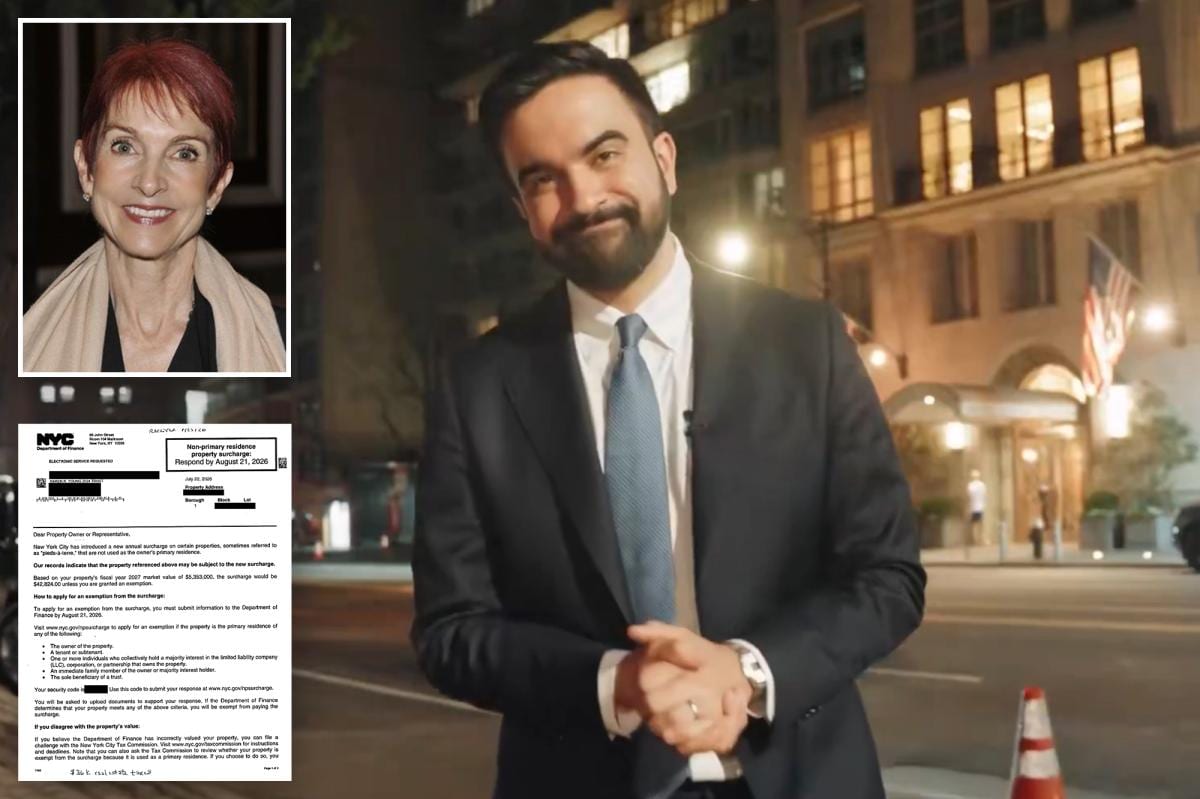
The July 28 Post report describes “ordinary New Yorkers” opening five‑figure assessments and questioning why a tax framed as a luxury surcharge is landing on people who consider the city their primary home. The dispute is quickly turning into a political test of Mamdani’s promise to make the city’s property system fairer.
Key facts
- Source
- New York Post
- Reported
- July 28, 2026
- Desk
- general
- Follow the story
- Spinn Radio Talk
What the new New York pied-à-terre tax is supposed to do
The new pied-à-terre tax championed by Mayor Zohran Mamdani is billed as a corrective to New York’s skewed property market. According to the New York Post, City Hall sold the measure as a targeted levy on wealthy owners who keep high-end apartments as occasional crash pads rather than full‑time homes. In theory, that kind of tax hits people who benefit from New York’s services without putting comparable strain on schools, transit, or local infrastructure.
A policy like this typically aims to raise revenue while nudging underused apartments back into the regular housing market. When a mayor argues that pied-à-terre owners should pay more, the political message is that primary residents will be protected while absentee owners shoulder the extra cost. That promise is central to the anger now surfacing, because the Post’s reporting suggests the tax is not stopping at ultra‑wealthy nonresidents.
“A tax pitched as a luxury surcharge is now being felt at kitchen tables, not only on penthouse terraces.”
Why longtime New Yorkers say their tax bills feel like a betrayal
The New York Post says “ordinary New Yorkers” are opening bills that run into five figures under Mamdani’s new scheme. For people who have treated their apartments as primary homes for years, sometimes decades, seeing a charge associated with pied-à-terre ownership signals that the lines drawn by City Hall are not matching everyday reality.
The frustration is not only about the amount owed. It is about expectations. Residents heard a message that wealthy part‑time owners would finally pay more, then discovered that they have been swept into the same bucket. The Post describes the reaction as seething, with some recipients asking whether they are being unfairly singled out by tax rules that do not reflect how they actually live in their homes.
That sense of being misclassified carries political weight. When a tax aimed at luxury housing lands on middle‑class or otherwise “ordinary” owners, it undermines trust in the broader argument that the system can distinguish between those who treat the city as a playground and those who rely on it as home.
“For many owners, the shock is not just the size of the bill, it is realizing the city now sees their home as a luxury pied-à-terre.”
Spinn Radio
Follow live news on Spinn Radio
How this pied-à-terre backlash puts pressure on Mayor Mamdani
Because Mayor Zohran Mamdani personally attached his name to the pied-à-terre tax push, the fallout from these bills reaches beyond the city’s finance offices and squarely into politics. The New York Post report, dated July 28, 2026, lands at a moment when New Yorkers are already acutely sensitive to affordability and the cost of staying in the city they grew up in.
If enough longtime residents feel they are collateral damage from a policy framed as a hit on absentee wealth, the mayor faces a narrative problem: that the taxman chasing luxury buyers is also pounding the people he pledged to shield. Even without hard numbers on how many households are affected, the image of “five‑figure property tax bills” arriving at regular apartments is likely to resonate in neighborhoods that feel economically squeezed.
For Mamdani, the political test now is whether he adjusts implementation, clarifies eligibility, or doubles down on the existing rules. However he responds, the pushback covered by the Post suggests the debate has already moved from theory about taxing wealth to concrete stories about people staring at bills they did not expect.
“The fight over pied-à-terre taxes is no longer abstract policy talk, it is a kitchen‑table argument about who City Hall sees as rich.”
What is at stake for New York homeowners and the housing debate
At stake in this dispute is more than a set of individual tax bills. How New York applies its pied-à-terre rules signals what kind of homeowners the city wants to keep and how aggressively it will go after perceived underuse in the housing stock. When “ordinary New Yorkers” get tagged with a tax they associate with luxury absentee owners, it blurs the moral line that helped sell the policy in the first place.
This may shape future conversations about broader property tax reform. If the current episode convinces residents that labels like primary residence, second home, and pied-à-terre are being applied too loosely, there will be pressure for clearer criteria and more transparent communication. That, in turn, could influence how new levies are designed and explained, whether for vacancy, speculation, or other forms of high‑end ownership.
For now, the clearest takeaway for homeowners is simple. A measure marketed as a narrow hit on wealthy part‑time residents can still reach people who see themselves far from that category. Anyone with an apartment that might fit a bureaucratic definition of non‑primary use will be watching this rollout closely, and they will be looking for signals from City Hall on whether relief or clarification is coming.
Where to follow the pied-à-terre tax fight as it develops
The New York Post broke this phase of the story with its July 28, 2026 coverage, but the politics of property taxes in New York rarely stop with a single report. As more owners open their mail and compare notes, expect further accounts of surprise assessments and more pressure on city officials to explain who exactly was meant to be caught by the new levy.
For listeners who want to track how Mayor Zohran Mamdani and the City Council respond, you can follow continuing analysis and reaction on Follow live news and talk on Spinn Radio. The debate over this pied-à-terre tax will likely feed into broader conversations about housing, affordability, and the future of homeownership in the city, and those discussions are just beginning.
“This story is still unfolding, and each new bill in a mailbox could mean another voice joining the fight over who counts as a pied-à-terre owner.”
Good to know
Frequently asked questions
What is the new New York pied-à-terre tax about?
The new pied-à-terre tax is a property levy promoted by Mayor Zohran Mamdani to target wealthy owners of part‑time apartments in the city. It was sold as a way to make absentee or occasional residents pay more into local coffers than full‑time New Yorkers.
Why are longtime New Yorkers upset about the pied-à-terre tax?
Longtime New Yorkers are upset because they are receiving large, five‑figure tax bills under a policy that was advertised as targeting wealthy part‑time owners. Many see this as a betrayal of the promise that ordinary primary residents would be spared from the new levy.
Who reported on the backlash to New York’s pied-à-terre tax?
The backlash to New York’s pied-à-terre tax was reported by the New York Post. The outlet detailed how ordinary New Yorkers described being hit with unexpectedly steep bills on July 28, 2026.
What should New York homeowners watch for next on this tax?
Homeowners should watch for how Mayor Zohran Mamdani and city officials clarify or adjust who qualifies as a pied-à-terre owner under the tax. Ongoing public reaction and any official changes will determine whether ordinary residents continue to be caught by the levy.
Explore more on Spinn Radio: Follow live news and talk on Spinn Radio
Sources