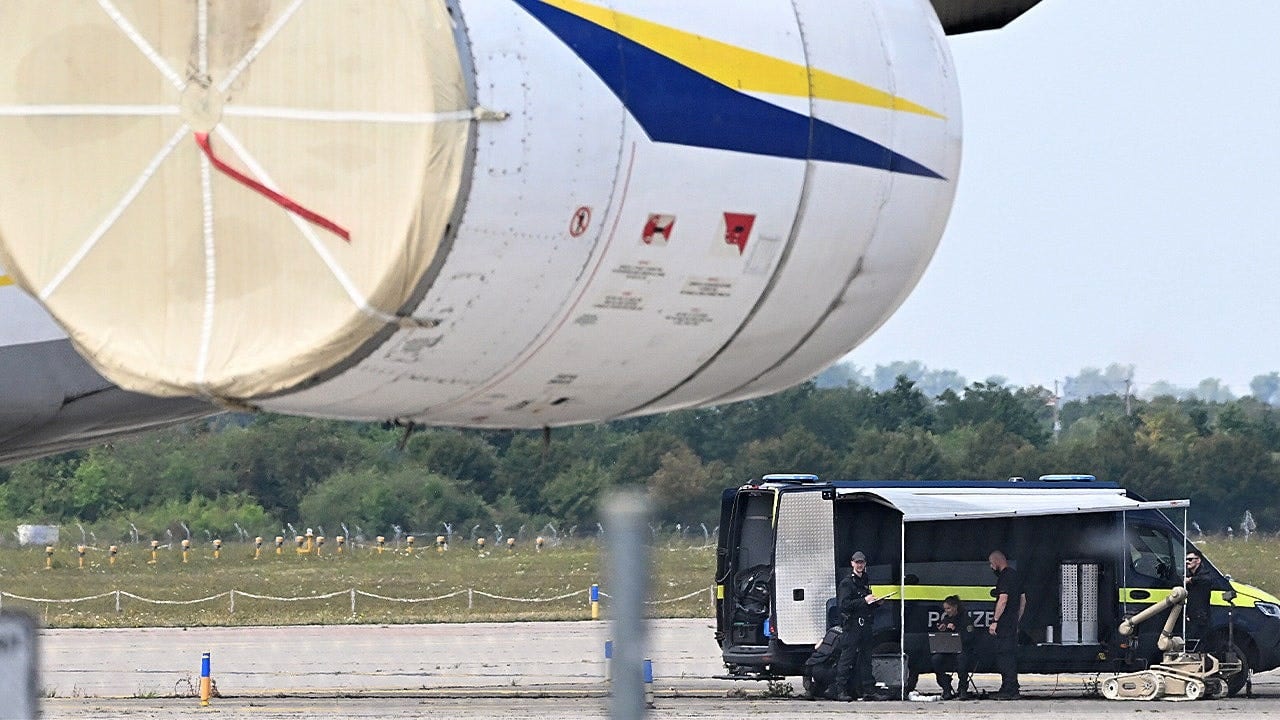
An explosive-carrying drone discovered near a Ukrainian plane at Leipzig/Halle Airport is now being treated as a possible hybrid attack, according to reporting from Fox News. Germany's interior minister has described the incident as a hybrid attack scenario, putting one of the country's key airports at the center of a sensitive security investigation.
The case, reported on August 5, 2026, has immediately raised questions about airport safety, the targeting of Ukrainian-linked assets in Europe, and how prepared German authorities are for tactics that blend physical sabotage with political pressure.
Key facts
- Source
- Fox News
- Reported
- August 5, 2026
- Desk
- general
- Follow the story
- Spinn Radio Talk
What happened at Leipzig/Halle Airport with the explosive drone
According to Fox News reporting on August 5, 2026, authorities at Leipzig/Halle Airport in Germany found a drone carrying an explosive device near a Ukrainian aircraft. The proximity to the Ukrainian plane is central to why the discovery is being treated as more than just an airspace violation or a one-off security breach.
Germany's interior minister has framed the incident as a hybrid attack scenario. That choice of language signals that investigators are looking beyond simple criminal motives and considering a hostile operation designed to intimidate, disrupt, or send a political message. The single key fact so far is stark: an explosive-equipped drone was close enough to a Ukrainian plane at a major German airport to trigger a national-level security response.
For readers tracking security risks around European infrastructure, that detail alone makes Leipzig/Halle Airport a new reference point in the evolving story of how drones and explosives are used against civilian targets.
“An explosive-equipped drone near a Ukrainian plane at a major German airport is now the center of a national security investigation.”
Why German officials call this a 'hybrid attack' scenario
The phrase "hybrid attack scenario" from Germany's interior minister is one of the most important clues to how this case is being viewed. Hybrid attacks usually refer to tactics that combine different pressure points: not just physical damage, but also fear, disruption of logistics, and political signaling. By using that term publicly, the minister is effectively telling the public that this incident touches on national security, not only airport security.
Placed next to a Ukrainian aircraft, an explosive drone at Leipzig/Halle Airport is likely being assessed for whether it connects to wider tensions involving Ukraine and its allies. Even without confirmed attribution, the context matters. A Ukrainian-linked asset on German soil is a symbolic and practical target. The concern is that such an operation could be meant to test German defenses, unsettle passengers and airlines, and generate headlines that amplify a sense of vulnerability.
For now, the main takeaway is that investigators are not treating the drone as an isolated gadget gone astray. They are exploring whether it fits a broader pattern in which drones and explosives become tools of influence and intimidation, not only of direct destruction.
“Labeling the case a hybrid attack signals that investigators see more than just a stray drone in restricted airspace.”
Spinn Radio
Follow live news on Spinn Radio
What is at stake for Leipzig/Halle Airport and European security
Leipzig/Halle Airport now sits at the intersection of aviation safety and geopolitical tension. The discovery of an explosive drone near a Ukrainian plane puts immediate focus on how well European airports can detect and neutralize small, weaponized aircraft before they get close to commercial operations. It also raises questions about whether Ukrainian-linked flights or cargo in Europe are becoming higher-priority targets.
The broader risk is copycat or escalation. If one explosive drone can reach the vicinity of an international flight at a major German hub, security planners across Europe will be asking where the next attempt could occur and how much more sophisticated it might be. Even without any detonation, the fact that the drone and its explosive load were present is enough to trigger reviews of surveillance zones, response times, and coordination between airport security and national interior ministries.
For travelers and airlines, the key point is that incidents like this can quickly lead to new restrictions, rerouted flights, or changed security procedures. The Leipzig/Halle case is likely to be cited in upcoming debates about how aggressively European states should police drones around airports and critical infrastructure.
How Leipzig/Halle fits into the evolving drone threat to airports
The explosive drone incident at Leipzig/Halle Airport underlines a trend that aviation security officials have been warning about: the difficulty of defending large, open airfields against small, remotely operated aircraft that can carry dangerous payloads. Traditional airport security is heavily focused on terminals, checkpoints, and perimeter fences. Drones challenge that model by approaching from above or from distances that are hard to secure continuously.
By appearing near a Ukrainian plane, this particular drone highlights the potential for targeted harassment of specific flights or operators, not just random disruption of air traffic. That targeting angle is part of what makes the Leipzig/Halle find so troubling. If investigators confirm that the device was intentionally directed at Ukrainian-linked aviation, it will feed pressure to expand anti-drone measures beyond generic airspace protection toward more tailored risk assessments for certain routes or carriers.
For anyone following the story, one of the most important things to watch will be whether German authorities publicly detail how the drone was detected and neutralized, and whether other European airports report similar suspicious activity in the wake of the Leipzig/Halle probe.
“The Leipzig/Halle case shows how a small drone can punch far above its weight in terms of political and security impact.”
What to watch next as the Leipzig/Halle probe unfolds
With Fox News confirming that a hybrid attack scenario is under investigation, the next key developments will be whether German officials attribute responsibility and whether they link the incident explicitly to wider conflicts involving Ukraine. Identification of a perpetrator, if it comes, would shape diplomatic responses and could influence airport security policies across the European Union.
Another watchpoint is how openly authorities share lessons from the case. Public disclosure of even basic findings about the explosive device, the drone model, or the route it took could help airports and airlines elsewhere adjust their defenses. At the same time, officials may hold some of that information back to avoid giving future attackers a blueprint.
For ongoing context, listeners can track how this story intersects with broader security debates through Follow live news and talk on Spinn Radio, where developments around hybrid threats, aviation safety, and the Ukraine conflict are likely to feature as the Leipzig/Halle investigation continues.
Good to know
Frequently asked questions
What exactly happened at Leipzig/Halle Airport?
Authorities found a drone carrying an explosive device near a Ukrainian aircraft at Leipzig/Halle Airport. That discovery triggered a national security probe in Germany.
Why are German officials calling it a hybrid attack scenario?
Germany's interior minister has described the incident as a hybrid attack scenario because investigators see potential political or strategic intent behind the explosive drone, not just a simple security breach.
Was the Ukrainian plane at Leipzig/Halle Airport the target?
Investigators found the explosive drone near a Ukrainian plane, which is why its presence is seen as especially sensitive, but public reporting has not confirmed a specific target beyond that proximity.
How serious is the security risk from this airport drone incident?
The risk is serious enough that German authorities have opened a hybrid attack probe, reflecting concern about both the explosive device itself and what it may signal about future threats to European airports.
Explore more on Spinn Radio: Follow live news and talk on Spinn Radio
Sources