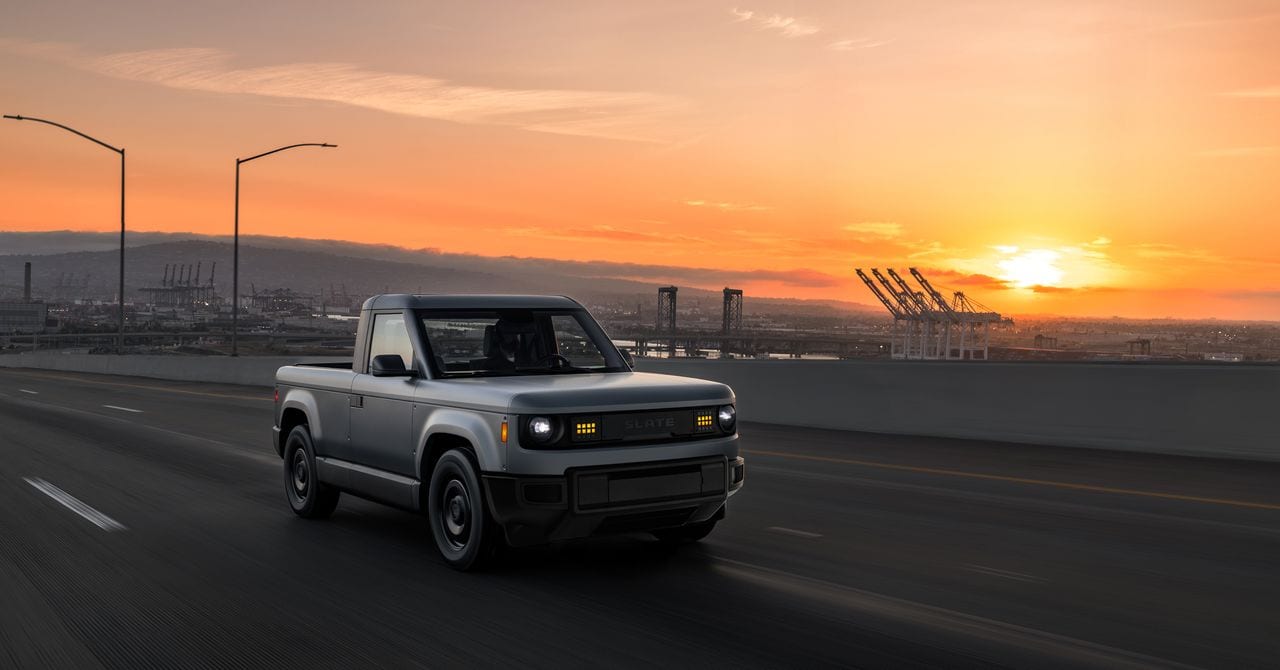
WIRED is reporting that a new $25,000 electric pickup called Slate has arrived with better-than-expected specs and a mission to be the most affordable EV truck in the United States. Backed by Jeff Bezos and pitched as a no-frills work rig, the truck is targeting the same cost-conscious buyers that have powered the rise of Ford’s Maverick, only this time with a battery pack and a home-charger instead of a gas tank.
For a segment that has been dominated by pricey, tech-stuffed models, the appearance of a low-cost, fix-it-yourself EV truck is a significant moment. It signals a push to drag electric trucks out of luxury garages and into everyday driveways, and it sets up an early test of whether American truck buyers are ready to trade excess features for affordability and basic utility.
Key facts
- Source
- WIRED
- Reported
- June 24, 2026
- Desk
- general
- Follow the story
- Spinn Radio Talk
What makes the Slate truck different from other EV pickups
WIRED’s report frames Slate as a deliberate break from the high-price, high-complexity electric trucks that have defined the market so far. Instead of leaning on luxury interiors and blockbuster performance figures, the truck is described as “no-frills, ” with its big selling point being a roughly $25,000 starting price that undercuts every other electric pickup currently on sale in the United States at the time of reporting.
That positioning matters because it goes after a very different buyer. Rather than chasing premium shoppers, Slate is trying to appeal to people who look at a truck as a practical tool and a monthly payment, not a rolling tech showcase. The detail to remember is simple: this is an EV pickup designed from day one to be the cheapest option in the segment, not a high-end model discounted later.
“This is an EV truck built to be the cheapest option on the lot, not a luxury toy with a battery.”
How the $25K Slate aims to rival Ford’s Maverick
According to WIRED, Slate is being positioned as a direct challenger to Ford’s Maverick, the compact pickup that has attracted buyers by offering truck utility at a relatively low entry price. The key twist is that Slate is electric, so it is trying to hit the same value-focused niche with a different powertrain and ownership experience.
The comparison to the Maverick is important because it shows exactly where Slate wants to compete: not with heavy-duty workhorses or full-size lifestyle trucks, but with urban and suburban drivers who need a bed, decent range, and a payment that does not crush their budget. If you remember one thing from this matchup, it is that Slate is trying to become the Maverick of EVs, the truck that proves an electric pickup can be basic, cheap, and good enough.
“Slate is gunning for the Maverick crowd: people who want a real truck, not a status symbol, at a price that feels almost old-fashioned.”
Spinn Radio
Follow live news on Spinn Radio
Why repairability is central to Slate’s EV truck pitch
WIRED highlights one feature that sets Slate apart from many modern vehicles: the company wants owners to be able to fix the truck themselves. In a decade when EVs and connected cars often come across as sealed black boxes, that promise of repairability is a quiet but meaningful differentiator.
The idea is straightforward. A truck aimed at budget-conscious buyers cannot rely on expensive dealer service visits to stay on the road. By emphasizing that the Slate can be worked on by its owner, the brand is signaling a more old-school relationship with the vehicle, even though it is powered by batteries. That is a key takeaway: Slate is not only cheap to buy, it is trying to be cheaper to keep running too.
“In an era of sealed EVs, the promise that you can fix Slate yourself is almost as disruptive as the price tag.”
Why Jeff Bezos backing raises the stakes for this EV truck
WIRED notes that Slate has backing from Jeff Bezos, a detail that immediately raises expectations around the project. Capital from a figure with that profile suggests this is not a side experiment, but an attempt to build something at meaningful scale if demand materializes.
Bezos’ involvement brings two big implications. First, it signals that serious money believes there is a business case for mass-market, affordable EV pickups rather than just luxury models. Second, it puts added pressure on Slate to deliver on its promises of price, specs, and repairability, because a high-profile backer tends to draw more scrutiny from investors, rivals, and regulators alike. If you are tracking which EV projects might actually stick around, that name on the cap table is a detail worth remembering.
“With Bezos money behind it, Slate is less a quirky niche truck and more a test case for whether cheap EV pickups can scale.”
What to watch next as the Slate electric truck rolls out
WIRED’s June 24, 2026 report focuses on the launch moment, but the real story will unfold in how buyers respond. Early questions are obvious: will traditional truck owners trust a stripped-back EV as their daily workhorse, and can Slate actually deliver trucks at volume while holding the line on that $25,000 headline price?
Regulatory incentives, charging infrastructure, and competition from both legacy automakers and EV startups will shape what happens from here. If Slate attracts the same kind of demand that surprised Ford with the Maverick, it could pressure rivals to rethink their own pricing and design philosophy for electric trucks. For anyone watching the EV transition shift from luxury to mainstream, this is one model worth tracking closely.
Spinn Radio will be following how this story develops, from adoption in truck-heavy regions to reactions from established automakers. To stay on top of the latest analysis and on-air debates around EV affordability, you can Follow live news and talk on Spinn Radio and keep Slate on your radar as a potential turning point in the truck market.
“The real test is not whether Slate can launch at $25K, but whether it can stay there once real-world demand hits.”
Good to know
Frequently asked questions
What is the Slate electric truck everyone is talking about?
The Slate is a new Bezos-backed electric pickup that WIRED reports is launching as the most affordable EV truck in the United States at about $25,000. It is pitched as a no-frills work truck with an emphasis on basic utility over luxury features.
How does this new pickup compare to Ford’s Maverick?
WIRED reports that Slate is being positioned to compete directly with Ford’s Maverick by targeting budget-conscious buyers who want a practical truck. The difference is that Slate uses an electric powertrain while aiming for a similarly accessible price bracket.
Why are people focused on Slate’s repairability?
People are focused on repairability because WIRED notes that Slate is designed to be fixable by its owners, which contrasts with many modern EVs. That approach could lower ownership costs and appeal to truck buyers used to working on their own vehicles.
Why does Jeff Bezos’ backing of Slate matter?
Jeff Bezos’ backing matters because it signals significant financial support and ambition behind the affordable EV truck project. His involvement suggests Slate is intended as a serious, scalable entry in the electric pickup market, not a small niche experiment.
Explore more on Spinn Radio: Follow live news and talk on Spinn Radio
Sources