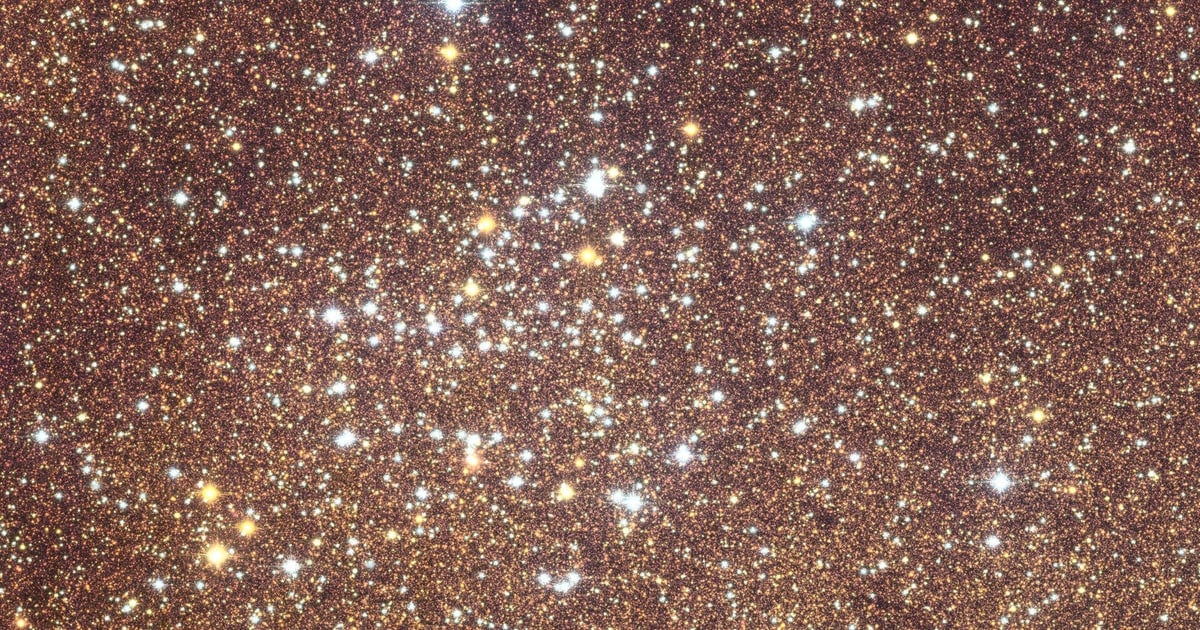
A new CBS News report says a space telescope has captured the most detailed image yet of the Milky Way’s crowded heart, a view astronomers are calling a kind of “cosmic magnifying glass.” The result comes from the Euclid mission, which is mapping a huge slice of the sky to help scientists probe dark matter and dark energy.
The image, reported on June 24, 2026, is an early sign of how powerful Euclid’s wide-field vision could be. By resolving the galaxy’s central regions in unprecedented detail, the mission is laying groundwork for a much larger cosmic map that researchers hope will clarify how the invisible parts of the universe shape what we see.
Key facts
- Source
- CBS News
- Reported
- June 24, 2026
- Desk
- general
- Follow the story
- Spinn Radio Talk
What CBS News is reporting about Euclid’s Milky Way image
CBS News reported on June 24 that a telescope had delivered the sharpest view yet of the Milky Way’s core, likening the new data to a “cosmic magnifying glass.” The observation comes from Euclid, a space mission built to survey roughly one-third of the sky with enough precision to study how dark matter and dark energy influence the universe on large scales.
This latest image matters because the galactic center is one of the most extreme regions in our home galaxy, packed with stars, gas and dust. For Euclid to succeed at its wider mission, it must handle crowded, complex fields like this and still produce clean, usable data. The CBS News story highlights that Euclid is already delivering that kind of detail, even while its long survey is still ramping up.
The immediate takeaway: the Milky Way’s core is turning into an early proving ground for Euclid’s capabilities. If the telescope can dissect our own galaxy’s heart with this level of clarity, astronomers expect it to perform just as well on more distant targets that hold clues to the dark universe.
“The Milky Way’s crowded heart is quickly becoming Euclid’s first big stress test, and it is passing with sharp, intricate detail.”
How Euclid’s sky survey aims to tackle dark matter and dark energy
Euclid’s primary job, as summarized in the CBS News coverage, is to chart about one-third of the sky to help researchers tackle two of cosmology’s biggest puzzles: dark matter and dark energy. Dark matter is the unseen mass that appears to glue galaxies together, while dark energy is thought to drive the accelerating expansion of the universe. Both are inferred from their effects, not from direct detection, which is why a precise cosmic map is so valuable.
By observing how galaxies are distributed and how their shapes subtly distort, Euclid can trace where matter, including dark matter, is located across vast distances. Over such large areas of sky, small statistical signals add up, letting scientists see patterns that would be invisible in a smaller, more focused survey. The Milky Way core image is just one scene in a far bigger panorama that will eventually stretch across a third of the celestial sphere.
For readers following this mission, one concrete point to remember is the sheer scale: one-third of the sky means billions of objects cataloged and measured. Each one becomes a data point in the story of how structures formed and evolved under the influence of dark matter and dark energy.
“Euclid’s real power is not a single dramatic image but a sky-spanning census of billions of objects that quietly reveal the universe’s invisible scaffolding.”
Spinn Radio
Follow live news on Spinn Radio
Why the Milky Way’s center is a crucial early target for Euclid
Targeting the Milky Way’s center gives Euclid a complex, near-at-hand laboratory for refining its techniques. The region is dense with stars and veiled by dust, which makes separating individual objects and correcting for interference a technical challenge. If Euclid can cope with that, mission scientists gain confidence in its ability to separate overlapping galaxies and measure faint distortions in more distant parts of the sky.
The CBS News headline’s “cosmic magnifying glass” description captures how this sort of observation helps. By seeing more stars, finer structures and subtle gradients in brightness, Euclid can better calibrate its instruments and models. That calibration feeds into the broader survey, where the goal is to detect very small changes in apparent galaxy shapes and positions that carry information about dark matter and dark energy.
A practical takeaway for space fans: this Milky Way heart image is not a one-off showpiece. It is a benchmark that will influence how the rest of Euclid’s observing strategy gets tuned, which in turn affects the quality of every map the mission releases over its lifetime.
“This view of our galaxy’s heart is less a trophy image and more a calibration tool for the deep, statistical work Euclid is built to do.”
What is at stake as Euclid maps one-third of the sky
The stakes with Euclid’s survey are straightforward but high. By charting a third of the sky, the mission aims to give scientists a better handle on how the universe’s expansion has changed over cosmic time. That history is central to testing ideas about dark energy, the mysterious component that seems tied to the universe’s accelerating growth.
On shorter timescales, each data release will shape how astronomers design follow-up observations with other telescopes. A clean catalog of galaxies, clusters and distant structures lets researchers pick the most promising targets for detailed study, whether they are hunting for subtle dark matter effects or trying to understand how galaxies evolve in different environments.
For the general public, the key point is that this project is not only about distant galaxies. Euclid’s wide view means that familiar regions, including our Milky Way’s center, become part of a single, coherent map. That unified dataset will feed into many branches of astronomy at once, from galaxy evolution studies to work on the large-scale cosmic web.
How to keep up with Euclid’s discoveries and live reactions
The CBS News report is one of the first major signals that Euclid’s science phase is starting to produce headline-grabbing images, such as this detailed view of the Milky Way core. As the survey grows, more such highlights are likely, each tied to new data releases or milestones as the mission fills in its one-third slice of the sky.
If you want to follow how scientists, commentators and space fans react in real time, you can track ongoing coverage and discussion on Follow live news and talk on Spinn Radio. That live stream will surface new angles as Euclid’s results roll out, including context on what each major image or dataset means for the larger dark matter and dark energy puzzle.
The near-term thing to watch is how often Euclid’s early images, like this “cosmic magnifying glass” view of the galactic center, show up in broader conversations about the future of cosmology. As more data arrives, those snapshots will increasingly be seen as the first frames in a much longer movie about how the universe is built.
“Keep an eye on the early images; they are the opening scenes of Euclid’s long-term story about the dark universe.”
Good to know
Frequently asked questions
What is Euclid and what is it trying to study?
Euclid is a space mission designed to chart about one-third of the sky to study dark matter and dark energy. It does this by mapping how matter is distributed across the universe.
Why is the new view of the Milky Way’s center important?
The new view of the Milky Way’s center is important because it shows Euclid can resolve one of the galaxy’s most crowded regions in great detail. That capability is crucial for the larger survey of distant objects.
How does mapping a third of the sky help with dark energy research?
Mapping a third of the sky helps with dark energy research by revealing how structures in the universe have grown over time. Those growth patterns reflect the influence of dark energy on cosmic expansion.
Where can I follow ongoing coverage of Euclid’s discoveries?
You can follow ongoing coverage of Euclid’s discoveries by tuning into live news and commentary on Spinn Radio Talk. It highlights new data and explains what each development means for the mission.
Explore more on Spinn Radio: Follow live news and talk on Spinn Radio
Sources