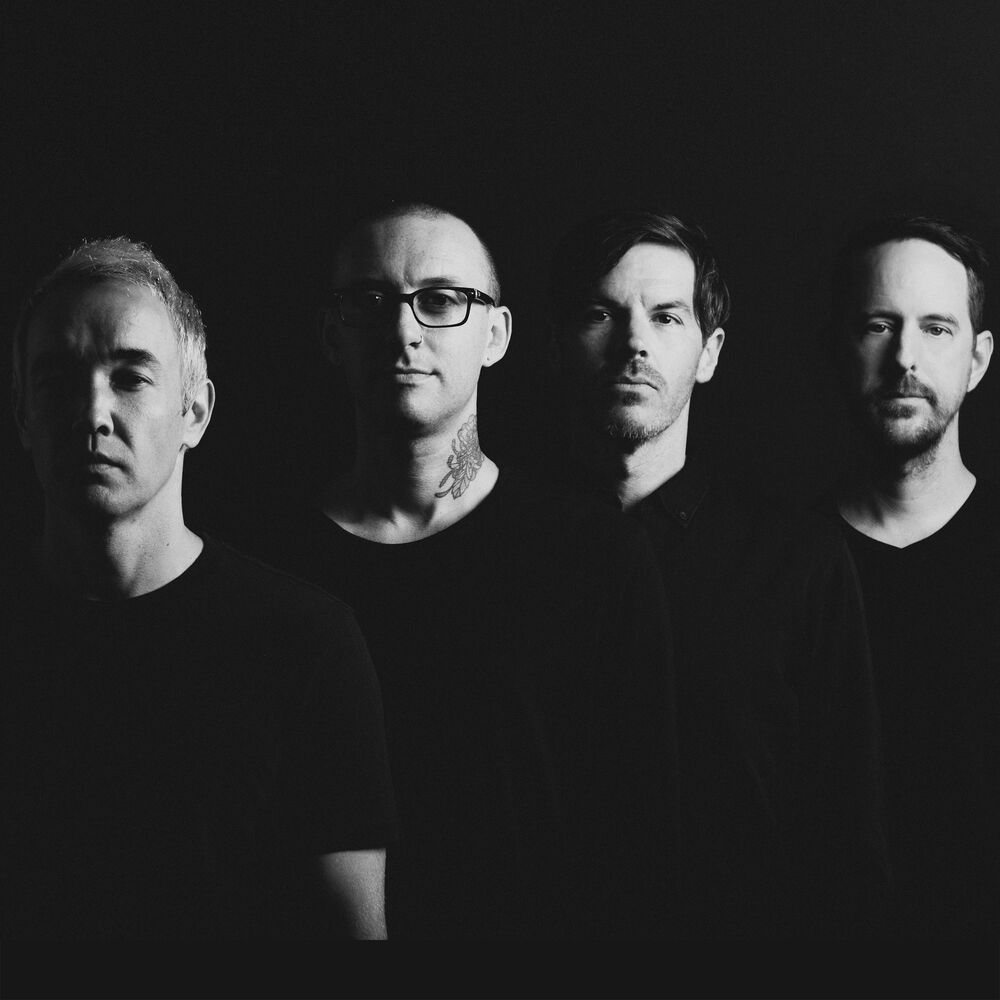
Every rock era has a band that gets flattened into a single song. For Hoobastank, that song is "The Reason" the aching, string-swept ballad that climbed all the way to No. 2 on the Billboard Hot 100 and turned four guys from the Los Angeles suburbs into a household name. But reducing Hoobastank to one hit misses the better story: a band that formed in 1994, spent seven years building a following the hard way, and then kept making records and playing shows long after the spotlight moved on. Nearly three million Last.fm listeners still press play on them every month. That kind of staying power doesn't come from one song.
Key facts
- Formed
- 1994, Agoura Hills, California
- Core lineup
- Doug Robb (vocals), Dan Estrin (guitar), Chris Hesse (drums)
- Breakthrough single
- "Crawling in the Dark" (2001)
- Signature hit
- "The Reason", No. 2 on the Billboard Hot 100
- Studio albums
- Six, plus one EP
- Monthly listeners
- Nearly 3 million on Last.fm
Agoura Hills, 1994: a cover band gets serious
Hoobastank's origin story starts in Agoura Hills, a quiet suburb on the western edge of Los Angeles County that, improbably, became one of the most fertile patches of ground in American rock. This is the same small-town scene that produced Linkin Park's founding members, kids trading demo tapes and battling each other at high school talent shows. It was in that world that vocalist Doug Robb met guitarist Dan Estrin, and the two decided they'd rather play together than compete.
The earliest version of the band, originally spelled Hoobustank, a nonsense name the members have always declined to explain in any satisfying way, wasn't chasing radio at all. They began as a Talking Heads cover band, working through David Byrne's angular art-funk in garages and backyards. It's a detail that sounds like trivia, but it explains a lot about what came later: underneath the big polished choruses, Hoobastank's rhythm section always had a nervier, more syncopated pulse than most of their contemporaries. Drummer Chris Hesse and original bassist Markku Lappalainen rounded out the founding lineup, and by the late '90s the band was a fixture of the LA club circuit, self-releasing music and packing local venues alongside their Agoura Hills peers.
Those years in the trenches mattered. By the time major labels came calling, Hoobastank wasn't a demo-tape gamble, they were a battle-tested live act with a real hometown following. Island Records signed them in 2001, beginning a label relationship that would last more than a decade.
Crawling into the light
The self-titled debut Hoobastank arrived in late 2001, and its lead single "Crawling in the Dark" did exactly what a debut single is supposed to do: it kicked the door down. Urgent, melodic, and built around Estrin's serrated guitar riff and Robb's clean, powerful tenor, the song became an alternative radio staple at a moment when rock airwaves were crowded with nu-metal growlers. Hoobastank stood out precisely because Robb sang really sang, instead of barking.
The follow-up single "Running Away" proved the debut was no fluke, showing off the band's gift for wounded, mid-tempo melodrama and pushing the album to platinum status in the United States. In the space of a year, Hoobastank had gone from local heroes to a nationally touring act sharing stages with the biggest rock bands of the era. The only question was whether they could get bigger.
“Hoobastank stood out precisely because Doug Robb sang, really sang, at a moment when rock radio was crowded with growlers.”
The Reason changes everything
The answer came with their second album, The Reason, released in December 2003. The record opened with harder material "Out of Control" and "Same Direction" are two of the most aggressive, propulsive songs the band ever cut, but it was the title track that rewired their career. "The Reason" was a departure in every way: a slow-building ballad about guilt, change, and wanting to be a better person, delivered with zero irony and a chorus engineered to be sung back by arenas.
It became one of the defining songs of 2004. It peaked at No. 2 on the Billboard Hot 100, topped the modern rock airwaves, and carried the album to multi-platinum sales. It was everywhere, radio, television, graduation ceremonies, weddings, and two decades later it remains a fixture of 2000s playlists and a genuinely beloved song rather than a punchline. Very few rock ballads from that era have aged as gracefully.
Spinn Radio
Listen to Hoobastank on Spinn Radio
The long road after the peak
What do you do after a song that big? Hoobastank's answer was: keep working. Every Man for Himself (2006) debuted strongly and produced the single "If I Were You, " leaning further into the melodic side of their sound. For(N)ever followed in 2009 and Fight or Flight in 2012, closing out their Island Records run. Along the way the band weathered the departure of founding bassist Markku Lappalainen in 2005, the kind of lineup change that sinks many bands, while Robb, Estrin, and Hesse held the core together, as they still do today.
In 2018 they returned with Push Pull, their sixth studio album, embracing a groovier, more rhythm-forward sound that, fittingly, circled back toward the danceable instincts of their Talking Heads-covering youth. And through it all they toured, steadily, globally, and with a professionalism that made them a reliable draw across North America, Europe, Asia, and South America, where their fanbase has always been passionate.
Today Hoobastank occupies a spot that few of their early-2000s peers can claim: a band with an undeniable era-defining hit and a deep, sturdy catalog, still fronted by the same voice, still built on the same three-man core that formed in a suburb thirty years ago. Fans of 3 Doors Down, Papa Roach, and the rest of that alt-rock generation know the type, but nobody else sounds quite like them.
Good to know
Frequently asked questions
What does the name Hoobastank mean?
Nothing, officially. The band has always said the name, originally spelled 'Hoobustank', is a nonsense word from their high school days, and they've never given a definitive explanation for it.
What is Hoobastank's biggest song?
"The Reason" (2004), which peaked at No. 2 on the Billboard Hot 100 and remains one of the most recognizable rock ballads of the 2000s. "Crawling in the Dark" and "Running Away" were their breakthrough hits before it.
Is Hoobastank still together?
Yes. Founding members Doug Robb, Dan Estrin, and Chris Hesse remain the core of the band, which continues to record and tour actively, including a run of upcoming ticketed shows.
How many albums does Hoobastank have?
Six studio albums and one EP, from their 2001 self-titled debut through 2018's Push Pull, with The Reason (2003) as their commercial peak.