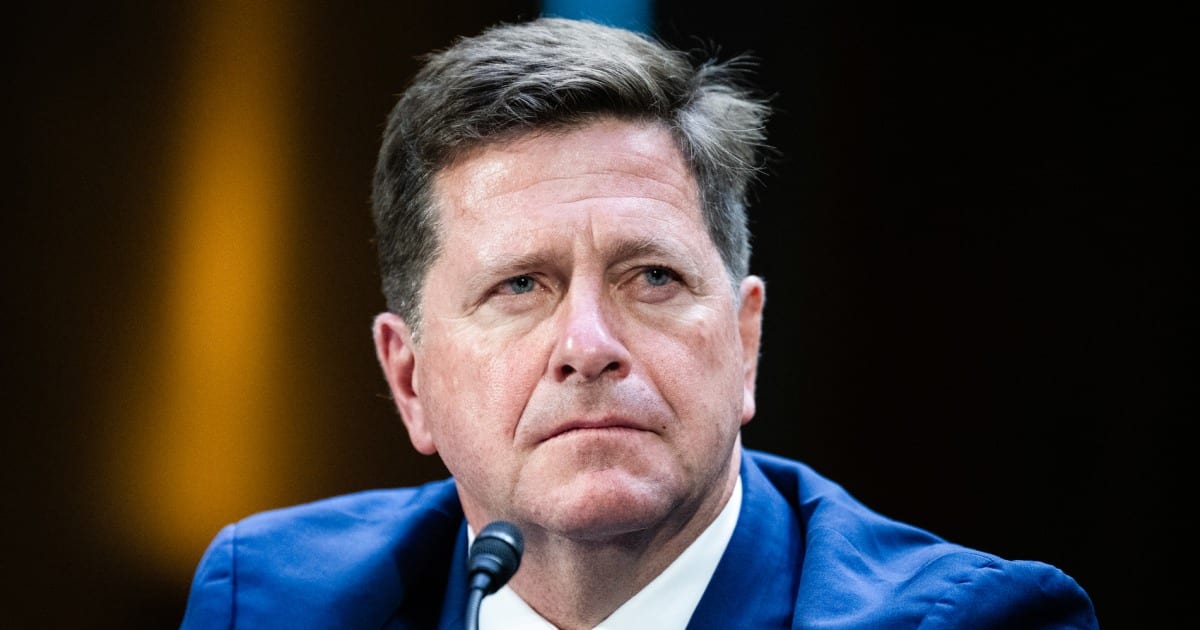
Jay Clayton has been confirmed by the Senate to lead the U.S. intelligence community, The New York Times reported on Tuesday, elevating a nominee whose stance on the 2020 election cost him Democratic support. Clayton will take over the Office of the Director of National Intelligence from Bill Pulte, putting him atop the sprawling network of American spy agencies at a tense political moment.
His confirmation matters immediately because he refused to clearly state that Joseph R. Biden Jr. won the 2020 election, a position that sharpened partisan lines around a job meant to sit above politics. With his arrival, the question is how a figure viewed skeptically by Democrats will manage intelligence on threats, elections, and foreign adversaries while trying to reassure Congress and the public.
Key facts
- Source
- The New York Times
- Reported
- July 28, 2026
- Desk
- general
- Follow the story
- Spinn Radio Movies
Why Jay Clayton’s confirmation is politically charged
The central controversy around Jay Clayton’s rise to lead the intelligence community is simple: he shed Democratic support after refusing to clearly say Joseph R. Biden Jr. won the 2020 election. For a role that is supposed to be rooted in facts and nonpartisan assessments, that hesitation cuts to the heart of how both parties see his credibility. Democrats who had backed or considered backing him pulled away, and his support in the Senate narrowed along party lines.
That context will follow him into the Office of the Director of National Intelligence. The job requires briefing lawmakers on sensitive matters, from election security to foreign interference. When one side of the aisle questions a director’s willingness to acknowledge an officially certified election, every closed-door briefing and public assessment becomes a test of trust.
The New York Times framed his refusal on 2020 as the turning point that cost him Democratic backing, which underscores how much this appointment is about more than resumes or experience. It is about whether the person managing classified assessments is seen as committed to the same basic version of reality as the elected officials he reports to.
“Clayton is stepping into a job built on trust after publicly wavering on the outcome of the 2020 election.”
What the Office of the Director of National Intelligence does
Clayton is not simply taking over a single agency. He is inheriting the Office of the Director of National Intelligence from Bill Pulte, which sits atop the entire U.S. intelligence community. The ODNI’s role is to coordinate information and priorities across multiple spy agencies and to present a consolidated picture of threats and trends to the president and Congress.
That makes the director a gatekeeper for some of the government’s most sensitive calls: what constitutes a foreign threat, how to describe it publicly, and how quickly to surface it to lawmakers. When election integrity, cyber attacks, or foreign influence are in question, the ODNI is typically at the table. A change at the top can shift how aggressive the office is in sounding alarms or smoothing them over.
The handoff from Bill Pulte to Jay Clayton will be closely watched because the director’s tone and judgments shape how intelligence is translated for political leaders. For anyone tracking power and accountability in Washington, knowing who runs ODNI is as important as knowing who runs a cabinet department.
Spinn Radio
Follow film news on Spinn Radio
How Clayton’s stance on the 2020 election could shape his tenure
Clayton’s refusal to clearly affirm Biden’s 2020 victory is not just a footnote from his confirmation hearings. It goes to how allies and critics will read every future assessment his office releases. When the ODNI weighs in on election security, misinformation, or foreign meddling, Democrats in particular may revisit his earlier unwillingness to state that Biden won.
This tension could surface whenever intelligence touches on domestic politics. If the office issues a report on threats to voting systems or certifies that an election result reflects the will of the voters, skeptics will ask whether Clayton is bending to partisan expectations or resisting them. That scrutiny may push him either to lean heavily on career analysts or to avoid any appearance of weighing in on contested political narratives.
For the intelligence community itself, many of whom prize analytic independence, the question is whether their new leader reinforces apolitical standards or lets political calculations creep in. His early public statements and interactions with both parties in Congress will signal which way he intends to steer.
“Every ODNI statement on elections will now be read through the lens of Clayton’s reluctance to affirm 2020.”
What this leadership change means for U.S. intelligence
A new director at ODNI always brings uncertainty about priorities, and Clayton’s confirmation is no exception. With Bill Pulte stepping aside, analysts and policymakers will be watching for early signs of how the new chief frames threats, manages classified findings, and calibrates public disclosures. Even subtle shifts in tone can influence budgets, policy debates, and how aggressively agencies pursue certain lines of collection.
Because his path to confirmation ran through a partisan fight over the 2020 election, Clayton begins with a narrower base of political goodwill than many predecessors. That could limit his room to maneuver on controversial judgments. If he issues an assessment that angers one party, he may find himself with fewer defenders on Capitol Hill, which in turn can affect morale inside the intelligence community.
For the broader public, the change at the top is a reminder that intelligence leadership is not immune from political battles. Debates over election legitimacy and truthfulness now extend into the very office charged with separating fact from spin. Observers who track these intersections of politics and security will likely treat Clayton’s tenure as a bellwether for how resilient U.S. intelligence norms really are.
How to keep following Jay Clayton’s intel story on Spinn Radio
Clayton’s confirmation is only the starting point. The real test will come in how he handles his first major intelligence controversies and interactions with a divided Congress. As The New York Times report makes clear, his relationship with Democrats is already strained, which means any public report or high-profile briefing could quickly become news on its own.
Spinn Radio will track how this plays out across politics, media, and culture, especially as filmmakers and storytellers circle big shifts in national security leadership. For a broader look at how power struggles and intelligence debates show up on screen, you can Explore film coverage on Spinn Radio and watch for future projects that dramatize moments like this confirmation fight.
For now, the key things to watch are how Clayton addresses questions tied to the 2020 election, how he positions himself relative to the analysts who work under him, and whether he can build any bipartisan trust around the ODNI. Those answers will define whether his tenure stabilizes the intelligence community or deepens its political crosscurrents.
“The confirmation vote is finished. The real story starts with Clayton’s first decisions as intelligence chief.”
Good to know
Frequently asked questions
Who is Jay Clayton and what role did he just take on?
Jay Clayton has been confirmed by the Senate to lead the U.S. intelligence community as head of the Office of the Director of National Intelligence. He will replace Bill Pulte in that coordinating role over America’s spy agencies.
Why was Jay Clayton’s confirmation considered controversial?
Clayton’s confirmation was controversial because he refused to clearly say Joseph R. Biden Jr. won the 2020 election, which led him to lose Democratic support. That stance raised doubts about his willingness to embrace basic electoral facts in a job built on trusted assessments.
What does the Office of the Director of National Intelligence do?
The Office of the Director of National Intelligence coordinates the work of the U.S. intelligence community and briefs leaders on key threats. Its director shapes how classified findings are interpreted for the president and Congress.
What should we watch for next under the new intelligence chief?
The key thing to watch is how Clayton handles issues tied to election security, misinformation, and politically sensitive intelligence. His early decisions and reports will signal whether he can win back any bipartisan trust around the ODNI.
Explore more on Spinn Radio: Explore film coverage on Spinn Radio
Sources