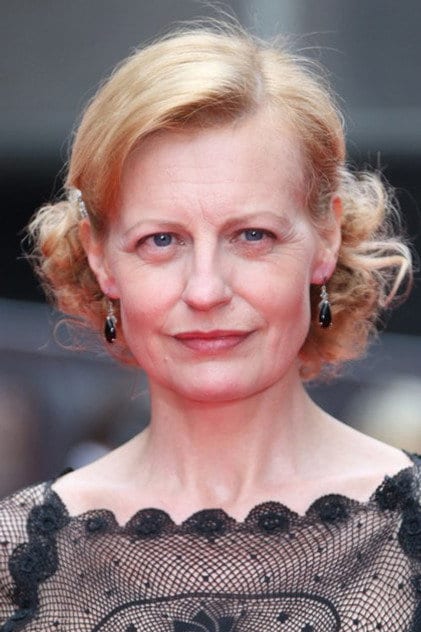
Anastasia Hille is one of those actors you know on sight, even if you do not know her name yet. Across British film, television and theatre, she has become the quiet force who sharpens every scene she steps into, from the ghostly corridors of The Awakening to the sunlit fantasy of Mamma Mia! Here We Go Again.
Born in London and trained at the Drama Centre, Hille has built a career that runs on craft rather than noise. With 28 film credits and major stage recognition, including Olivier Award nominations for The Master Builder in 2011 and The Effect in 2013, she specialises in complex women on the edge of crisis, power or revelation. If you are piecing together where you have seen her, this is where to start.
Key facts
- Known for
- Acting
- Born
- 1965-11-28
- Place of birth
- Lambeth, London, England, UK
- Film credits
- 28
- Notable films
- Snow White and the Huntsman (2012), Mamma Mia! Here We Go Again (2018), Tulip Fever (2017), The Awakening (2011), Desert Flower (2009), A United Kingdom (2016)
Who is Anastasia Hille and why do filmmakers trust her?
Anastasia Hille was born in Lambeth, London, in 1965 and trained at London’s Drama Centre, a school known for turning out actors with serious range. That training shows in the way she can move from stylised fairy tale spectacle in Snow White and the Huntsman (2012) to intimate character work in dramas like Desert Flower (2009) and A United Kingdom (2016). She is not a star vehicle actor, she is the specialist directors call when they need a role played with weight and zero fuss.
The theatre world clocked this early. In 1994 she won second prize at the Ian Charleson Awards, with Toby Stephens taking first and Jude Law third, which puts her squarely among a generation of heavyweight British performers. Later, Olivier nominations for Best Supporting Actress for The Master Builder at the Almeida Theatre (2011) and The Effect at the National Theatre’s Cottesloe (2013) underlined what casting directors already knew: give Hille a supporting role and she will deepen the whole project.
On screen, that means you often meet her as the character who suddenly makes the stakes feel real. Whether she is part of the period intrigue of Tulip Fever (2017) or the layered politics of A United Kingdom (2016), she anchors the fantasy or history in something lived-in and human.
“Give Anastasia Hille a supporting role and she will quietly deepen the whole project.”
Anastasia Hille in The Awakening: who should watch this ghost story
If you are searching for “Anastasia Hille horror movie” you are probably thinking of The Awakening (2011), a moody British ghost story that has become a low-key favourite for viewers who like their scares atmospheric rather than gory. Set in a haunted boarding school between the wars, it leans on doubt, grief and repressed memory as much as jump scares, which plays directly to Hille’s strengths.
In this film, she fits seamlessly into a world of stiff upper lips and buried trauma, the kind of setting where a glance or a pause matters as much as a monologue. What stands out is how grounded she keeps the supernatural plot. Whenever she appears, the story feels less like a genre exercise and more like a human drama that happens to have ghosts in it.
If you enjoyed slow-burn hauntings and tense period detail, queue up The Awakening and watch how Hille uses tiny shifts in voice and posture to sell the uncanny. It is a masterclass in how a supporting performance can quietly carry a film’s emotional weight.
“Whenever Hille appears in The Awakening, the ghost story briefly turns back into a human drama.”
Spinn Radio
Explore Anastasia Hille on Spinn Radio
From Desert Flower to A United Kingdom: Hille in true-story dramas
Hille has a particular knack for grounding films based on true events. In Desert Flower (2009), which traces the life of model and activist Waris Dirie, she helps navigate tough subject matter without tipping into melodrama. Her presence in key scenes helps steer the film between anger, resilience and the bittersweet reality of survival.
She brings a similar discipline to A United Kingdom (2016), a drama built around an interracial marriage that reshaped a country’s politics. In stories like this, the supporting cast need to sketch whole social worlds in a handful of scenes. Hille does it with finely judged choices that suggest decades of backstory without spelling anything out.
If you gravitate to prestige dramas drawn from real life, Hille is a reliable marker of quality. Spot her in the credits and you can expect the film to treat its historical and political material with care rather than cliché.
Why Anastasia Hille keeps stealing scenes in big-budget movies
Even when the budget gets bigger and the spectacle louder, Hille’s work stays precise. In Snow White and the Huntsman (2012), a dark fantasy take on the fairy tale, she slots into a world of elaborate costumes and heavy CGI without ever feeling like a stock figure. The film surrounds her with recognisable myth and blockbuster action, yet her performance feels grounded, almost modern, inside it.
On the other end of the tone spectrum sits Mamma Mia! Here We Go Again (2018), the ABBA-fuelled musical that lives on sunniness and nostalgia. Hille is part of an ensemble required to juggle comedy, romance and full-throated musical numbers. She does what she often does best, which is to let the leads take the spotlight while she quietly sharpens the emotional beats around them.
If your taste runs to big, glossy crowd-pleasers, look for her in Mamma Mia! Here We Go Again or the fantasy spectacle of Snow White and the Huntsman. Once you tune in to what she is doing at the edge of the frame, it becomes hard not to track her every move.
“Once you notice Hille at the edge of the frame, you start watching blockbusters differently.”
Tulip Fever and beyond: where to go next with Anastasia Hille
For a more offbeat recommendation, Tulip Fever (2017) is a lush period drama set against Amsterdam’s tulip mania, full of schemes, forbidden attachments and rich visual detail. Hille fits into its tangle of artists, merchants and power players with the subtle authority that has become her signature, helping the film feel like a world rather than a costume display.
Beyond film, it is worth remembering that Hille is also a ceramicist and a stage actor with serious critical recognition. That mix of disciplines seems to feed into the way she approaches screen roles: you can feel the theatrical discipline in her timing and the visual artist’s eye in how she uses stillness and space.
If you are building an Anastasia Hille watchlist, start with The Awakening, add Desert Flower and A United Kingdom for her serious drama work, then round it out with Snow White and the Huntsman, Tulip Fever and Mamma Mia! Here We Go Again for a sense of her range. It is the kind of filmography that rewards close attention.
Good to know
Frequently asked questions
Who is Anastasia Hille?
Anastasia Hille is an English film, television and theatre actress, and ceramicist born in Lambeth, London, in 1965. She is known for roles in works like The Awakening, Desert Flower and Mamma Mia! Here We Go Again, alongside acclaimed stage performances.
When was Anastasia Hille born?
Anastasia Hille was born on 28 November 1965. She was born in Lambeth, London, England, UK.
What is Anastasia Hille known for?
Anastasia Hille is known for acting in film, television and theatre. Her notable films include Snow White and the Huntsman (2012), Mamma Mia! Here We Go Again (2018), Tulip Fever (2017), The Awakening (2011), Desert Flower (2009) and A United Kingdom (2016).
How many films has Anastasia Hille been in?
Anastasia Hille has 28 film credits. Those credits include roles in Snow White and the Huntsman, The Awakening, Desert Flower, Tulip Fever, Mamma Mia! Here We Go Again and A United Kingdom.
What awards has Anastasia Hille been nominated for?
Anastasia Hille has been nominated twice for the Olivier Award for Best Supporting Actress. She received nominations for The Master Builder at the Almeida Theatre in 2011 and The Effect at the National Theatre’s Cottesloe Theatre in 2013, and earlier won second prize at the Ian Charleson Awards in 1994.
Explore more on Spinn Radio: Snow White and the Huntsman · Mamma Mia! Here We Go Again · Tulip Fever · The Awakening
Sources