War of the Worlds (version 2) drops you straight into catastrophe, not as a distant spectacle but as something you are hearing one breath, one hoofbeat, one siren at a time. H. G. Wells’ 1898 science fiction classic, told in the voice of an unnamed observer wandering through Surrey and London, feels surprisingly contemporary when it arrives through headphones rather than on the page.
In this audiobook you do not watch history happen, you sit beside a single human being trying to describe the indescribable as vessels from Mars fall to Earth. That semi‑documentary style, already striking in print, becomes the spine of a tense, episodic listening experience spread across 27 chapters that mirror the stages of invasion, panic and fragile survival.
Key facts
- Author
- H. G. Wells
- Genre
- Science Fiction
- Published
- 1898
- Language
- English
- Chapters
- 27
The premise of War of the Worlds (version 2): Mars lands in Surrey
War of the Worlds (version 2) keeps the core premise of Wells’ 1898 novel intact. A number of vessels are fired from Mars and land in England, and the story tracks what happens as they open and the aliens begin to move. The action centers on London and the county of Surrey, which turns out to be an unnerving setting when you hear it described as familiar countryside suddenly altered by something utterly foreign.
The narrator is unnamed, which matters in audio. Instead of a flamboyant hero, you listen to a voice that could be anyone, noting small details and trying to make sense of giant events. That plain, observant perspective makes the Martian arrival sound less like fantasy and more like breaking news reported in real time.
Because the plot unfolds as a series of encounters in specific places, the 27 chapters feel like discrete scenes: a Martian cylinder falling, a crowd gathering, the first glimpse of what is inside. For a listener, each chapter becomes a new vantage point on the same catastrophe, which keeps the premise tense even if you already know the broad strokes of the story.
“The unnamed narrator makes the Martian landing sound less like fantasy and more like breaking news.”
H. G. Wells, 1898 and the fears behind the fiction
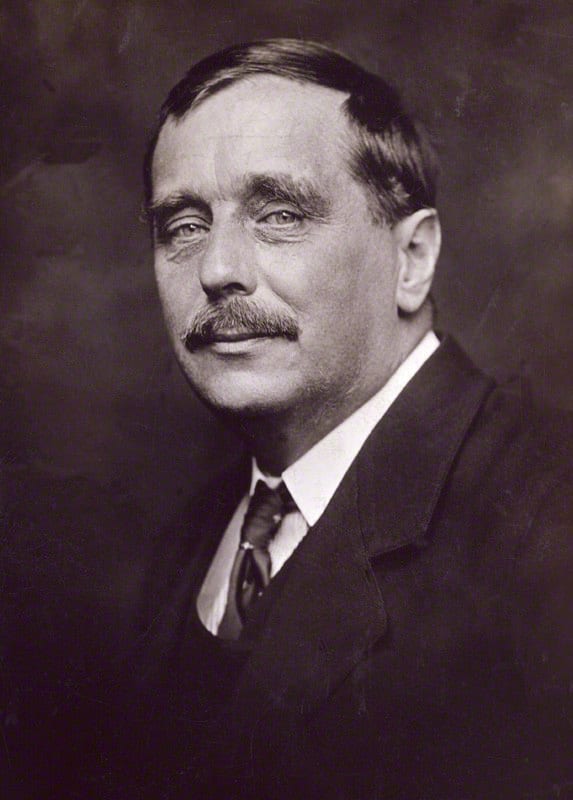
War of the Worlds was published in 1898, and that date is not just a footnote, it shapes everything you hear. Wells was writing at a time when the unification and militarization of Germany was reshaping Europe, and his fictional Martian invaders echo the era’s anxiety about powerful new armies and technologies crossing borders.
Knowing that context enriches the audiobook. When you hear descriptions of overwhelming force arriving suddenly in peaceful English spaces, you are hearing a science fiction writer working through very real geopolitical dread. The alien vessels may come from Mars, but the fear pulsing underneath comes from the late nineteenth century’s arms races and imperial ambitions.
The book sits firmly in Science Fiction, but its roots are historical. That mix gives the audio narrative a double charge: on the surface, it is about heat rays and strange machines; beneath that, it is about what happens when a seemingly secure society is exposed as fragile. Listening with 1898 in mind makes the story feel less like prophecy and more like a mirror held up to Wells’ own world.
“The Martians may come from Mars, but the fear pulsing underneath comes from 1898 Europe.”
Spinn Radio
Listen to War of the Worlds (version 2) on Spinn Radio
Why War of the Worlds still feels modern in 27 audiobook chapters
More than a century after publication, War of the Worlds keeps returning in new forms because its core themes refuse to age. In this version, those themes are distilled into 27 chapters that move quickly from curiosity to panic to uneasy reflection. That structure mirrors how real crises unfold: first speculation, then chaos, then the slow work of understanding what has been lost.
The semi‑documentary, first‑person style is a key reason the story endures, and it becomes even more immediate in audio. Instead of ornate speeches, you get observational reporting, fragments of thought, and matter‑of‑fact descriptions of strange machines and ruined streets. That restraint lets your imagination do the heavy lifting, which tends to be more unsettling than any sound effect could be.
There is also the simple fact that hearing a single voice describe the fall of familiar places taps into how we now experience major events: through eyewitness accounts, audio clips and on‑the‑ground testimony. War of the Worlds (version 2) feels modern not because the Martians are realistic, but because the human response is.
“In audio, Wells’ semi‑documentary style sounds uncannily like an eyewitness podcast from 1898.”
What to listen for in War of the Worlds (version 2)
Because this is an audiobook, the experience is not only about plot, it is about rhythm. The 27‑chapter structure offers natural breaks, which makes War of the Worlds (version 2) well suited to listening in focused bursts. Each chapter comes with its own arc, often beginning in relative calm and ending on some new image or revelation that will nudge you into letting the next one play.
Pay attention to how the first‑person narration shapes your sense of scale. When the narrator describes events in London and Surrey, you rarely get a god’s‑eye view. Instead, you hear about what can be seen from a window, a hillside, a roadside field. That limited perspective keeps the tension intimate, even while the story implies devastation on a national level.
If you are new to Wells, this audiobook is also an effective introduction to his Science Fiction. You hear a writer who is less interested in technical detail than in psychology and social shock. The Martians are important, but the lingering images are often human: crowds gathering by a newly fallen vessel, families trying to flee, one observer struggling to assemble a coherent account from fragments.
“Each short chapter feels like a dispatch from the edge of something no one yet has words for.”
Who should queue up War of the Worlds (version 2) next
War of the Worlds (version 2) will land with obvious force for Science Fiction fans, especially anyone curious about how the genre sounded at the moment it was taking shape in 1898. Hearing Wells’ ideas unfold in English, through a single, steady voice, connects this classic to the more intimate, character‑driven audio stories that followed it decades later.
It also suits listeners who like historically rooted fiction. The references to London and Surrey, combined with the background of German unification and militarization, make this feel like an invasion story anchored to real anxieties rather than abstract space opera. If you enjoy narratives where imagined threats illuminate their own era, this is a rewarding few hours of listening.
Finally, because the book is divided into a manageable 27 chapters, it works well as a commuter or evening listen. You can move through the Martian invasion in short sessions without losing the thread, which makes it easier to live alongside the story for a few days and let its questions about vulnerability, technology and power linger between chapters.
“This is not just a landmark Science Fiction novel in audio form; it is a compact way to inhabit 1898 fears with twenty‑first century ears.”
Good to know
Frequently asked questions
Who wrote War of the Worlds (version 2)?
War of the Worlds (version 2) was written by H. G. Wells. His full name is Herbert George Wells, and he is credited here simply as H. G. Wells.
When was War of the Worlds (version 2) published?
War of the Worlds (version 2) was published in 1898. That late nineteenth‑century date shapes its focus on issues like the unification and militarization of Germany.
What genre is War of the Worlds (version 2)?
War of the Worlds (version 2) is Science Fiction. It combines alien invasion with very specific historical anxieties from the 1890s.
How many chapters are in War of the Worlds (version 2)?
War of the Worlds (version 2) has 27 chapters. That structure makes it easy to listen in short, self‑contained segments.
What language is War of the Worlds (version 2) in?
War of the Worlds (version 2) is in English. The straightforward language helps the first‑person, semi‑documentary style feel immediate in audio form.
Shop the story
Reading Essentials
 Bestseller
Kindle Paperwhite (16 GB)
The fastest Kindle e-reader
View on Amazon
Kindle Paperwhite
Waterproof, glare-free reading
View on AmazonAs an Amazon Associate, Spinn Radio earns from qualifying purchases.
Sources