**History**
edit **Boston (1871–1952)**
edit
- **1871–1913**
edit
Boston Beaneaters team photo, 1890
The Cincinnati Red Stockings, formed in 1869, were the first openly all-professional baseball team but disbanded after the 1870 season. Manager Harry Wright and players moved to Boston, forming the Boston Red Stockings, a charter team in the National Association of Professional Base Ball Players (NAPBBP). Led by the Wright brothers, Ross Barnes, and Al Spalding, they dominated the National Association, winning four of five championships. The original Boston Red Stockings team and its successors can lay claim to being the oldest continuously playing franchise in American professional sports. The club was known as the Boston Red Caps when they played the first National League game in 1876, winning against the Philadelphia Athletics. Despite a weaker roster in the league's first year, they rebounded to secure the 1877 and 1878 pennants. Managed by Frank Selee, they were a dominant force in the 19th century, winning eight pennants. By 1898, the team was known as the Beaneaters and they won 102 games that season, with stars like Hugh Duffy, Tommy McCarthy, and "Slidin'" Billy Hamilton. In 1901, the American League was introduced, causing many Beaneaters players including stars Duffy and Jimmy Collins to leave for clubs of the rival league. The team struggled, having only one winning season from 1900 to 1913. In 1907, they temporarily dropped the red color from their stockings due to infection concerns. The club underwent various nickname changes until becoming the Braves before the 1912 season. The president of the club, John M. Ward, named the club after the owner, James Gaffney. Gaffney was called one of the "braves" of New York City's political machine, Tammany Hall, which used a Native American chief as their symbol. **1914: Miracle**
edit In 1914, the Boston Braves experienced a remarkable turnaround in what would become one of the most memorable seasons in baseball history. Starting with a dismal 4–18 record, the Braves found themselves in last place, trailing the league-leading New York Giants by 15 games after losing a doubleheader to the Brooklyn Robins on July 4. However, the team rebounded with an incredible hot streak, going 41–12 from July 6 to September 5. On August 3, Joseph Lannin the president of the Red Sox, offered Fenway Park to the Braves free of charge for the remainder of the season since their usual home, the South End Grounds, was too small. On September 7 and 8, they defeated the Giants in two out of three games, propelling them into first place. Despite being in last place as late as July 18, the Braves secured the pennant, becoming the only team under the old eight-team league format to achieve this after being in last place on the Fourth of July. They were in last place as late as July 18, but were close to the pack, moving into fourth on July 21 and second place on August 12. The Braves entered the 1914 World Series led by captain and National League Most Valuable Player, Johnny Evers. The Boston club were slight underdogs against Connie Mack's Philadelphia A's. However, they swept the Athletics and won the world championship. Inspired by their success, owner Gaffney constructed a modern park, Braves Field, which opened in August 1915 and was the largest park in the majors at the time, boasting 40,000 seats and convenient public transportation access. **1915–1952**
edit
The Boston Braves cap logo, 1946 to 1952
From 1917 to 1933, the Boston Braves struggled. After a series of different owners, a syndicate led by Emil Fuchs and including pitching great and Fuchs' longtime friend Christy Mathewson bought the team in 1923. Mathewson's death in 1925 left Fuchs in control of the team. Despite Fuchs' commitment to success, the team faced challenges overcoming the damage from previous years. It was not until 1933 and 1934, under manager Bill McKechnie, that the Braves became competitive, but the team's improvement in performance did little to help its finances. In an effort to boost fan attendance and finances, Fuchs orchestrated a deal with the New York Yankees to acquire Babe Ruth in 1935. Ruth was appointed team vice president with promises of profit shares and managerial prospects. Initially, Ruth seemed to provide a spark on opening day, but his declining skills became evident. Ruth's inability to run and poor fielding led to internal strife, and it became clear that his titles were symbolic. Ruth retired on June 1, 1935, shortly after hitting his last three home runs. The Braves finished the season with a dismal 38–115 record, marking the franchise's worst season. Fuchs lost control of the team in August 1935, leading to a rebranding attempt as the Boston Bees, but it did little to alter the team's fortune. Construction magnate Lou Perini took over, eventually restoring the Braves' name. Despite World War II causing a brief setback, the team, led by pitcher Warren Spahn, enjoyed impressive seasons in 1946 and 1947 under Perini's ownership. Hall of Fame pitcher Warren Spahn
In 1948, the team won the pennant, behind the pitching of Spahn and Johnny Sain. The remainder of the rotation was so thin that in September, Boston Post writer Gerald Hern wrote the poem "Pray for Rain" about the pair: First we'll use Spahn
then we'll use Sain
Then an off day
followed by rain
Back will come Spahn
followed by Sain
And followed
we hope
by two days of rain. The poem reached and found favor with an audience so wide that the poem's sentiment, now usually paraphrased as "Spahn and Sain and pray for rain" or "Spahn and Sain, then pray for rain", entered the baseball vocabulary. The 1948 World Series, which the Braves lost in six games to the Indians, turned out to be the Braves' last hurrah in Boston. On March 13, 1953, Perini announced he was moving the club to Milwaukee. Perini cited advent of television and the lack of enthusiasm for the Braves in Boston as the key factors in deciding to move the franchise. **Milwaukee (1953–1965)**
edit The Milwaukee Braves cap logo
The Milwaukee Braves' move to Wisconsin for the 1953 season was an immediate success, as they drew a National League-record 1.8 million fans and finished the season second in the league. Manager Charlie Grimm was named NL Manager of the Year. Throughout the 1950s, the Braves were a National League power; driven by sluggers Eddie Mathews and Hank Aaron, the team won two pennants and finished second twice between 1956 and 1959. In 1957, Aaron's MVP season led the Braves to their first pennant in nine years, then a World Series victory against the formidable New York Yankees. Despite a strong start in the World Series rematch the following season, the Braves ultimately lost the last three games and the World Series. The 1959 season ended in a tie with the Los Angeles Dodgers, who defeated the Braves in a playoff. The ensuing years saw fluctuating success, including the Braves finishing fifth in 1963, their first time in the "second division". In 1962, team owner Louis Perini sold the Braves to a Chicago-based group led by William Bartholomay. Bartholomay intended to move the team to Atlanta in 1965, but legal hurdles kept them in Milwaukee for an extra season. **Atlanta (1966–present)**
edit **1966–1974**
edit
Hall of Fame right fielder and designated hitter Hank Aaron
After arriving in Atlanta in 1966, the Braves found success in 1969, with the onset of divisional play by winning the first National League West Division title. In the National League Championship Series the Braves were swept by the "Miracle Mets". They would post only two winning seasons between 1970 and 1981. Fans in Atlanta had to be satisfied with the achievements of Hank Aaron, who by the end of the 1973 season, had hit 713 home runs, one short of Ruth's record. On April 4, opening day of the next season, he hit No. 714 in Cincinnati, and on April 8, in front of his home fans and a national television audience, he finally beat Ruth's mark with a home run to left-center field off left-hander Al Downing of the Los Angeles Dodgers. Aaron spent most of his career as a Milwaukee and Atlanta Brave before being traded to the Milwaukee Brewers on November 2, 1974. **Ted Turner and Time Warner era**
edit **1976–1977: Ted Turner buys the team**
edit
Media magnate Ted Turner purchased the team in 1976, and played a large role in the team's operation.
In 1976, the team was purchased by media magnate Ted Turner, owner of superstation WTBS, as a means to keep the team (and one of his main programming staples) in Atlanta. Turner used the Braves as a major programming draw for his fledgling cable network, making the Braves the first franchise to have a nationwide audience and fan base. WTBS marketed the team as "The Atlanta Braves: America's Team", a nickname that still sticks in some areas of the country, especially the South. The financially strapped Turner used money already paid to the team for their broadcast rights as a down-payment. Turner quickly gained a reputation as a quirky, hands-on baseball owner. On May 11, 1977, Turner appointed himself manager, but because MLB passed a rule in the 1950s barring managers from holding a financial stake in their teams, Turner was ordered to relinquish that position after one game (the Braves lost 2–1 to the Pittsburgh Pirates to bring their losing streak to 17 games). **1978–1990**
edit The Braves did not enjoy much success between 1978 and 1990, but in the 1982 season, led by manager Joe Torre, the Braves secured their first divisional title since 1969. The team was led by standout performances from key players like Dale Murphy, Bob Horner, Chris Chambliss, Phil Niekro, and Gene Garber. The Braves were swept in the NLCS in three games by the Cardinals. Murphy won the Most Valuable Player award for the National League in 1982 and 1983. **1991–2005: 14 consecutive division titles**
edit
From 1991 to 2005, the Atlanta Braves enjoyed a remarkable era of success in baseball, marked by a record-setting 14 consecutive division titles, five National League pennants, and a World Series championship in 1995. Bobby Cox returned as manager in 1990, leading the team's turnaround after finishing the previous season with the worst record in baseball. Notable developments included the drafting of Chipper Jones in 1990 and the hiring of general manager John Schuerholz from the Kansas City Royals. The Braves' remarkable journey began in 1991, known as the "Worst to First" season. Overcoming a shaky start, the Braves bounced back led by young pitchers Tom Glavine and John Smoltz. The team secured the NL pennant in a memorable playoff race, ultimately losing a closely contested World Series to the Minnesota Twins. The following year, the Braves won the NLCS in dramatic fashion against the Pirates but fell short in the World Series against the Toronto Blue Jays. In 1993, the Braves strengthened their pitching staff with the addition of Cy Young Award winner Greg Maddux in free agency. Despite posting a franchise-best 104 wins, they lost in the NLCS to the Philadelphia Phillies. The team moved to the Eastern Division in 1994, sparking a heated rivalry with the New York Mets. The player's strike cut short the 1994 season just before the division championships, but the Braves rebounded in 1995, defeating the Cleveland Indians to win the World Series. With this World Series victory, the Braves became the first team in Major League Baseball to win world championships in three different cities. The Braves reached the World Series in 1996 and 1999 but were defeated both times by the New York Yankees. In 1996, Time Warner acquired Ted Turner's Turner Broadcasting System, including the Braves. Despite their continued success with a ninth consecutive division title in 2000, the Braves faced postseason disappointment with a sweep by the St. Louis Cardinals in the NLDS. The team won division titles from 2002 to 2004 but experienced early exits in the NLDS each year. **Liberty Media era**
edit **Liberty Media buys the team**
edit
Chipper Jones salutes the crowd at Turner Field prior to his final regular-season game on September 30, 2012. Jones announced he would retire after 19 seasons with the Braves
In December 2005, Time Warner put the club up for sale, leading to negotiations with Liberty Media. After over a year of talks, a deal was reached in February 2007 for Liberty Media to acquire the Braves for $450 million, a magazine publishing company, and $980 million in cash. The sale, valued at approximately $1.48 billion, was contingent on approval from 75 percent of MLB owners and Commissioner Bud Selig. **Bobby Cox and Chipper Jones retire**
edit
Bobby Cox's final year as manager in 2010 saw the Braves return to the postseason for the first time since 2005. The team secured the NL Wild Card but fell to the San Francisco Giants in the National League Division Series in four closely contested games, marking the conclusion of Bobby Cox's managerial career. The following season the Braves suffered a historic September collapse to miss the postseason. The club bounced back in 2012 and returned to the postseason in Chipper Jones' final season. The Braves won 94 games in 2012, but that wasn't enough to win the NL East, so they faced the St. Louis Cardinals in the inaugural Wild Card Game. Chipper Jones last game was a memorable one: the Braves lost the one game playoff 6–3, but the game would be remembered for a controversial infield fly call that helped end a Braves rally in the 8th inning. **Truist Park and return to the World Series**
edit
Truist Park prior to its first regular-season game
In 2017, the Atlanta Braves began playing at Truist Park, replacing Turner Field as their home stadium. Following an MLB investigation into international signing rule violations, general manager John Coppolella resigned and faced a baseball ban. Alex Anthopoulos took over as the new general manager. The team's chairman, Terry McGuirk, apologized for the scandal and expressed confidence in Anthopoulos' integrity. A new on field mascot named Blooper was introduced at a fan event before the 2017 season. Under Anthopoulos, the Braves made the playoffs in six of his first seven seasons. In 2020 the Braves reached the National League Championship Series, but ultimately lost to the Dodgers after leading 3–1. President Joe Biden hosts the 2021 World Series Champion Atlanta Braves on September 26, 2022, in the East Room of the White House.
In the 2021 season, the Braves won the National League East with an 88–73 record. In the postseason, they quickly defeated the Milwaukee Brewers in the NL Division Series 3–1. The Braves again faced the Dodgers in the 2021 NLCS, and won in six games to take Atlanta's first National League pennant since 1999. The Braves advanced to the World Series. They defeated the Houston Astros in six games to win their fourth World Series title. **End of postseason run and Brian Snitker era**
edit
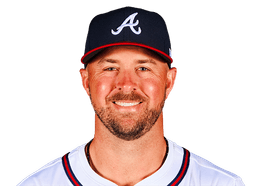
The Braves failed to qualify for the postseason in 2025, ending a streak of seven consecutive appearances. After 49 years with the organization, including ten seasons as manager, the team announced that Snitker would step down from his managerial role and transition into an advisory position with the club. In November 2025, the Braves announced that longtime bench coach Walt Weiss would be promoted to manager. Weiss, a former All-Star shortstop also spent part of his playing career in Atlanta. **Logos and uniforms**
edit
The Braves logos have evolved over the years, featuring a Native American warrior from 1945 to 1955, followed by a laughing Native American with a mohawk and a feather from 1956 to 1965. The modern logo, introduced in 1987, includes the cursive word "Braves" with a tomahawk below it. Uniforms adopted that year evoked their 1950s classic look. For the 2023 season, the Braves had four uniform combinations, including the classic white home and gray road uniforms, a navy blue road jersey for alternate games, and two alternate uniforms for home games - a Friday night red uniform and a City Connect uniform worn on Saturdays, paying tribute to Hank Aaron. The City Connect uniform features "The A" across the chest, accompanied by a cap with the "A" logo and 1974 uniform colors. The Braves retired the '70s-era City Connects and unveiled a new alternate uniform ahead of the 2026 season. The new jersey is an homage to their cable television-fueled growth in the 1980s; powder-blue pullovers with a script "Atlanta" on the front and a lowercase "A" hat reference their contemporary away uniform, while an "ATL" wordmark on the left sleeve and printing above the laundry tag are designed similar to the classic TBS SuperStation logo. ^ a b Sewell, Dan (February 11, 2019). "Season-long tribute planned to pioneering 1869 Red Stockings". The Washington Times. Associated Press. Retrieved February 13, 2024. - ^ a b c Souder, Mark (December 19, 2019). "How Bostonians Became the Beaneaters". The Glorious Beaneaters of the 1890s. Society for American Baseball Research. ISBN 978-1970159196. - ^ Cite error: The named reference NLast was invoked but never defined (see the help page). - ^ Cite error: The named reference BravesHistory was invoked but never defined (see the help page). - ^ Events of Saturday, April 22, 1876 Archived July 13, 2015, at the Wayback Machine. Retrosheet. Retrieved September 30, 2011. - ^ Noble, Marty (September 23, 2011). "MLB carries on strong, 200,000 games later: Look what they started on a ballfield in Philadelphia in 1876". MLB.com. Archived from the original on February 1, 2013. Retrieved September 30, 2011. [B]aseball is about to celebrate its 200,000th game, [in the division series on] Saturday [October 1, 2011] .... - ^ Thorn, John (May 4, 2015). "Why Is the National Association Not a Major League … and Other Records Issues". OurGame.MLBlogs.com. Major League Baseball Advanced Media. Archived from the original on October 22, 2015. Retrieved November 1, 2015. The National Association, 1871–1875, shall not be considered as a 'major league' due to its erratic schedule and procedures, but it will continue to be recognized as the first professional baseball league. - ^ "Sporting Matters". Boston Globe. October 7, 1878. Retrieved February 13, 2024. - ^ a b Fleitz, David (December 19, 2019). "Billy Hamilton". The Glorious Beaneaters of the 1890s. Society for American Baseball Research. ISBN 978-1970159196. - ^ Murnane, T.H. (October 12, 1898). "Boston Again Champions". Boston Globe. Retrieved February 13, 2024. - ^ Lamb, Bill (December 19, 2019). "Tommy McCarthy". The Glorious Beaneaters of the 1890s. Society for American Baseball Research. ISBN 978-1970159196. - ^ "Boston Team Completed". Boston Evening Transcript. March 6, 1901. Retrieved February 13, 2024. - ^ a b c d Murnane, T.H. (December 21, 1911). "Ward Wants His Team to be Called the "Boston Braves"". The Boston Globe. Archived from the original on April 23, 2021. Retrieved February 21, 2020. - ^ James, Pat (May 27, 2022). "Get to know the Red Sox for HRDX". mlb.com. Retrieved December 22, 2024. - ^ Kaese, Harold The Boston Braves, Northeastern University Press, 1948. - ^ Overfield, Joseph M. (May 1961). "How Losing an Exhibition Sparked Miracle Braves". Baseball Digest. 20 (4). Evanston: Lakeside Publishing Company: 83–85. ISSN 0005-609X. - ^ Vass, George (September 2001). "Down To The Wire; Six Greatest Stretch Runs For The Pennant". Baseball Digest. 60 (9). Evanston: Lakeside Publishing Company: 26–35. ISSN 0005-609X. - ^ O'Leary, J.C. (July 5, 1914). "Chances Thrown Away by Braves' Misplays". Boston Globe. Retrieved February 21, 2024. - ^ "1914 Boston Braves Schedule by Baseball Almanac". Baseball-almanac.com. Archived from the original on April 30, 2011. Retrieved July 25, 2011. - ^ Murnane, T.H. (August 4, 1914). "Fenway Park for Braves". Boston Globe. Retrieved February 13, 2024. - ^ O'Leary, J.C. (September 9, 1914). "Braves on Top Again". Boston Globe. Retrieved February 13, 2024. - ^ "1914 New York Giants Schedule by Baseball Almanac". Baseball-almanac.com. Archived from the original on May 1, 2011. Retrieved July 25, 2011. - ^ Nowlin, Bill (February 1, 2014). The Miracle Braves of 1914: Boston's Original Worst-to-First World Series Champions. Society for American Baseball Research. p. 380. ISBN 978-1933599694. - ^ Cohen, Neft, Johnson and Deutsch, The World Series, The Dial Press, 1976. - ^ "Johnny Evers and Eddie Collins Chalmers Trophy Winners for 1914". The Brooklyn Daily Eagle. October 4, 1914. p. 29. Retrieved February 9, 2024 – via Newspapers.com. Johnny Evers, captain and second baseman of the champion Boston Braves, is winner of the Chalmers Trophy in the National League of 1914, with 50 out of a possible 64 points. - ^ "Million and a Half in Wagers on World Series". New Castle News. October 9, 1914. p. 15. Retrieved February 9, 2024 – via Newspapers.com. The general betting today, however was 5 to 4 on the Athletics. Last week the odds were around 7 to 4 on the Athletics, while two or three weeks ago when it looked certain that the Braves would win the pennant, the Athletic backers offered 2 to 1 and 3 to 1 against the Braves - ^ O'Leary, J.C. (October 13, 1914). "Braves Win 3-1". Boston Globe. Retrieved February 22, 2024. - ^ Murnane, T.H. (December 5, 1914). "Boston Braves to Move to Allston". Boston Globe. Retrieved February 13, 2024. - ^ O'Leary, J.C. (August 18, 1915). "Braves Field Opening Today". Boston Globe. Retrieved February 13, 2024. - ^ Craig, William J. (November 20, 2012). A History of the Boston Braves: A Time Gone By. The History Press. ISBN 978-1609498573. - ^ Fuchs, Robert S.; Soini, Wayne (April 15, 1998). Judge Fuchs and the Boston Braves, 1923-1935. McFarland. p. 24. ISBN 978-0786404827. - ^ "Judge Fuchs is Elected President of Braves to Fill Mathewson Vacancy". Boston Herald. October 22, 1925. p. 13. - ^ Fuchs, Robert S.; Soini, Wayne (April 15, 1998). Judge Fuchs and the Boston Braves, 1923-1935. McFarland. p. 58. ISBN 978-0786404827. - ^ Cameron, Stuart (February 27, 1935). "Acquisition of Bate Ruth May Pull the Braves Out of the 'Red'". Brooklyn Citizen. Retrieved February 13, 2024. - ^ Rothman, Lily (June 2, 2015). "The Disappointing Reason Babe Ruth Left Baseball". Time. Retrieved February 16, 2024. - ^ a b c d Neyer, Rob (2006). Rob Neyer's Big Book of Baseball Blunders. New York: Fireside. ISBN 978-0-7432-8491-2. - ^ a b c Fuchs, Robert S.; Soini, Wayne (April 15, 1998). Judge Fuchs and the Boston Braves, 1923-1935. McFarland. pp. 110–113. ISBN 978-0786404827. - ^ King, Bill (April 30, 1941). "It's Braves Again as New Owners Stamp Out 'Bees'". The Post-Crescent. Associated Press. Retrieved February 13, 2024. - ^ Hand, Jack (October 6, 1948). "Indians 5 to 1 Favorites to Win the Series". Moberly Monitor-Index and Moberly Evening Democrat. Associated Press. p. 9. Retrieved February 22, 2024. - ^ Smith, Red (January 29, 1973). "Spahnie and Howie". The Berkshire Eagle. Retrieved January 5, 2024. - ^ Bellamy, Clayton (November 25, 2003). "Hall-of-Famer Spahn dead at 82". Delphos Herald Newspaper. Associated Press. Retrieved January 5, 2024. - ^ Bill Gutman (for hire by Brompton Books Corp.), The Golden Age of Baseball: 1941–1964 (as on book spine and dust jacket) / The Golden Age of Baseball: 1941–1963 (as in book interior), New York / Hong Kong: W. H. Smith Publishers / Gallery Books, 1989, p. 62. - ^ Frost, Jake (October 12, 1948). "Braves Unable to Beat Luck, Says Sothwort". Los Angeles Evening Citizen News. U.P. Retrieved February 13, 2024. - ^ a b Hand, Jack (March 19, 1953). "More Territory to be Drafted O'Malley Says". Rhinelander Daily News. Associated Press. Retrieved February 16, 2024. - ^ "Milwaukee Braves' Attendance Boosts Saved National". The Commercial-Mail. U.P. September 28, 1953. Retrieved February 16, 2024. - ^ "Charlie Grimm is National League Manager of the Year". Rhinelander Daily News. Associated Press. October 22, 1953. Retrieved February 16, 2024. - ^ a b c d Wisnia, Saul (March 28, 2014). "From Yawkey to Milwaukee: Lou Perini Makes his Move". Thar's Joy in Braveland: The 1957 Milwaukee Braves. Society for American Baseball Research. pp. 5–11. ISBN 978-1933599717. - ^ a b Johnson, William (March 28, 2014). "Henry 'Hank' Aaron". Thar's Joy in Braveland: The 1957 Milwaukee Braves. Society for American Baseball Research. pp. 13–16. ISBN 978-1933599717. - ^ "Braves Capture National League West Division Title". Panama City News-Herald. Associated Press. October 1, 1969. Retrieved February 16, 2024. - ^ "It's Mets and Orioles In Fall Classic". Warren Times-Mirror and Observer. Associated Press. October 7, 1969. Retrieved February 16, 2024. - ^ a b c d Trutor, Clayton (February 1, 2022). Loserville. University of Nebraska Press. ISBN 978-1496225047. - ^ "Aaron Looks to '74". St. Lucie News Tribune. United Press International. October 1, 1973. Retrieved February 16, 2024. - ^ "Season's First Hit Gets Aaron Tie With Ruth". The Daily Courier. United Press International. April 5, 1974. Retrieved February 16, 2024. - ^ Moffit, David (April 5, 1974). "Big Homer Record Chase Finally Ends for Aaron". The Daily Courier. United Press International. Retrieved February 16, 2024. - ^ Richmond, Milton (November 3, 1974). "Brewers Get Aaron". The Daily Courier. United Press International. Retrieved February 16, 2024. - ^ Wulf, Steve (August 9, 1982), America's Team II, Sports Illustrated, archived from the original on June 3, 2011 - ^ "Turner Takes Over for Bristol". Colorado Springs Gazette-Telegraph. Associated Press. May 12, 1977. Retrieved February 16, 2024. - ^ "Kuhn Rejects Turner". Times Recorder. Associated Press. May 14, 1977. Retrieved February 16, 2024. - ^ Embry, Mike (November 9, 1983). "Braves Back Into Playoffs". Daily American Republic. Associated Press. Retrieved February 16, 2024. - ^ "Blue Jays' Cox Leaves Land of the Freeze for the Home of the Braves". Los Angeles Times. October 23, 1985. Retrieved June 23, 2022. - ^ "Cards, Brewers Advance to World Series". Indiana Gazette. Associated Press. October 11, 1982. Retrieved February 16, 2024. - ^ "Murphy Repeats as MVP". Daily American Republic. Associated Press. November 9, 1983. Retrieved February 16, 2024. - ^ Ringolsby, Tracy (June 19, 2017). "Braves' 14 straight division titles should be cheered". MLB. Retrieved September 18, 2022. - ^ Bowman, Mark. "Chipper a wise choice for Braves in 1990 Draft". MLB.com. Archived from the original on October 23, 2019. Retrieved July 28, 2018. - ^ Bowman, Mark (June 23, 2020). "14 division titles: Schuerholz is Braves' best GM". MLB.com. Retrieved September 20, 2023. - ^ Walburn, Lee (March 18, 2015). "Unbelievable! The Braves 1991 worst to first season". Atlanta Magazine. Retrieved September 20, 2023. - ^ Burns, Gabriel (June 25, 2020). "How Leo Mazzone became baseball's best pitching coach". The Atlanta Journal-Constitution. Retrieved September 20, 2023. - ^ Maske, Mark (December 10, 1992). "Maddux To Braves For $28 Million". The Washington Post. Archived from the original on June 6, 2020. Retrieved June 5, 2020. - ^ Cite error: The named reference Realignment was invoked but never defined (see the help page). - ^ Cite error: The named reference RivalryWithMets was invoked but never defined (see the help page). - ^ The subway series: the Yankees, the Mets and a season to remember. St. Louis, Mo.: The Sporting News. 2000. ISBN 978-0-89204-659-1. - ^ Chass, Murray (October 17, 2000). "From Wild Card to World Series". The New York Times. - ^ Makse, Mark (October 29, 1995). "Atlanta, at last; Braves Win World Series". The Washington Post. Archived from the original on November 23, 2019. Retrieved June 5, 2020. - ^ "Atlanta Braves 1995 summary". Baseball-Reference.com. Retrieved September 16, 2023. - ^ "1996 Atlanta Braves season summary". Baseball-Reference.com. Retrieved February 17, 2024. - ^ "1999 Atlanta Braves summary". Baseball-Reference.com. Retrieved February 17, 2024. - ^ Rice, Marc (October 11, 1996). "Done Deal". Ellwood City Ledger. Associated Press. Retrieved February 28, 2024. - ^ Saladino, Tom (October 8, 2000). "Braves Swept Out of Playoffs". South Florida Sun Sentinel. Associated Press. Retrieved February 28, 2024. - ^ "Astros Deck Braves to get to NLCS". The Iola Register. Associated Press. October 12, 2004. Retrieved February 28, 2024. - ^ Pelline, Jeff (September 23, 1995). "Time Warner Closes Deal for Turner". San Francisco Chronicle. - ^ Isidore, Chris (December 14, 2005). "Time Warner considers Braves sale". CNNMoney.com. Archived from the original on October 22, 2012. Retrieved April 27, 2011. - ^ Burke, Monte (May 5, 2008). "Braves' New World – Forbes Magazine". Forbes. Archived from the original on May 24, 2011. Retrieved July 25, 2011. - ^ Odum, Charles (October 4, 2010). "Cox not finished yet after Braves win NL wild card". San Diego Union-Tribune. Associated Press. Retrieved February 15, 2024. - ^ "San Francisco Giants bounce Atlanta Braves from the playoffs in manager Bobby Cox's final game". Pioneer Press. Associated Press. October 11, 2010. Retrieved February 15, 2024. - ^ O Brien, David (October 1, 2012). "Chronology of Braves' collapse". Atlanta Journal-Constitution. Retrieved February 15, 2024. - ^ "Chipper Jones plan to retire". ESPN.com. March 22, 2012. Archived from the original on February 28, 2018. Retrieved March 22, 2012. - ^ a b Blinder, Alan; Waldstein, David (October 3, 2019). "The Braves, the Cardinals and an Infamous Infield Fly: An Oral History". New York Times. Retrieved February 15, 2024. - ^ Odum, Charles (April 14, 2017). "Braves greats help celebrate opening of new SunTrust Park". Associated Press. Archived from the original on April 18, 2017. Retrieved January 12, 2024. - ^ "Braves GM John Coppolella Resigns Amid MLB Investigation Over International Signings". Sports Illustrated. October 2, 2017. Archived from the original on November 14, 2017. Retrieved November 13, 2017. - ^ a b "Braves hire former Dodgers, Blue Jays exec Alex Anthopoulos as GM". ESPN. November 13, 2017. Archived from the original on November 14, 2017. Retrieved November 13, 2017. - ^ "Fans react to Blooper, the new Braves mascot". The Atlanta Journal-Constitution. January 27, 2018. Retrieved January 12, 2024. - ^ O'Brien, David; Weese, Lukas (January 12, 2024). "Braves extend GM Alex Anthopoulos on multiyear deal". The Athletic. Retrieved February 22, 2024. - ^ Waldstein, David (October 18, 2020). "Dodgers Rally to Win N.L.C.S. and Reach 3rd World Series in 4 Years". The New York Times. Archived from the original on February 6, 2021. Retrieved February 8, 2021. - ^ Blinder, Alan (November 2, 2021). "Atlanta Topples Dodgers To Reach First World Series Since 1999". The New York Times. Retrieved September 17, 2023. - ^ Waldstein, David (November 11, 2021). "Atlanta Overcomes Decades of Frustration to Win World Series". The New York Times. Retrieved February 25, 2022. - ^ O'Brien, David (September 10, 2025). "Braves' Brian Snitker undecided on retirement". The New York Times. Retrieved October 1, 2025. - ^ Burns, Gabriel (October 2025). "BREAKING: Braves manager Brian Snitker retiring after 49 years in organization". The Atlanta Journal-Constitution. Retrieved October 1, 2025. - ^ O'Brien, David (November 3, 2025). "Braves hire Walt Weiss as manager". The Athletic. The New York Times. Retrieved November 5, 2025. - ^ "Boston Braves Logos". SportsLogos.net. Archived from the original on June 19, 2018. Retrieved June 19, 2018. - ^ "Milwaukee Braves Logos". SportsLogos.net. Archived from the original on June 19, 2018. Retrieved June 19, 2018. - ^ "Atlanta Braves Logos". SportsLogos.net. Archived from the original on June 19, 2018. Retrieved June 19, 2018. - ^ "Braves' New Look". The Herald-Sun. Associated Press. January 17, 1987. Retrieved February 19, 2024. - ^ "Braves Uniforms". Braves.com. MLB Advanced Media. Archived from the original on April 18, 2019. Retrieved January 19, 2019. - ^ Toscano, Justin (March 27, 2023). "'Keep Swinging #44′: Braves unveil Hank Aaron tribute uniforms". Atlanta-Journal Constitution. Retrieved March 28, 2023. - ^ https://www.mlb.com/braves/fans/city-connect?affiliateId=atl-media-cityconnect-040926




 Atlanta Braves
 Chicago Cubs
 Boston Red Sox
 Miami Marlins
 Washington Nationals
 Cincinnati Reds
 Toronto Blue Jays
 Pittsburgh Pirates
 Chicago White Sox
 New York Mets
 San Francisco Giants