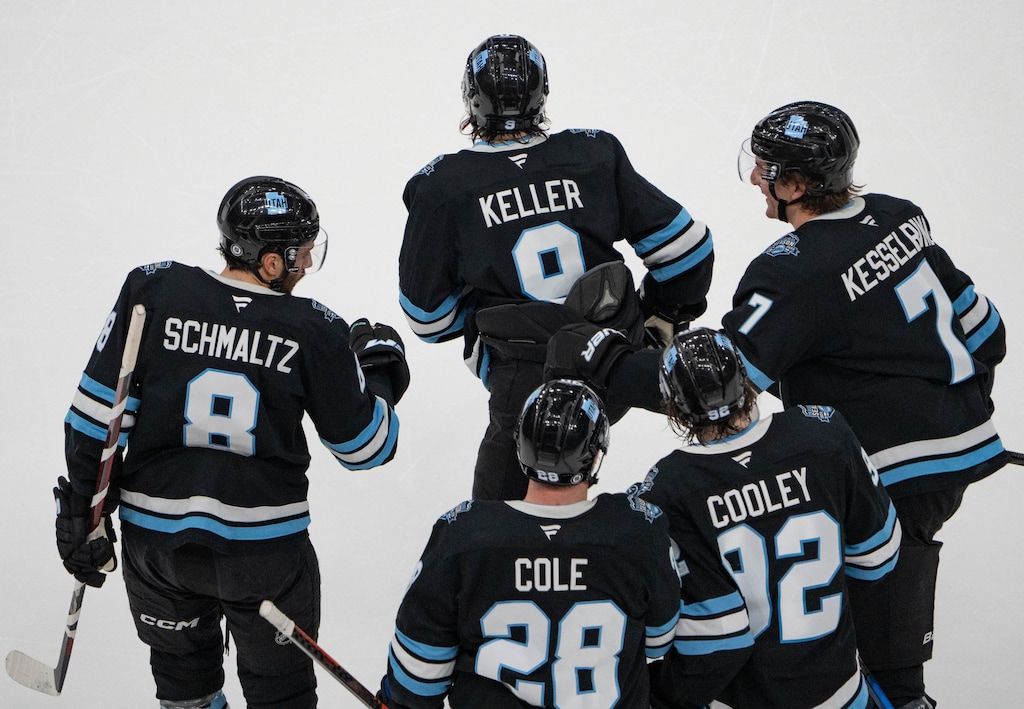
Utah Mammoth enter this week with real momentum: as reported by Nbc Sports and Yardbarker, the club has locked up head coach Andre Tourigny with a new contract and added former Coyotes bench boss Adam Foote to the staff as an assistant. For a franchise that only began life in 2024 and rebranded as the Mammoth in May 2025, the moves signal a clear intent to build stability and push deeper into the Western Conference picture.
A fresh preseason slate for 2026, highlighted by Salt Lake City Deseret News, means the Delta Center will see its third NHL training camp in as many years, but the energy already feels different. With a playoff berth in 2026, a fan-driven name, and a staff anchored by Tourigny, associate coach Mario Forsythe and now Foote, Utah looks far removed from the stopgap storylines that surrounded the former Coyotes. This is starting to feel like a permanent NHL home.
Key facts
- Based in
- Salt Lake City, UT, United States
- Founded
- 2024
- Home venue
- Delta Center
How Utah Mammoth went from Utah Hockey Club to a permanent identity
The organization that is now Utah Mammoth officially entered the NHL in 2024, but it did so under the deliberately plain label Utah Hockey Club. The NHL Board of Governors granted the expansion franchise on April 18, 2024, to Jazz owner Ryan Smith, who acquired the hockey operations of the Arizona Coyotes while the Coyotes franchise itself was made inactive. From the start, there was one clear condition from state lawmakers: any new club had to carry “Utah” in its name to represent the entire state, not just Salt Lake City.
For the inaugural 2024-25 season, Utah skated as Utah Hockey Club with temporary branding that was unveiled on June 13, 2024. That runway allowed the fan base to grow into the team before choosing a long-term identity. After a full season at the Delta Center and the club’s first steps toward contention, supporters got their say. A fan vote produced the winning name, and on May 7, 2025, the franchise unveiled its permanent moniker: Utah Mammoth. The rebrand signaled the end of the placeholder era and the start of something that felt rooted in Utah’s own sporting culture.
That timetable matters if you want to understand the Mammoth’s trajectory. Expansion fee in 2024, one season as Utah Hockey Club, fan vote in 2025: in barely two years Utah went from rumor to a named NHL fixture with its own logo, colors and growing traditions.
“In barely two years Utah went from rumor to a named NHL fixture with its own logo, colors and growing traditions.”
Salt Lake City’s long road to an NHL franchise at the Delta Center
The Mammoth did not appear in a vacuum. Salt Lake City has been a serious hockey town since the Salt Lake Golden Eagles took the ice in 1969. Across 25 seasons in the WHL, CHL and IHL, the Golden Eagles lifted three Adams Cups and two Turner Cups, first at the old Salt Palace, then at the then-new Delta Center. When that franchise moved in 1994 to become the Detroit Vipers, the city barely had time to miss it before another top minor-league team arrived.
The Utah Grizzlies of the IHL relocated from Denver for 1995-96, immediately rewarded fans with a second straight Turner Cup in 1996, and packed 17,381 people into the Delta Center for the Cup-clinching Game 4. That crowd set a single-game attendance record for minor-league hockey at the time and proved the market would show up for big-time games. Later, the Grizzlies moved to the new E Center (now the Maverik Center) in West Valley City, joined the AHL in 2001, and eventually left town for Cleveland after the 2005-06 suspension of operations.
Even then, professional hockey remained in the valley. An ECHL version of the Utah Grizzlies has skated out of the Maverik Center since 2005, reaching the conference finals twice and missing the playoffs only four times, although silverware has been harder to come by. In September 2025, that franchise was sold to a Trenton-based ownership group and is set to relocate after the 2025-26 season, which only underlines how firmly the Mammoth now own the top rung of Utah’s hockey ladder. If you care about the wider pro game, the state’s AHL and ECHL history sits in the background of every Mammoth home night at the Delta Center.
“That 17,381 crowd for the 1996 Turner Cup clincher proved Utah would show up for big-time hockey long before the NHL arrived.”


Spinn Radio
Follow Utah Mammoth on Spinn Radio
From Coyotes assets to a historic first playoff run
Utah’s path into the [NHL](https://spinnradio.com/sports/league/nhl) was structurally unusual. On April 18, 2024, the league split the Arizona Coyotes in two: the Coyotes franchise itself was made inactive while Utah received the players, staff and draft capital, and was treated as an expansion team, echoing how the NFL handled the Cleveland Browns and Baltimore Ravens. Ryan Smith paid a 1.2 billion dollar expansion fee to the existing 31 owners, while the league paid former Coyotes owner Alex Meruelo 1 billion dollars for the dormant franchise, effectively creating a 200 million dollar relocation-style windfall for the other clubs.
On the ice, Utah moved quickly to put its own stamp on that inherited core. The first official signing under the new banner came on June 17, 2024, when former Coyotes pick Noel Nordh agreed to a three-year entry-level deal. Eleven days later, Utah stepped onto the draft floor and took Kelowna Rockets forward Tij Iginla sixth overall, immediately giving the franchise a blue-chip prospect with a recognizable hockey name. Preseason then arrived with tangible moments: a first win on September 22, 2024, in Des Moines against the St. Louis Blues, 5-3 at Wells Fargo Arena, followed by a 3-2 home debut victory over the Los Angeles Kings at the Delta Center on September 23.
The regular-season launch gave fans milestone after milestone. On October 4, 2024, forward Clayton Keller was named the first captain in club history. Four days later, Utah defeated the Chicago Blackhawks 5-2 in its first regular-season game, with Dylan Guenther scoring the first goal and later adding another. The inaugural campaign finished with a 38-31-13 record and a sixth-place spot in the Central Division, just outside the playoff cut line. Year two delivered the breakthrough: Utah clinched the first wild card berth in the 2026 Stanley Cup playoffs with a win over Winnipeg, as reported by NHL.com, and in the process became the first team since the shootout was introduced in 2005 to go an entire 82-game season without a single shootout. If you want one stat to toss out about the Mammoth, that no-shootout season is it.
“Utah’s second year featured a quirky piece of history: 82 games, zero shootouts, and a first playoff berth secured against Winnipeg.”

Why the Delta Center and Utah’s Olympic future matter to the Mammoth
The Delta Center is the heart of the Mammoth project. The arena, shared with the NBA’s Utah Jazz, was once seen as a poor permanent option for ice hockey because of sightlines and broadcast angles, even as it hosted Los Angeles Kings preseason dates through the Frozen Fury series. By 2024, the building had become the launchpad for NHL hockey in Utah, drawing 12,400 people to the team’s formal introduction on April 26 and near-capacity preseason crowds that fall.
At the same time, Ryan Smith and state leaders have been open about the long-term plan for a new, hockey-optimized downtown venue. In February 2024 the Utah State Senate passed tax legislation to support an arena proposal, and in May 2024 the club announced a dedicated practice facility in nearby Sandy, with ground broken on August 12. The investment around the team fits with a broader winter sports narrative, with the Maverik Center and Peaks Ice Arena in Provo already proven Olympic sites from 2002 and Salt Lake City set as host city for the 2034 Winter Games.
For Mammoth fans, all of this means the game-day experience is likely to evolve quickly. Today it is loud NHL nights at the Delta Center. Within a decade, the club could be skating in a purpose-built downtown rink as part of a city tuned for another Olympics. The Mammoth are not a temporary tenant in someone else’s building; they are a central piece of Utah’s next winter-sport era.
“The Mammoth are not a temporary tenant, they are a central piece of Utah’s next winter-sport era.”
Coaching stability, Adam Foote’s arrival and what to watch next
The latest round of coaching news around the Mammoth matters almost as much as any signing. Nbc Sports and Yardbarker report that Utah has signed head coach Andre Tourigny to a new contract and extended Mario Forsythe, while bringing in former Arizona Coyotes head coach Adam Foote as an assistant. Tourigny guided the team through its formative years, including the 2026 playoff berth, and the extensions give the locker room a clear, consistent voice as the roster matures.
Foote’s arrival is intriguing for anyone who followed the Coyotes saga. He has direct experience with several players who made the journey from Arizona to Utah, and his background on NHL benches should strengthen Utah’s defensive structure and special-teams work. Paired with Tourigny’s familiarity and Forsythe’s continuity, the staff looks built to refine what the club already does well rather than rip anything up.
Looking ahead to the 2026 preseason schedule reported by Salt Lake City Deseret News, Mammoth fans should focus on a few threads. First, how quickly prospects like Tij Iginla push for full-time roles after the club’s early success. Second, whether the Mammoth can parlay that quirky no-shootout season into a more ruthless overtime and regulation record. And third, how the Delta Center crowd evolves now that the novelty has worn off and the identity is set. This is no longer “Utah’s new NHL team.” It is Utah Mammoth, with a playoff line already on the board and a coaching group that just committed to stick around.
“This is no longer Utah’s new NHL team; it is Utah Mammoth, with a playoff line already on the board and a staff built to stick around.”
Good to know
Frequently asked questions
When was Utah Mammoth founded?
Utah Mammoth were founded in 2024 as an NHL expansion franchise based in Salt Lake City. The team played its first season under the temporary name Utah Hockey Club before adopting the Mammoth name in May 2025.
Where do Utah Mammoth play their home games?
Utah Mammoth play their home games at the Delta Center in Salt Lake City, Utah. They share the arena with the NBA’s Utah Jazz while longer-term plans for a new hockey-capable downtown venue develop.
What division do Utah Mammoth play in?
Utah Mammoth compete in the NHL’s Central Division in the Western Conference. They joined the league as part of the 2024-25 expansion that used the Arizona Coyotes’ hockey assets.
Who is the head coach of Utah Mammoth?
Andre Tourigny is the head coach of Utah Mammoth and recently signed a new contract with the club. His staff includes Mario Forsythe and new assistant coach Adam Foote, as reported in June 2026.
When did Utah Mammoth make the NHL playoffs for the first time?
Utah Mammoth reached the NHL playoffs for the first time in the 2026 Stanley Cup postseason. That year they clinched the first wild card spot and also became the first team to play an 82-game season without a shootout.
Explore more on Spinn Radio: League page
