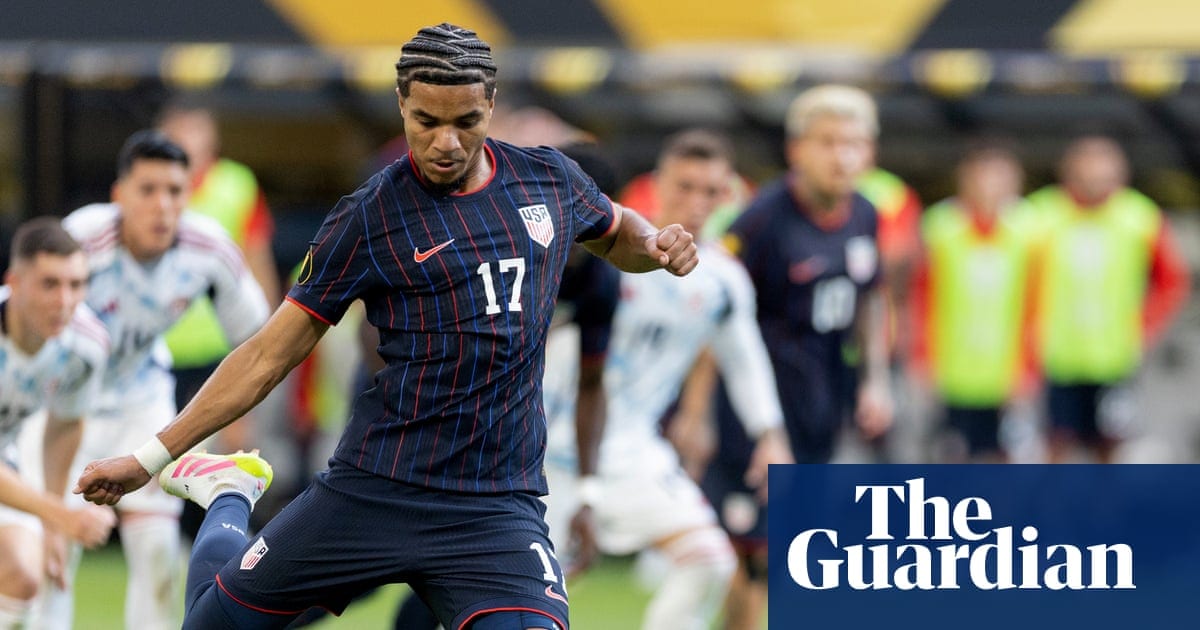
The United States men’s national team are looking beyond the training ground as they brace for potential World Cup penalty shootouts, according to new reporting from The Guardian. With the tournament’s knockout stage in view, the team have brought in outside companies, including one that measures players’ brainwaves, to help decide who should take a spot kick when everything is on the line.
The Guardian’s June 30 report lands at a moment when marginal gains and psychological edges can tilt entire campaigns. By trying to quantify confidence and composure under pressure, the USMNT are treating penalties not as a lottery but as a specific skill set that can be mapped, tested and, they hope, trusted when the drama arrives.
Key facts
- Source
- The Guardian
- Reported
- June 30, 2026
- Desk
- general
- Follow the story
- Spinn Radio Sports
Why the USMNT are planning for World Cup penalty shootouts now
The USMNT’s preparations reflect a hard reality of modern tournaments: knockout ties are often decided from 12 yards, and the margins between progress and exit are tiny. The Guardian reports that the United States have focused on shootouts early, rather than waiting for a do-or-die match to rehearse who takes responsibility.
This shift matters because penalties compress a whole World Cup cycle into a few seconds of technique and nerve. If the order and identity of takers are left to gut feeling in the moment, randomness creeps in. By investing in structured planning now, the US staff are trying to turn penalty drama into a rehearsed scenario with defined roles and a clear process.
For fans, the key takeaway is simple: if a knockout game goes to a shootout, the United States are unlikely to improvise. The pool of takers, and likely the order, will have been shaped weeks in advance using information that goes well beyond who struck the last spot kick in training.
“Penalty drama is not being left to chance; the USMNT are treating shootouts as a repeatable, trainable phase of the game.”
How brainwave data could shape the US penalty taker list
According to The Guardian, one of the outside companies working with the US program measures players’ brainwaves, then feeds that information into staff decisions on who should take a penalty. The idea is to get a window into how calmly or sharply a player processes pressure, instead of relying only on visible body language or training-ground finishing drills.
In practice, this kind of technology is used to pick up patterns that might correlate with better decision-making or more stable emotions when the stakes spike. A player who looks relaxed from the stands might register very differently on a brainwave readout when told a kick will decide a match. Another who appears intense could, on the data, show steadier focus.
The concrete implication is that a US penalty list at this World Cup is likely filtered through more than just a coach’s clipboard. Brainwave metrics are one more input in deciding who steps up first, who anchors later kicks, and who might be stronger kept in reserve.
“The United States are effectively scouting their own minds, not just their technique, before picking spot kick specialists.”
Spinn Radio
Follow live sports on Spinn Radio
Why confidence and composure matter as much as technique
The Guardian’s reporting highlights three watchwords in the US setup: confidence, composure and the use of consultants. The first two are familiar themes in any shootout, but here they are being treated as qualities that can be monitored, trained and supported, rather than left to personality alone.
Confidence influences whether a player truly wants the ball when the walk from halfway begins. Composure affects run-up, contact and follow-through once the whistle goes. By involving outside specialists, the USMNT are signalling that they see these as separate pillars from pure striking ability, and that each can be strengthened in specific ways.
For viewers, the telling detail will be how the United States behave around the penalty spot in live knockout games. Short, consistent routines and calm body language from multiple takers will be a clue that this focus on psychological preparation has filtered from consultant reports into real-world habits.
What the use of outside consultants tells us about USMNT strategy
The decision to lean on external companies, as reported by The Guardian, points to a broader strategic mindset in the US camp. Instead of limiting expertise to the national team staff, the program is drawing on specialist firms that can dedicate all their energy to niche performance questions, such as brainwave analysis or pressure training.
This approach mirrors trends across elite sport where teams outsource specific performance puzzles to consultants, then integrate the findings into day-to-day work. For the US, outsourcing parts of penalty preparation allows coaches to keep focus on tactics and selection, while still benefiting from data-heavy insights on who is likely to cope best with shootout pressure.
Supporters following the team can read this as a sign that the federation is willing to experiment to secure any edge it can find. Whether or not every technological layer proves decisive, the commitment to external input has already changed how the United States identify and rank their spot kick candidates.
“Outside consultants now sit quietly behind the USMNT’s penalty plans, shaping decisions that will look instinctive on matchday.”
What to watch next as USMNT penalty plans are tested
The next major question is not whether the United States are preparing for penalty drama, but how those plans hold up when a World Cup knockout tie reaches full-time. The Guardian’s June 30 report makes clear that the groundwork is being laid now; the real examination will come when a referee points to the spot after 120 minutes and a bracket hangs in the balance.
Fans should track not just whether the USMNT win or lose any shootout, but the patterns inside it: which players repeatedly take penalties, how quickly the order is confirmed, and whether the team’s approach looks rehearsed or hesitant. Each of those details will reflect months of background work with consultants and brainwave data.
For ongoing context, match build-up and reaction across tournaments, listeners can follow live sports coverage on Spinn Radio. As the World Cup unfolds, Spinn Radio Sports will be one of the places where this penalty experiment is measured against the pressure of real competition.
Good to know
Frequently asked questions
What are the USMNT doing differently for World Cup penalties?
The United States are using outside companies, including a firm that measures players’ brainwaves, to help decide who should take penalties. This approach aims to blend psychological data with traditional coaching judgment in planning for shootouts.
Why are consultants involved in the US penalty shootout plans?
Consultants are involved to provide specialist insights that team staff might not generate on their own, such as interpreting brainwave data under pressure. Their findings are then used as one input in selecting and ordering penalty takers.
How does brainwave measurement influence USMNT penalty takers?
Brainwave measurement gives coaches information about how players’ minds respond to high-pressure situations, which can influence who is trusted in a shootout. The data helps identify those who may stay calmer and more focused when taking a spot kick.
Where can fans follow updates on the USMNT’s World Cup run?
Fans can follow updates on the team’s campaign through Spinn Radio Sports, including build-up and reaction around any penalty shootouts. A good starting point is the live coverage hub on Spinn Radio’s sports section.
Explore more on Spinn Radio: Follow live sports coverage on Spinn Radio
Sources