Donald Trump’s push on Georgia’s elections has escalated into a broader fight over public faith in democracy, according to new reporting from The New York Times. The paper says the president has sent 260 F.B.I. analysts to the state while again insisting, without evidence, that the 2020 vote was marred by fraud.
The move, reported on July 3, 2026, is alarming critics who argue the real target is not just one state’s outcome but confidence in the entire electoral system. With Georgia again at the center of national politics, what happens there now could shape how millions view the next round of results.
Key facts
- Source
- The New York Times
- Reported
- July 3, 2026
- Desk
- general
- Follow the story
- Spinn Radio Talk
What The New York Times says is happening in Georgia
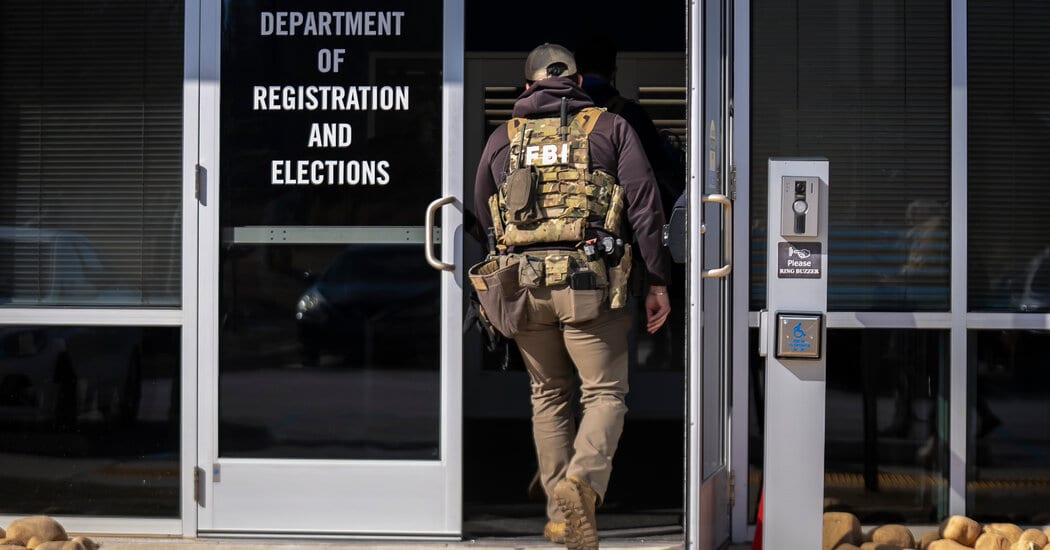
The New York Times reports that President Trump has deployed 260 F.B.I. analysts to Georgia as part of a fresh push focused on the state’s elections. At the same time, he is repeating his baseless claims that the 2020 election was riddled with fraud, allegations that have been widely rejected by courts and election officials. The combination of federal personnel on the ground and renewed false narratives is what makes this phase notable.
The key detail from the Times report is the scale and focus: hundreds of analysts concentrating on one pivotal state while the president continues to question how votes were cast and counted there in 2020. Even without precise public detail on their assignments, the presence of 260 analysts is enough to send a signal to supporters that something is amiss, and to critics that the machinery of government is being used to bolster a political storyline.
For readers trying to understand the stakes, the immediate takeaway is simple: Georgia is again being singled out, with a large federal footprint and a familiar message from Trump about supposed fraud that investigators and courts have not found.
“The scale of the F.B.I. deployment is itself a message, even as the fraud claims remain unsupported.”
Why Georgia’s vote keeps becoming a national flashpoint
Georgia’s elections have repeatedly drawn national attention because results there have been especially close and politically consequential. When Trump focuses on Georgia while reviving his unfounded 2020 fraud narrative, it reinforces the idea that this one state reflects a wider battle over who holds power and who gets to define what counts as a legitimate result.
Critics see the targeting of Georgia as part of a pattern. A state that has become more competitive attracts intense scrutiny and pressure, and that scrutiny can shade into insinuations that close outcomes are suspect. Even without detailed public evidence of any current wrongdoing, the act of repeatedly suggesting there was fraud in 2020 encourages some voters to treat any narrow margin as proof that something went wrong.
The important detail here is not a single race or recount, but how often Georgia is placed at the center of claims that the system cannot be trusted. Each new episode builds on the last, making it harder for election officials to persuade skeptical voters that routine procedures are enough to guarantee a fair count.
“In Georgia, every fresh accusation lands on ground already softened by years of fight over close results.”
Spinn Radio
Follow live news on Spinn Radio
How critics say Trump is undermining trust in elections
According to The New York Times, critics argue that the president’s goal is bigger than altering one tally in Georgia. They say the real effect of sending F.B.I. analysts while reviving disproven 2020 fraud claims is to weaken faith in the process itself. If enough people come to believe that elections are inherently rigged, then any result they dislike can be dismissed as illegitimate.
This strategy does not depend on proving anything in court. It relies on repetition and spectacle: visible federal personnel, high profile statements, and constant references to 2020. By insisting that a past election was stolen despite a lack of supporting evidence, Trump encourages his base to view new elections through a lens of suspicion. That suspicion can outlast any specific investigation or news cycle.
The main takeaway for voters is that the argument is shifting from “who won” toward “can any result be trusted at all.” That is why legal scholars, democracy advocates, and election workers are warning about long term damage, even when no new concrete allegations have been substantiated.
“The political fight is drifting from disputes over numbers to doubts about the very idea of a settled result.”
What the F.B.I. analysts’ deployment signals politically
Public information about the exact tasks of the 260 F.B.I. analysts in Georgia is limited, but the symbolism is clear. A large team of federal specialists in one state’s election environment conveys urgency and seriousness, regardless of what they actually find. To Trump’s supporters, that can reinforce the sense that their concerns about 2020 were valid all along. To his opponents, it looks like an attempt to wrap baseless claims in the credibility of federal law enforcement.
Even if the analysts’ work remains mostly behind the scenes, their presence can shape media coverage and public debate. Headlines about federal analysts in Georgia sit alongside Trump’s continued insistence that there was widespread fraud in 2020, even though those claims are baseless. The net effect is to keep the idea of a tainted election alive in public conversation, whether or not any new facts emerge.
The detail worth remembering is the number: 260 analysts is large enough to be noted prominently by The New York Times, and large enough that both parties can point to it as evidence for their competing narratives about what is really going on in Georgia.
“The point is not only what analysts might uncover, but what their very presence suggests to a polarized audience.”
What to watch next in Georgia and beyond
The next phase of this story will hinge on two questions: what the 260 F.B.I. analysts actually do in Georgia, and how Trump continues to frame their work alongside his 2020 fraud claims. Any official statements about findings, or lack of them, will be scrutinized by supporters and critics who already disagree about the basic facts. The risk is that even a clean bill of health for election procedures will be dismissed by those who have been primed to expect corruption.
Voters in Georgia and across the country should watch for how often officials and candidates talk about strengthening election administration versus attacking it. Efforts to upgrade systems or clarify rules can build confidence, but only if people believe that leaders are acting in good faith. When a president repeats baseless fraud allegations about a past election, it pulls in the opposite direction, toward deeper cynicism and disengagement.
For continuing context, listeners can follow live news and talk on Spinn Radio, where this Georgia story sits alongside broader coverage of how political rhetoric is reshaping trust in American institutions.
Good to know
Frequently asked questions
What is Trump doing in Georgia’s elections right now?
Trump has focused attention on Georgia by sending 260 F.B.I. analysts to the state and repeating baseless claims of fraud in the 2020 election. His actions are shaping a political fight over how much voters trust official results.
Why are Trump’s Georgia actions seen as a threat to trust in elections?
Critics say Trump’s Georgia push is meant to undermine faith in the electoral process rather than fix specific problems. By reviving disproven 2020 fraud claims, they argue he encourages voters to see any result they dislike as illegitimate.
Why is Georgia such a key state in election disputes?
Georgia has become a national flashpoint because close, high stakes races there draw intense scrutiny. When Trump singles it out while questioning 2020, it reinforces the idea that its results are a proxy for a wider battle over political power.
What should voters watch for next in the Georgia situation?
Voters should watch how the work of the 260 F.B.I. analysts is described publicly and how often leaders focus on improving election systems versus attacking them. Those signals will show whether the conversation is moving toward solutions or deeper distrust.
Explore more on Spinn Radio: Follow live news and talk on Spinn Radio
Sources