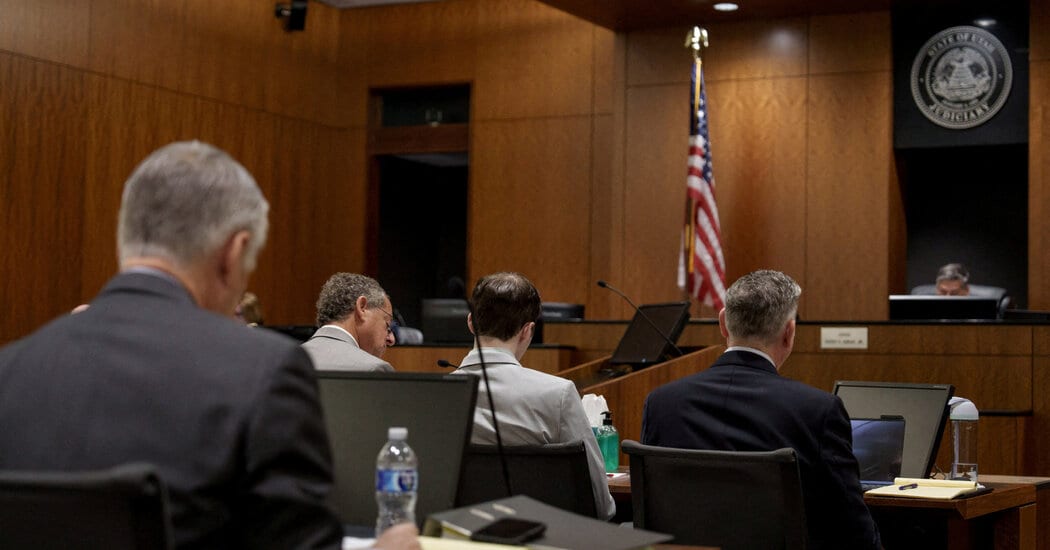
Reporting from The New York Times this week says a former partner has told investigators that Tyler Robinson came home on the day of Charlie Kirk’s killing, paced anxiously and confessed with regret to the assassination. The interview, given by Lance Twiggs and played in court, places alleged admissions by the suspect at the center of the case over Kirk’s death.
The account, reported on July 9, 2026, gives jurors and the public one of the starkest narrative threads so far: a description of Robinson’s behavior just after the killing and claims that he voiced remorse. How judges and attorneys handle that testimony will help decide what weight the court gives to the alleged confession.
Key facts
- Source
- The New York Times
- Reported
- July 9, 2026
- Desk
- general
- Follow the story
- Spinn Radio Talk
What The New York Times reports about the alleged confession
According to The New York Times, investigators heard a detailed statement from Lance Twiggs, who described the hours after Charlie Kirk was assassinated. Twiggs told them that Tyler Robinson came home that day and did not behave as if it were a normal return. Instead, he is said to have paced the floor, displaying visible anxiety as the reality of what had happened set in.
In that interview, which the paper reports was later played in court, Twiggs said Robinson confessed to involvement in the killing and expressed regret. Those two elements, a claimed admission and an emotional reaction, are now a focal point of the proceedings. Prosecutors and defense attorneys alike will be scrutinizing Twiggs’s description of Robinson’s pacing and remorse as they argue over what really happened that day.
“The case now turns on what jurors believe about a confession described secondhand from inside the suspect’s own home.”
Who is Tyler Robinson and how is he tied to Charlie Kirk’s death
Tyler Robinson is the suspect at the center of the case over the assassination of Charlie Kirk. The Times report identifies him as the person Twiggs says came home on the day Kirk was killed, acting nervously and pacing the floor before allegedly admitting what he had done. That places Robinson not just near the scene of the crime chronologically, but in a narrative where his own former partner claims he described his role.
In any killing, an alleged confession can dramatically alter the trajectory of a case. Here, Twiggs’s account positions Robinson as someone who was shaken when he returned home and who voiced regret. It is a snapshot from inside a private space, relayed later to investigators, and now replayed in open court. Jurors are being asked to interpret what it means that this description comes from someone who lived closely with Robinson.
Spinn Radio
Follow live news on Spinn Radio
Why Lance Twiggs’s courtroom interview matters so much now
The interview with Lance Twiggs, as recounted by The New York Times, is not just background. It is evidence that has been formally introduced, in the form of a recorded conversation with investigators that jurors have now heard. That recording potentially gives the court a contemporaneous account of Robinson’s mood and words in the immediate aftermath of Kirk’s assassination.
Twiggs told investigators that Robinson paced, appeared anxious and acknowledged responsibility, while also sounding regretful. For prosecutors, that combination can be framed as consciousness of guilt. For the defense, the reliability and context of Twiggs’s statements will likely be challenged, since they come from a former partner who is recalling a tense day under investigative pressure. The outcome of that credibility battle will heavily shape how this case is remembered.
“A single recorded interview, replayed in court, now carries outsized weight in explaining what happened after Charlie Kirk was killed.”
How the timing and setting of the alleged confession shape the case
The timing outlined by Twiggs matters: he says Robinson came home on the very day Charlie Kirk was assassinated. That places the alleged confession in a window when emotions would have been raw and when the facts of the killing were still settling in publicly. Courts often look closely at statements made shortly after a crime because they can appear less rehearsed, but they can also be colored by shock and fear.
The setting, their shared home, also shapes how this evidence is viewed. Twiggs describes a private scene, with only the two of them present, in which Robinson is said to have paced anxiously and expressed regret. Jurors must weigh whether that intimate context makes the account more believable, because of the closeness of the relationship, or more complicated, because of whatever tensions existed between former partners. The Times report indicates that the court is now hearing that domestic moment as if it were happening in the courtroom itself.
What to watch next as the Charlie Kirk killing case unfolds
With Twiggs’s interview now in the open, the next key step will be how lawyers and the court react to it. Cross-examination, legal arguments over how much weight jurors should give to the recording and any additional evidence that supports or contradicts Twiggs’s version will all shape the story from here. Observers will be looking for whether other witnesses echo the themes of anxiety, pacing and regret that he described.
The New York Times report underscores that we are in an active phase of the case, with new material being aired for the first time in front of a jury. For those following multiple breaking stories at once, dedicating time to live coverage can be difficult. That is where Follow live news and talk on Spinn Radio becomes a hub, collecting developments and on-air analysis so listeners can track what happens to Robinson, how Kirk’s killing is litigated and what this testimony ultimately means.
“The real test ahead is whether other evidence lines up with Twiggs’s account or leaves Robinson’s alleged confession isolated and contested.”
Good to know
Frequently asked questions
Who is the suspect in the killing of Charlie Kirk?
The suspect is Tyler Robinson, who is accused in connection with the assassination of Charlie Kirk. A former partner has told investigators that Robinson confessed afterward and appeared anxious and regretful.
What did the former partner say about the suspect’s behavior?
The former partner, Lance Twiggs, said Robinson came home on the day Kirk was killed, paced the floor and was visibly anxious. Twiggs told investigators that Robinson confessed and voiced regret in that moment.
How did the alleged confession become part of the court case?
The alleged confession entered the case through an interview Twiggs gave to investigators, which The New York Times reports was played in court. Jurors have now heard that recording as part of the evidence.
Why is this testimony important for the case over Kirk’s assassination?
Twiggs’s testimony is important because it describes a confession and remorse from inside Robinson’s home on the day of the killing. How credible jurors find that account could heavily influence their view of the suspect’s role.
Explore more on Spinn Radio: Follow live news and talk on Spinn Radio
Sources