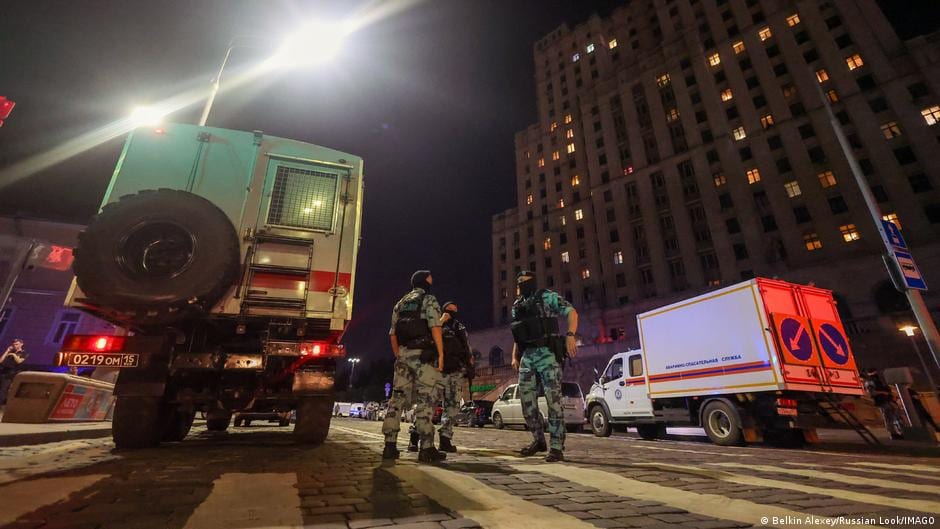
A deadly explosion outside an upscale Moscow restaurant at Kudrinskaya Square has been condemned as a “brutal terror attack” by Moscow Mayor Sergei Sobyanin, according to DW.com reporting on Sunday. The mayor vowed that those behind the blast would be punished, signaling that Russian authorities are treating the incident as a high‑stakes security threat in the heart of the capital.
Details remained limited in the immediate aftermath, but the location and language used by Sobyanin underline the political sensitivity of an attack at an upscale venue in central Moscow. With questions mounting over who is responsible and how the security services will respond, the blast is already shaping up as a major test for the city’s sense of safety.
Key facts
- Source
- DW.com
- Reported
- August 2, 2026
- Desk
- general
- Follow the story
- Spinn Radio Talk
What we know so far about the Moscow restaurant blast
DW.com reports that the explosion occurred outside an upscale restaurant at Kudrinskaya Square in central Moscow, an area associated with high‑end venues and significant foot traffic. The blast was described as deadly, though early accounts did not specify casualty numbers or identify victims. The choice of location alone suggests the perpetrators aimed at a high‑profile target, one that would send a jolt through everyday life in the capital.
Mayor Sergei Sobyanin publicly labeled the incident a “brutal terror attack” and promised that those responsible would face punishment. That framing moves the incident out of the realm of accidental explosion or criminal dispute and into the category of politically charged violence that Russian authorities say they intend to confront. When the city’s top official uses language like this, it typically signals that national security agencies will take the lead on the investigation.
The incident was reported on August 2, 2026, underscoring how fresh the information remains. In the early hours of any major attack, official statements often focus on condemnation and calls for calm, with operational details following only after security services have secured the site and begun forensic work.
“The choice of an upscale restaurant at Kudrinskaya Square hints at a target meant to rattle Moscow’s sense of everyday security.”
Why Mayor Sergei Sobyanin’s words matter
By calling the blast a “brutal terror attack, ” Sergei Sobyanin set the tone for how the city and the country are likely to understand what happened. The wording suggests authorities are working on the assumption that this was a deliberate act meant to cause fear, not a random or accidental explosion. It also creates an expectation that security agencies will be under pressure to identify suspects quickly.
Sobyanin’s promise that the perpetrators would be punished points to an official determination to show control and resolve. In previous crises, such language has often preceded visible security clampdowns in public spaces, from transport hubs to entertainment districts. While no specific measures were detailed in the initial reporting, Muscovites will be watching closely for signs of increased checks and a heavier police presence around restaurants, malls, and cultural venues.
For observers outside Russia, the mayor’s stance is also a signal about how the Kremlin and regional authorities might frame this event in broader domestic debates about security and political stability. A terror label typically opens the door to expanded investigative powers and can shape public discourse for weeks or months after the incident.
“Calling it terror is not just a description, it sets the stage for how Moscow polices itself in the days ahead.”
Spinn Radio
Follow live news on Spinn Radio
Why Kudrinskaya Square and an upscale restaurant are significant
Kudrinskaya Square is known in Moscow for its centrality and its proximity to prominent buildings and busy traffic routes. An attack in that area is not only deadly for those in the immediate blast zone, it is also symbolically charged. Hitting an upscale restaurant sends a message that even elite or well‑guarded spaces are vulnerable, which can amplify the psychological impact on residents and visitors alike.
Upscale restaurants in Moscow often function as social hubs that blend business, politics, and culture. Targeting such a venue can be read as an attempt to disrupt normal social life, not just to damage property or injure individuals. Patrons of these establishments include local residents, professionals, and sometimes tourists, which adds an international dimension to the perception of risk in the city.
For many Muscovites, the immediate concern will be whether this blast is an isolated episode or the beginning of a pattern. The location at Kudrinskaya Square will likely keep this attack in public consciousness longer than an incident in a less central district, and it may influence where people choose to gather in the coming days.
“Striking an upscale restaurant in central Moscow is a direct hit on the city’s sense of normal, everyday life.”
What is at stake for security and politics in Moscow now
With authorities treating the blast as terrorism, several layers of risk and consequence come into play. First is the basic question of public safety: Muscovites will want reassurance that the immediate threat has passed, that no secondary devices are present, and that crowded venues remain secure. The speed and visibility of the official response will shape how confident people feel about returning to restaurants and public squares.
Second, the investigation itself becomes a test of state capacity. Identifying suspects, uncovering potential networks, and clarifying any motives will be crucial to preventing copycat attacks. Although no investigative details were made public in the early DW.com report, the mayor’s comments suggest that security agencies are already under pressure to show progress. How transparent they choose to be, and how quickly they present findings, will affect both domestic trust and international perception.
Finally, the political reading of the blast will matter. In many countries, major attacks influence debates on surveillance, policing powers, and civil liberties. In Russia, a terror designation can be used to justify tighter controls in public and online spaces. Even without concrete legislative moves on the table yet, analysts will be watching for signs that this incident is used to argue for tougher security policies or to crack down on perceived opponents.
“The blast is not only a crime scene, it is a live test of how Russia balances security, control, and public confidence.”
How to follow developments on the Moscow blast
Because this is a developing story, much of what matters most is still to come: identification of victims, any claim of responsibility, and results from the investigation. Until officials provide more detail, many key questions will remain open, from the precise nature of the explosive device to the attackers’ potential motives. That uncertainty makes timely, verified updates crucial for anyone tracking events in Moscow.
For listeners who want to stay across the latest confirmed information, real‑time coverage and informed analysis will be essential. Spinn Radio will continue to track DW.com and other verified outlets as Russian authorities release new statements or operational details from Kudrinskaya Square. You can Follow live news and talk on Spinn Radio for on‑air updates, expert context, and listener reactions as the situation evolves.
As more information emerges, expect the narrative to shift from the immediate language of shock and condemnation toward questions of accountability and long‑term consequences. Whether this blast is ultimately viewed as a turning point for Moscow’s security posture will depend on what investigators uncover in the days and weeks ahead.
“In the first hours after a major attack, the most valuable thing is not speculation, it is steady, verified updates you can trust.”
Good to know
Frequently asked questions
What happened at the Moscow restaurant near Kudrinskaya Square?
A deadly explosion hit outside an upscale restaurant at Kudrinskaya Square in Moscow. Authorities are treating it as a serious security incident.
Why is the Moscow mayor calling the blast a terror attack?
Mayor Sergei Sobyanin labeled the blast a brutal terror attack because authorities believe it was a deliberate act meant to spread fear, not an accidental explosion.
Where exactly did the Moscow blast take place?
The blast occurred outside an upscale restaurant at Kudrinskaya Square in central Moscow, an area known for prominent buildings and heavy foot traffic.
How can I follow updates on the Moscow restaurant explosion?
You can follow updates by tuning into Spinn Radio’s news coverage and by using Follow live news and talk on Spinn Radio, which tracks developments as they emerge.
Explore more on Spinn Radio: Follow live news and talk on Spinn Radio
Sources