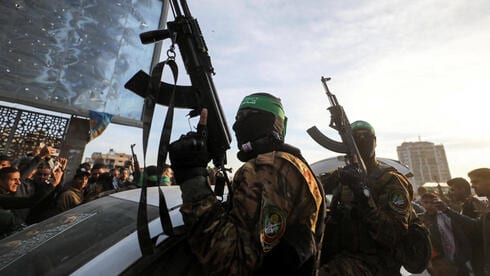
Israeli officials say Hamas has accepted a framework for full disarmament in Gaza, according to a Ynetnews report published Thursday, a potential turning point in negotiations over the territory's future. The emerging deal, as described by those sources, would hinge on Hamas giving up its weapons and underground infrastructure before any Israeli withdrawal.
Accounts linked to Hamas are already portraying the understandings in narrower terms, highlighting how contested both the details and the narrative are, even as mediators push to convert the outline into a binding agreement.
Key facts
- Source
- Ynetnews
- Reported
- July 30, 2026
- Desk
- general
- Follow the story
- Spinn Radio Talk
What Israeli officials say Hamas has agreed to in Gaza
According to Israeli officials cited by Ynetnews, the draft deal requires Hamas to surrender all weapons inside Gaza. That includes not only guns and rockets but the broader military capacity that has underpinned the group's rule. The same officials say the terms also obligate Hamas to relinquish political control in the enclave, creating a sequence in which demilitarization and a transfer of power come before any formal Israeli pullback.
Those officials also describe a requirement to destroy cross-border and internal tunnels, which Israel has long viewed as a core strategic threat. In the emerging outline, dismantling that underground network sits alongside disarmament as a central condition, tying any future change on the ground in Gaza to verifiable steps that strip Hamas of both its armed wing and its physical infrastructure.
The key takeaway is the order of operations: in the version described to Ynetnews, weapons, tunnels, and power leave Hamas' hands before Israeli forces leave Gaza, not the other way around.
“In the outline relayed by Israeli officials, weapons, tunnels, and power leave Hamas’ hands before Israeli forces leave Gaza.”
How Hamas-linked accounts are framing the same deal
While Israeli officials are calling the package full disarmament, Hamas-linked accounts are presenting it as less sweeping. Their messaging, as summarized in the Ynetnews report, suggests a more limited or phased understanding of what is on the table, rather than an immediate, comprehensive surrender of all capabilities and authority.
This gap matters because it signals potential friction over implementation. If one side views the framework as total demilitarization and the other as a narrower security arrangement, every checkpoint handover, tunnel demolition, or weapons transfer could become a new flashpoint. The difference in framing is itself a reminder that until the terms are written and verified, the deal remains political as much as it is technical.
For readers, the practical point is that even as headlines speak of "full disarmament, " the actors closest to Hamas are already contesting how far the commitments really go.
“The deal is being sold as full disarmament in Israeli briefings and as something far less sweeping in messaging close to Hamas.”
Spinn Radio
Follow live news on Spinn Radio
Why the Gaza disarmament report matters now
Ynetnews reported the story on July 30, 2026, at a moment when the future of Gaza's security and governance is under intense scrutiny. A deal that conditions Israeli withdrawal on Hamas surrendering weapons, destroying tunnels, and stepping aside from power would reshape every subsequent discussion about who runs the territory and how it is policed.
The stakes extend well beyond the sequence of steps. If implemented in the maximalist form described by Israeli officials, such an arrangement would mark a rare case in which a group that has held both guns and government posts in Gaza agrees to give up both as part of a negotiated framework. It would also open the door for debates over what kind of authority replaces Hamas, what security mechanisms operate on the ground, and how outside actors engage with a post-Hamas Gaza.
For now, the report is a signal that talks have moved into the hardest issues: not just cease-fire timelines, but the fate of Hamas' armed wing, its tunnels, and its political dominance in Gaza.
Key sticking points to watch in the emerging Gaza deal
The first unresolved question is verification. Israeli officials are describing obligations that run from surrendering weapons to destroying tunnels, yet the mechanics of how those steps would be monitored are not laid out in the initial reporting. Any disagreement over inspections, access to sites, or who certifies compliance could slow or stall implementation.
A second sensitive point is the timing of Israeli withdrawal relative to Hamas' exit. The outline, as summarized by Ynetnews, puts the onus on Hamas to move first: give up arms, dismantle tunnels, and relinquish power, then see Israeli forces pull back. For Hamas-linked actors that are already portraying the deal as less sweeping, that sequencing may be a hard sell, which is why their public framing could matter as much as any written clause.
Another variable is the political follow-up. Once Hamas steps aside in this scenario, an institutional vacuum appears. That future governance question is not detailed in the report, but it will shape how other regional players and international backers respond to any final text.
“Verification, sequencing, and the political vacuum after Hamas are likely to be the pressure points if this framework moves ahead.”
Where to follow live updates and analysis on Gaza talks
Because this story is still developing, details may shift as negotiators refine the language and both sides test public reaction. Israeli officials have laid out an ambitious picture of complete disarmament and political exit for Hamas, while accounts close to the group push a narrower reading. That gap will define the next news cycle: either it narrows into a shared text or hardens into a new impasse.
For ongoing coverage, listeners can track breaking headlines, expert reaction, and caller perspectives on Follow live news and talk on Spinn Radio. The Gaza file is changing hour by hour, and the most reliable view of where things stand will come from watching how both sides describe the same clauses in the days ahead.
Good to know
Frequently asked questions
What is being reported about Hamas and Gaza disarmament?
Israeli officials are reporting that Hamas has agreed to a framework for full disarmament in Gaza, according to Ynetnews. They describe it as requiring the group to give up weapons, tunnels, and power before any Israeli withdrawal.
What does the emerging Gaza deal require from Hamas?
The emerging deal requires Hamas to surrender all weapons in Gaza, destroy its tunnel network, and relinquish control of the territory before an Israeli pullback. Israeli officials are presenting these steps as preconditions rather than outcomes of withdrawal.
How are Hamas-linked accounts responding to the reported deal?
Hamas-linked accounts are portraying the understandings as less sweeping than the full disarmament described by Israeli officials. Their framing suggests a narrower or more limited interpretation of the commitments reportedly on the table.
Where can I follow ongoing coverage of the Gaza negotiations?
You can follow ongoing coverage of the Gaza talks on Spinn Radio's news and discussion streams. Start with Follow live news and talk on Spinn Radio for real-time updates and analysis.
Explore more on Spinn Radio: Follow live news and talk on Spinn Radio
Sources