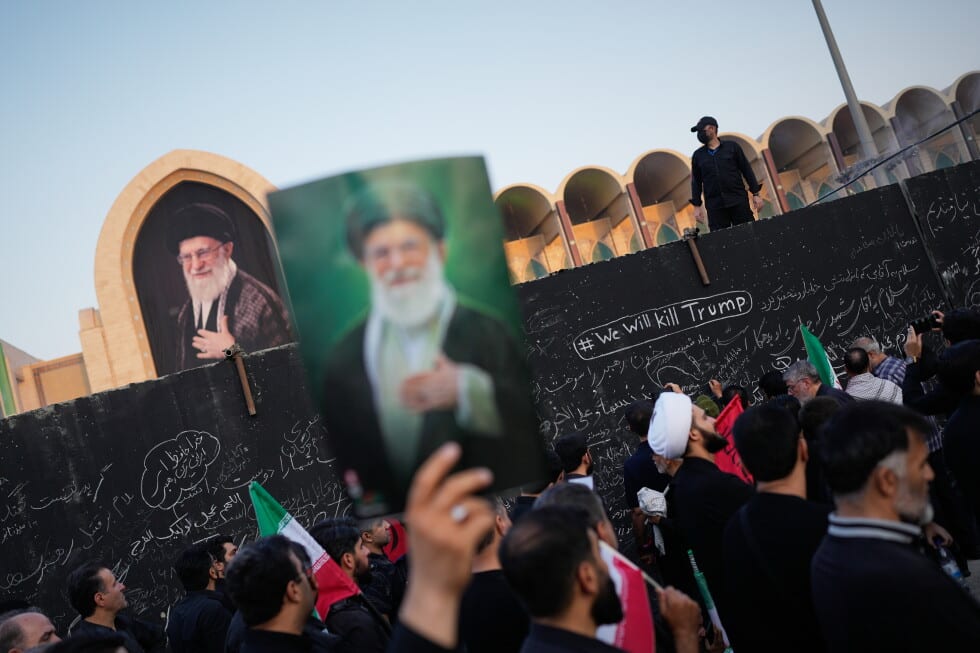
Ayatollah Ali Khamenei’s funeral, reported this week by AP News, was scripted to look like a nation mourning as one. The ceremony for Iran’s supreme leader was designed to show crowds, flags and solidarity at a moment of uncertainty.
Behind that televised unity, however, sits a country that AP describes as bitterly divided after Khamenei’s decades in power, with his long rule shaping the political and social fault lines that now define Iran’s future.
Key facts
- Source
- AP News
- Reported
- July 9, 2026
- Desk
- general
- Follow the story
- Spinn Radio Talk
What AP News is reporting about Khamenei’s funeral
AP News reports that the funeral for Iran’s supreme leader, Ayatollah Ali Khamenei, was organized above all as a display of unity. State-managed ceremonies, seen often around moments of succession in tightly controlled systems, tend to focus on big visuals: official delegations, tightly packed crowds, banners and clerical ranks moving in step. The aim in this case, as AP notes, was to send a clear message at home and abroad that the system he led still holds together after his death.
That choreography matters because Khamenei’s time in power stretched across decades, long enough for an entire political generation to know no other supreme leader. A funeral on this scale is not just about honoring a single figure. It is about signaling continuity: that the institutions he shaped remain in control, and that elites who rose under him can still cooperate to manage a sensitive transition.
AP’s framing of the event as a unity show is a key detail. When an outlet emphasizes the staging, it is flagging the gap between what viewers are meant to see and the more fractured reality beneath. The funeral is therefore both a national ritual and an early test of how the system manages visible and hidden dissent after the passing of its central figure.
“The funeral was less a farewell to one man than a stress test of the system he built.”
How Khamenei’s long rule left Iran so bitterly split
AP News highlights that the country is “bitterly split” over Khamenei’s decades-long rule, which is the central fact behind the unity messaging around his funeral. A leader who shapes policy, institutions and public life for that long inevitably generates both loyalty and deep resentment. In Iran’s case, those divisions run through politics, culture and everyday life, separating conservatives and reform-minded groups, insiders and those who feel permanently shut out.
Supporters see stability and ideological continuity as Khamenei’s legacy. His era entrenched a system that prizes loyalty to the supreme leader, and over time this created powerful networks that depend on that model to survive. For many within those networks, a tightly controlled political space is the price of what they view as security and resistance to outside pressure.
Critics, which AP signals by emphasizing the “bitterly” split public, focus instead on the restrictions that grew under his rule and on the lack of broad political inclusion. Their frustration turns a funeral that presents unity into a symbol of the gap between official imagery and lived reality. That disconnect will shape how many Iranians interpret every speech and slogan in the days around his burial.
“The carefully staged unity around his coffin sits on top of years of unresolved arguments about what his rule did to the country.”
Spinn Radio
Follow live news on Spinn Radio
Why this transition after Khamenei matters for Iran’s future
The AP News report underlines that Khamenei’s death closes a long chapter at the top of Iran’s political system. A transition after such a lengthy tenure always carries risk, because it forces factions that grew up under one figure to renegotiate power among themselves. The unity-themed funeral becomes, in effect, the first joint performance by a cast that must now agree on a successor and on how tightly to police public debate.
For ordinary Iranians, those decisions will influence everything from how contested elections are handled to how much space exists for criticism or reform within the current system. A leadership that feels secure might allow some controlled debate about the past decades. One that feels threatened is more likely to respond to visible division with heavier control, making the bitterness AP describes even sharper.
Internationally, close watchers will read the handling of the funeral and its messaging as an early indicator of who is confident, who is sidelined and whether any new tone emerges. Even without specific details in the AP account about external policy, the basic pattern is clear: the more visible the domestic splits, the more carefully Iran’s leaders will try to project steadiness to the outside world.
What to watch in Iran as the post-Khamenei era opens
AP News has signaled two competing realities: the visual unity of a state funeral and the deep division left by a long rule. The key question now is which reality shapes events from here. In the short term, observers will watch for signs of how tightly authorities manage public space around the mourning period. Large, state-organized gatherings can either drown out dissent or, under certain conditions, give critics moments to be seen and heard.
Inside the political class, the same split AP describes in society at large exists among elites who rose under Khamenei. Their ability to maintain a coherent front during the ceremonies, and in the days after, will be an early test of whether the country’s power structure can contain its own rivalries. If those tensions surface, they will likely appear first as small but telling signals: changed slogans, altered seating arrangements, or shifts in who speaks on behalf of the system.
For audiences following from abroad, this is a developing story rather than a settled verdict on Khamenei’s legacy. AP’s reporting sets the scene, but the real question is how Iran’s leaders respond to a public described as “bitterly” divided. That response will determine whether the funeral is remembered mainly as a final show of unity, or as the moment when the depth of the split became impossible to hide.
“The real story is not the size of the funeral crowds, but what Iran’s leaders choose to do once the cameras move on.”
How to keep up with fast-moving coverage of Iran
With AP News framing Khamenei’s funeral as a unity spectacle in a fractured country, events are likely to move quickly as reactions unfold. New statements, smaller ceremonies and political maneuvers can shift the tone from one day to the next, especially when the underlying public mood is so divided.
For listeners who want to track those turns in near real time, live formats are essential. Talk programming can unpack AP’s headlines, add regional context and surface voices that feel the split on the ground. You can Follow live news and talk on Spinn Radio for rolling discussion, analysis and reactions as Iran navigates the uncertain weeks after Khamenei’s passing.
Good to know
Frequently asked questions
What did Khamenei’s funeral aim to show?
Khamenei’s funeral was designed to showcase national unity. AP News reports that authorities built the ceremony to project a stable, cohesive Iran at a fragile moment.
Why is Iran so divided over Khamenei’s rule?
Iran is deeply split because Khamenei’s decades in power polarized the country. His long tenure created loyal networks but also longstanding resentment over political limits.
Why does the period after Khamenei’s death matter?
The period after Khamenei’s death matters because it forces Iran’s leadership to manage a sensitive transition. How they handle it will shape both domestic politics and external perceptions.
How can I follow ongoing developments in Iran?
You can follow ongoing developments through live news and analysis. Spinn Radio’s talk programming offers rolling coverage and context as the story evolves.
Explore more on Spinn Radio: Follow live news and talk on Spinn Radio
Sources