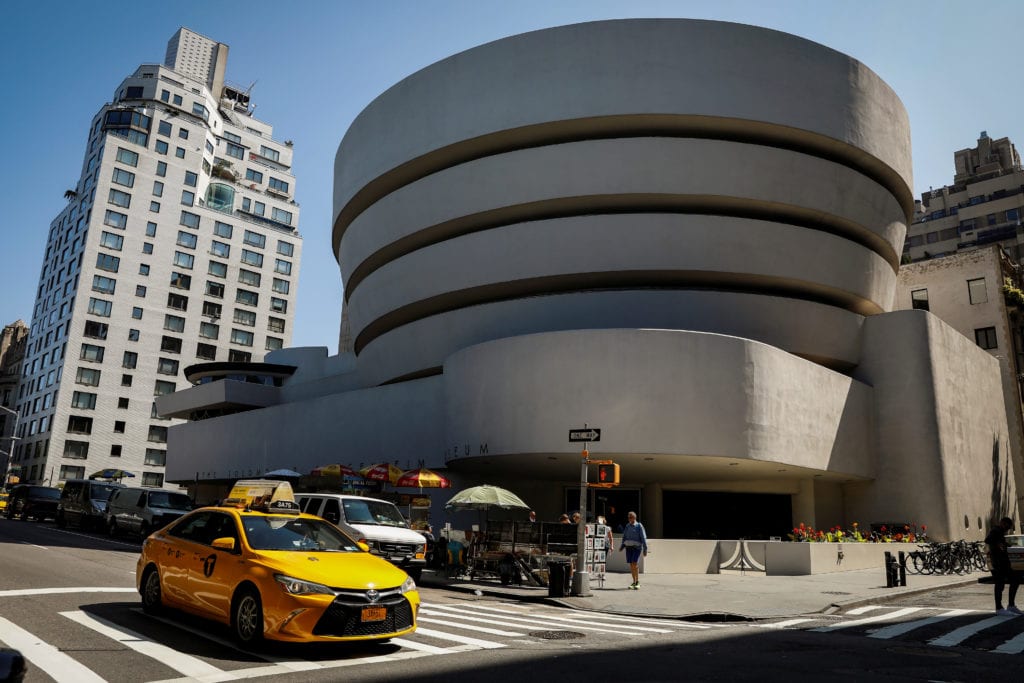
The Guggenheim Museum’s cooling system is among 31 Upper East Side buildings that tested positive for Legionella bacteria, PBS reported, as New York City health officials race to contain a new Legionnaires’ disease outbreak. The city health department released the list on Friday and ordered the affected sites to clean and disinfect their cooling towers.
The move highlights how quickly officials are moving to track and respond to potential sources of infection in a dense neighborhood that includes major cultural institutions, residential towers, and commercial buildings.
Key facts
- Source
- PBS
- Reported
- July 11, 2026
- Desk
- general
- Follow the story
- Spinn Radio Talk
What PBS reported about the Guggenheim and Legionnaires’ tests
According to PBS, New York City’s health department on Friday named 31 buildings on the Upper East Side whose cooling towers tested positive for Legionella bacteria. The Guggenheim Museum appears on that list, putting one of the city’s most recognizable cultural landmarks directly into a wider public health story that has been building this week.
Each of the listed properties has been ordered to clean and disinfect its cooling tower. That instruction signals that officials see the towers as potential contributors to the current Legionnaires’ disease outbreak and want to reduce any ongoing risk. The specific test results for each tower have not been detailed publicly, but being on the list means inspectors found enough evidence of contamination to trigger corrective action.
For visitors and workers around the Guggenheim, the key takeaway is that the museum’s cooling system is under scrutiny and must undergo formal disinfection. The listing itself does not confirm any individual infections tied to a single site, it confirms that the building is part of a neighborhood-wide response.
“Being named on the city’s list does not prove infections started at one building, but it does trigger immediate cleaning orders for that site.”
Why cooling towers matter in a Legionnaires’ disease outbreak
Legionnaires’ disease is closely associated with contaminated water in large building systems, and cooling towers are a central focus whenever clusters of cases appear in a city. These towers can emit fine water droplets into the air, which can then be inhaled by people in the surrounding area. That is why New York City health inspectors target them quickly when an outbreak is detected.
The Upper East Side list reflects that strategy in real time. By identifying 31 buildings, including the Guggenheim Museum, the city is effectively mapping possible sources within a tight geographic zone and pressing building owners to act. Cleaning and disinfecting towers aims to strip out Legionella bacteria from the water and surfaces inside the equipment so that droplets released into the air no longer carry the pathogen.
The practical takeaway for residents and visitors is that the city is treating this as a systems problem, not a single-building issue. Multiple towers are undergoing mandatory cleaning, which is exactly the kind of broad intervention public health agencies rely on when dealing with airborne exposure from shared urban infrastructure.
“This is a systems problem: dozens of cooling towers in one neighborhood are being scrubbed at once to choke off possible sources of infection.”
Spinn Radio
Follow live news on Spinn Radio
What the NYC health department’s list of 31 buildings tells us
The fact that the health department publicly released a list of 31 affected Upper East Side buildings is itself notable. It shows that officials want residents to know where inspections have found Legionella and where remediation is ordered. Including a landmark such as the Guggenheim Museum also underlines that even high-profile, tightly managed institutions can be caught up when an outbreak intersects with complex building systems.
The list spans a cross section of the neighborhood, from cultural venues to residential and commercial properties. While PBS did not publish every address in the summary now circulating, the total number points to a broad inspection effort rather than a narrow probe of one or two sites. Each inclusion means that the city expects owners and managers to bring in specialists, flush and disinfect systems, and then likely submit follow-up testing.
For people in the area, the main takeaway is scale. Thirty‑one buildings with positive Legionella tests on the Upper East Side indicates that officials are thinking about the outbreak as a neighborhood event, not a one-off anomaly, and they are acting on that understanding.
“Thirty‑one positive towers in one neighborhood tells residents this is a broad neighborhood response, not a one-off anomaly.”
What is at stake for New Yorkers and visitors near the Guggenheim
When a major outbreak touches an area as busy as the Upper East Side, the stakes extend beyond any single building. The Guggenheim Museum draws locals, tourists, and staff into a relatively compact space, and it sits among dense residential blocks and other large structures with their own cooling systems. That mix means that controlling Legionella in one tower is only part of the picture.
The city’s order to clean and disinfect the Guggenheim’s cooling tower is meant to lower any risk associated with that specific system while similar work proceeds at 30 other sites. For people who live, work, or spend time nearby, the situation is a reminder that Legionnaires’ outbreaks are often tied to clusters of infrastructure rather than easily visible problems. The public signal from health officials is that those systems are now being actively managed.
For now, the big takeaway is that the outbreak has prompted a coordinated response in one of Manhattan’s most recognizable neighborhoods, and that response explicitly includes one of its most famous museums.
“For neighbors and visitors, the message is simple: the systems that keep big buildings cool are under active inspection and cleanup.”
What to watch next as the Legionnaires’ investigation continues
PBS reported the health department’s list on July 11, 2026, which means the inspection and cleanup phase is current and ongoing. The next key developments will likely involve follow-up test results from the 31 buildings and any updates from officials about whether those disinfection orders coincide with a drop in new Legionnaires’ cases in the Upper East Side cluster.
Public health investigators typically keep tracking both new infections and environmental test samples to see if interventions are working. In this case, that means watching for any change in the number or location of buildings flagged by the city, and any fresh guidance about the area around the Guggenheim Museum. Residents and visitors can expect more information as testing cycles progress and as the outbreak curve becomes clearer.
For continuing coverage and live analysis of how New York City handles this Legionnaires’ flare-up, listeners can follow live news and talk on Spinn Radio, where public health updates share space with the music, culture, and city stories that shape daily life.
“The story now hinges on what follow-up tests show after the 31 ordered cleanups and whether case numbers start to fall in the Upper East Side.”
Good to know
Frequently asked questions
Which New York buildings tested positive in the Legionnaires’ probe?
New York City’s health department named 31 Upper East Side buildings whose cooling towers tested positive for Legionella bacteria. The list, reported by PBS, includes the Guggenheim Museum among other residential, commercial, and cultural properties.
What action has been ordered for the Guggenheim’s cooling tower?
The Guggenheim Museum has been ordered to clean and disinfect its cooling tower after tests found Legionella bacteria. That order is part of a broader directive covering 31 Upper East Side buildings.
How serious is the Legionnaires’ outbreak on the Upper East Side?
The current Legionnaires’ outbreak is serious enough that the city health department identified and acted on 31 Legionella-positive cooling towers. That scale shows officials are treating it as a neighborhood-level public health event.
Where can I follow ongoing updates about the Legionnaires’ response?
You can follow ongoing updates about the outbreak and the city’s response on Spinn Radio’s news and talk coverage. The story is continuing to develop as inspections and disinfection orders play out.
Explore more on Spinn Radio: Follow live news and talk on Spinn Radio
Sources