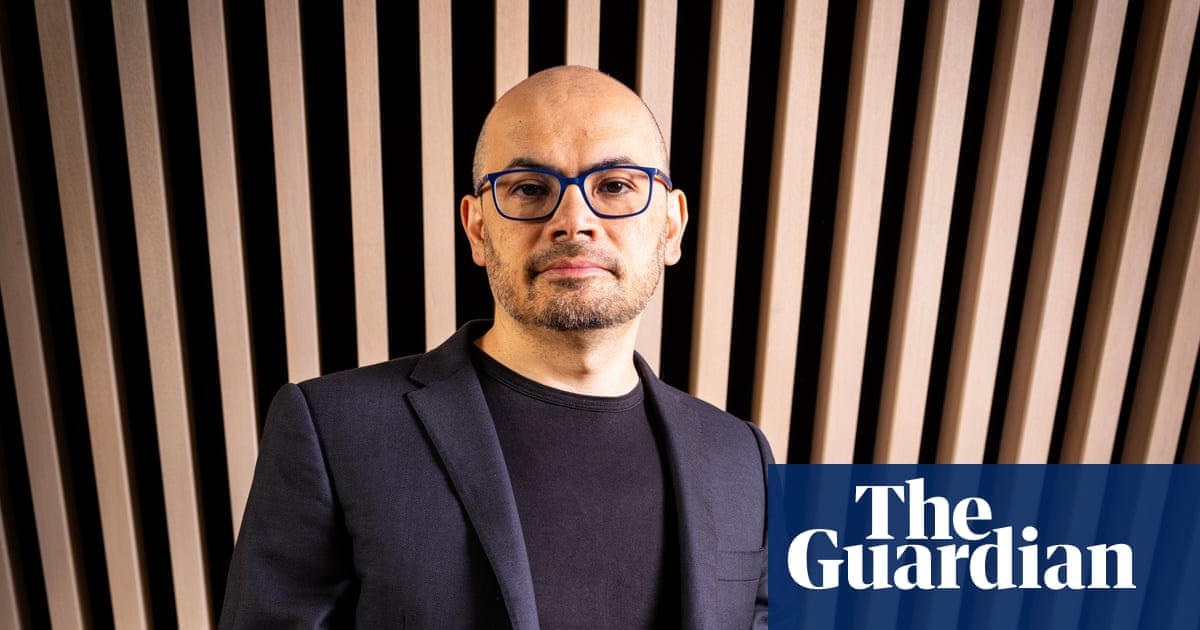
Google DeepMind is entering what observers describe as a new chapter after co‑founder Demis Hassabis shifted his position inside the artificial intelligence division, The Guardian reported on 8 August. The move has sharpened long‑running questions about how much freedom the lab still has inside Google and how tightly its work is now tied to commercial products.
According to The Guardian, critics and supporters alike see the change as a symbolic moment for a group that was once held up as an independent research powerhouse. The concern is simple: as Google’s business focus on AI hardens, DeepMind’s original mission may be giving way to commercial reality.
Key facts
- Source
- The Guardian
- Reported
- August 8, 2026
- Desk
- general
- Follow the story
- Spinn Radio Talk
Why Demis Hassabis’s role change at DeepMind matters now
Demis Hassabis helped define DeepMind’s identity as a research‑driven AI lab, so any shift in his role is being read as a signal of where Google wants to take the unit next. The Guardian’s report on 8 August frames this as the start of a “new era” for Google DeepMind, with the co‑founder’s change in responsibilities seen as a turning point rather than a minor reshuffle.
What matters is not only what Hassabis does next, but what his move says about DeepMind’s place inside Google. Observers cited by The Guardian worry that the balance has tipped away from long‑horizon research toward more immediate commercial goals, and they are watching to see whether future projects reflect that shift.
For listeners following AI as closely as music or sport, the key takeaway is that one of the sector’s most closely watched labs is adjusting its leadership at the same time that big‑tech competition in AI is intensifying. That combination is why this internal change is drawing outsized attention.
“Hassabis’s new role is being treated less like a reshuffle and more like a signal of where Google wants DeepMind to go next.”
How DeepMind’s independence inside Google is being questioned
From its early years inside Google, DeepMind was often talked about as a semi‑independent research house, with its own culture and a mandate to push AI science. The Guardian now reports that observers fear this independence has eroded, and that “commercial reality has taken over” inside the unit.
Those concerns are not abstract. Independence, in this context, means the ability to work on open‑ended research problems rather than being steered mainly by product roadmaps and revenue timelines. If that independence shrinks, DeepMind looks less like a blue‑sky lab and more like a traditional product group folded into a tech giant.
The practical takeaway: when you next hear about a breakthrough from Google DeepMind, expect people to ask whether it was driven by scientific curiosity or by the demands of Google’s broader business. The Guardian’s reporting suggests that this question is now front and center for many watching the lab.
“Independence used to be DeepMind’s calling card; critics now fear it has become a luxury Google can no longer justify.”
Spinn Radio
Follow live news on Spinn Radio
What ‘commercial reality’ could mean for Google DeepMind’s AI work
The Guardian’s summary that “commercial reality has taken over” captures a wider unease about how frontier AI is being built and deployed. For DeepMind, commercial reality means fitting research and infrastructure into Google’s competitive push in AI, from search and ads to consumer and enterprise tools.
If that lens dominates, some worry that longer‑term or higher‑risk research could be sidelined in favor of work that can be quickly packaged into products. Even without specific projects named, the implication in The Guardian’s reporting is clear: DeepMind’s agenda may be more directly tied to Google’s revenue‑driven priorities than before.
For AI‑curious listeners on Spinn Radio, the detail to remember is that one of the field’s flagship labs may now be judged internally less on scientific breakthroughs and more on its contribution to Google’s commercial strategy. That shift in measurement could quietly reshape what gets built and how quickly it reaches users.
“Commercial reality, in practice, decides which experiments get oxygen and which never leave the whiteboard.”
The Guardian’s report and what we know so far
The Guardian broke the latest development on 8 August, reporting that Google DeepMind was entering a new era as Hassabis adjusted his role and observers voiced concern over the unit’s direction. The piece places the leadership change squarely in the context of Google’s broader AI push and rising scrutiny of big‑tech power over foundational AI research.
While the report does not spell out every internal detail, its framing is pointed: DeepMind’s trajectory is no longer being read solely through the lens of scientific ambition, but through the extent of Google’s control. By foregrounding fears about lost independence, The Guardian has turned what could have been a quiet personnel story into a wider debate about who will set the rules for advanced AI.
For anyone tracking AI like a developing transfer saga in sport, the actionable point is that this is a live story, not a finished chapter. Leadership roles, reporting lines, and strategic priorities around DeepMind are now part of a larger public conversation about how far Google will go in centralising AI power.
“What might once have been a quiet internal move is now a proxy battle over who steers frontier AI inside Google.”
What to watch next and how to follow updates on Spinn Radio
The next phase will be defined less by job titles and more by what DeepMind actually ships. Observers will be watching whether upcoming work from the unit looks closer to open‑ended research or tightly integrated Google products, and whether Hassabis’s new position gives him more or less room to set that agenda.
Regulators, researchers, and rivals are likely to treat this shift as another data point in the broader contest over big‑tech control of AI. Each new announcement from Google DeepMind will be read through the lens The Guardian has sketched: has commercial logic fully taken over, or does a meaningful degree of research freedom remain?
Spinn Radio will track those developments alongside the rest of the day’s news cycle. To hear live reaction, analysis, and community conversations as this story evolves, you can Follow live news and talk on Spinn Radio and keep Google DeepMind’s next moves on your radar.
“The real test of this new era will arrive with the next wave of DeepMind projects and how tightly they are woven into Google’s core business.”
Good to know
Frequently asked questions
What changed for Demis Hassabis at Google DeepMind?
Demis Hassabis has shifted his role at Google DeepMind, according to The Guardian. The move is being treated as a signal of a new era for the AI unit inside Google.
Why are people worried about DeepMind’s independence?
People are worried about DeepMind’s independence because observers cited by The Guardian say the unit has lost its separate identity inside Google and that commercial priorities now dominate.
What does ‘commercial reality has taken over’ mean here?
In this context, “commercial reality has taken over” means DeepMind’s AI work is seen as more closely aligned with Google’s business needs than with purely open‑ended research goals.
Where can I follow ongoing coverage of the DeepMind story?
You can follow ongoing coverage of the DeepMind story by tuning into news and discussion on Spinn Radio, including live analysis available through its talk channels.
Explore more on Spinn Radio: Follow live news and talk on Spinn Radio
Sources