An improvised bomb that detonated inside an upscale Moscow restaurant has killed three people and injured 21 others, The New York Times reported on Sunday. Among the dead are a security guard and a woman whom Russian authorities say arrived at the venue carrying the suspicious package that later exploded.
The blast turns a night out in one of the capital’s high-end dining spots into a fresh shock for a city already accustomed to heavy security checks and surveillance. With details still emerging and officials working to identify who is behind the attack, investigators now face urgent questions about how an improvised device reached a busy restaurant and whether more violence could follow.
Key facts
- Source
- The New York Times
- Reported
- August 2, 2026
- Desk
- general
- Follow the story
- Spinn Radio Talk
What The New York Times is reporting about the Moscow blast
According to The New York Times, three people were killed when an improvised explosive device went off inside an upscale restaurant in Moscow. Initial information from Russian authorities, cited by the outlet, says the dead include a member of the venue’s security staff and a woman who is believed to have arrived with the package that later exploded.
The Times reports that another 21 people were injured in the blast. That toll underlines the confined, crowded nature of the setting, where diners and staff were suddenly caught in an explosion that investigators say came from a device brought into the building, not planted in advance by staff. For residents of Russia’s largest city, the idea that a bomb could be carried into a prominent restaurant reinforces a sense of vulnerability in places that typically rely on visible guards and bag checks.
“The attack turned a guarded, high-end dining room into a mass-casualty crime scene in seconds.”
Who the victims are and what is known about the suspicious package
Details released so far focus on two of the three people killed. The New York Times reports that one victim was a security guard working at the restaurant. His presence in the casualty list highlights how frontline staff, who are meant to protect guests from exactly this kind of threat, can be among the first in harm’s way when an attack occurs inside the premises they guard.
Another person killed was a woman whom Russian authorities say arrived at the restaurant with a suspicious package. That claim, relayed by The Times, instantly raises investigative questions about whether she knowingly transported an explosive device, whether she was used as an unwitting courier, or whether officials are still sorting out conflicting witness accounts. The third victim has not been described in the reporting so far, and there is no breakdown yet of the conditions of the 21 injured people.
With the basic casualty figures now public, the next phase is likely to focus on identifying all the victims, reconstructing their movements inside the restaurant, and analyzing how the package moved from the woman’s possession to the spot where it detonated. Each of those details will help investigators determine whether this was a carefully staged attack or a more improvised act that exploited gaps in everyday security.
“Investigators now have to trace every step of that suspicious package: where it came from, who handled it, and why it exploded inside a crowded room.”
Spinn Radio
Follow live news on Spinn Radio
How the attack fits into Moscow’s security climate
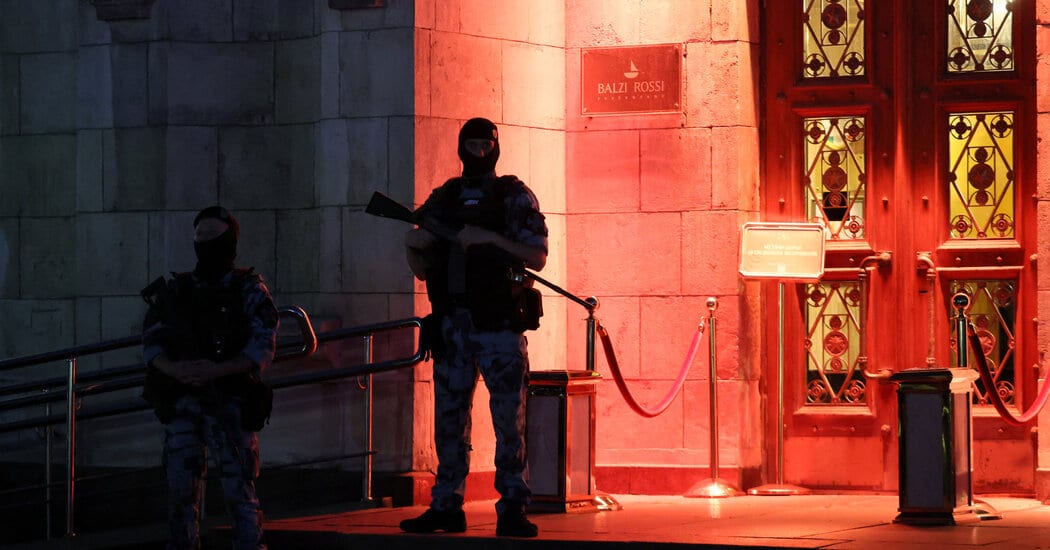
The restaurant targeted in this blast is described by The New York Times as “upscale, ” placing it among the capital’s more closely watched public venues. High-end restaurants in Moscow often employ visible security guards, use cameras throughout dining and service areas, and in some cases screen bags at the entrance. The reported presence of a security guard among the dead suggests those measures were in place but were not enough to prevent an improvised device being carried inside.
For residents and visitors, the attack is a reminder that even elite parts of the city, where patrons might expect tighter control and a degree of insulation from street-level crime, remain exposed to sudden violence. Because the device is described as improvised, authorities will likely be looking not only at who built it but also at potential blind spots in how such items can move around the capital. That focus will extend to public and private transport routes, delivery services, and personal bags that enter busy venues with minimal checks.
The political and social implications will depend heavily on what investigators eventually say about motive and responsibility. At this stage, The New York Times has not reported any claim of responsibility or any official designation of the incident as terrorism or another category of crime. Until that picture comes into focus, the main certainty for ordinary Muscovites is the visible response: more checks, more questions at doors, and a heightened sense of scrutiny in places that once felt routine.
What investigators are likely to examine next
With an improvised explosive device at the center of the case, Russian investigators will be under pressure to determine where the bomb was made, how it was transported, and whether others were involved. The detail that a woman reportedly arrived at the restaurant with a suspicious package gives them a specific timeline and a key figure to study through security footage and witness statements, as cited by The New York Times.
One priority will be confirming whether the device was assembled locally or elsewhere, then brought into Moscow. The level of sophistication in the bomb’s design, which has not yet been described in the available reporting, will shape how authorities talk about the threat and how widely they search for collaborators. If they conclude that the woman was knowingly involved, they will also have to map her contacts and movements before she reached the restaurant.
Given the number of injuries, investigators will also rely on medical records and interviews with survivors to reconstruct the exact moment of detonation. That work can reveal where the package was placed, whether anyone tried to intervene, and whether any prior warnings were missed. For now, those are open questions, and The New York Times account frames this as a case still in its early stages, with more information likely to surface in the coming days.
“The device, the woman who carried it, and the camera trail between them will define the next phase of the investigation.”
What this could mean for daily life in Moscow
Even without a confirmed motive, an attack in an upscale dining room is likely to change how people in Moscow move through public spaces. High-end restaurants, bars, and entertainment venues may respond by tightening their own entry checks, increasing the visibility of guards, and reviewing how they handle unattended bags or parcels. The death of a security guard, reported by The New York Times, will resonate in that industry and could prompt calls for better training and protective procedures.
For diners and staff, the incident could deepen an existing culture of caution, where people are more likely to report suspicious items or behavior. That kind of vigilance can help prevent copycat attempts, but it also risks normalizing a climate of fear and constant surveillance. Local authorities, facing pressure to show they can secure the city’s most polished addresses, will be balancing public reassurance against the practical limits of screening every person and package that crosses a restaurant threshold.
For listeners following fast-moving global stories like this, the next wave of updates will matter. More detailed briefings from Russian officials, additional reporting from outlets such as The New York Times, and on-the-ground accounts from Moscow will gradually clarify whether this was an isolated act or part of a broader pattern. You can track those developments and hear real-time discussion on Follow live news and talk on Spinn Radio, where hosts will be unpacking what this blast means for security, politics, and everyday life in the Russian capital.
Good to know
Frequently asked questions
What happened at the Moscow restaurant?
An improvised bomb exploded inside an upscale Moscow restaurant, killing three people and injuring 21, according to reporting from The New York Times. The blast turned a busy evening service into a major emergency with fatalities among staff and visitors.
Who are the victims of the Moscow restaurant blast?
The dead include a security guard and a woman who authorities say arrived with the suspicious package that later exploded, The New York Times reports. A third victim has not yet been detailed, and the conditions of the 21 injured have not been broken out publicly in the reporting so far.
Do authorities know who is behind the Moscow bombing?
Authorities have not been publicly identified in The New York Times reporting as naming a suspect group or motive for the bombing. Investigators are focusing on the woman said to have carried the suspicious package and on tracing the origins of the improvised device.
How can I follow updates on the Moscow restaurant explosion?
You can follow updates on the explosion through ongoing coverage by outlets such as The New York Times and live discussion on Spinn Radio. For rolling reaction and analysis, tune into news and talk programming via Spinn Radio’s dedicated Follow live news and talk on Spinn Radio stream.
Explore more on Spinn Radio: Follow live news and talk on Spinn Radio
Sources