China has recovered an orbital-class rocket booster, DW.com reported on July 10, 2026, marking a major step in Beijing's push toward reusable launch systems. The successful retrieval places China in a small club of space powers able to bring back boosters after reaching orbit.
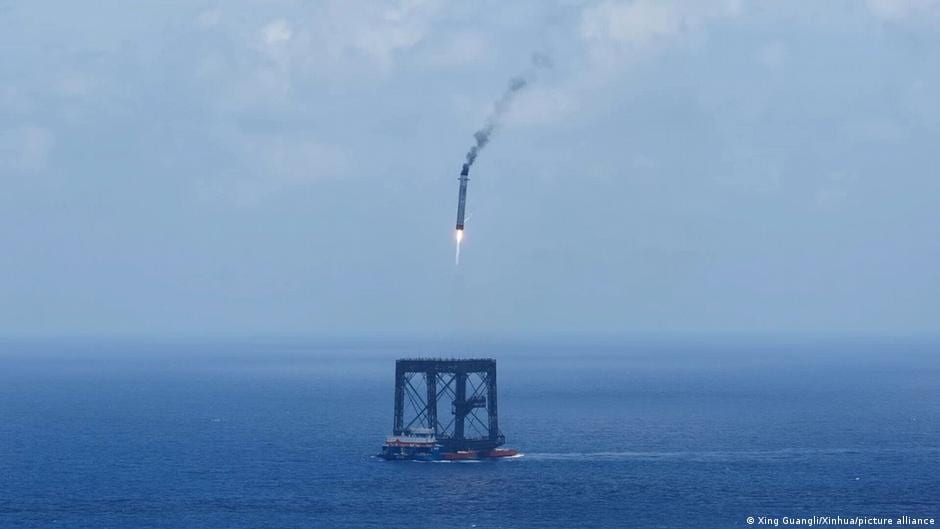
Developers turned to an alternative landing method rather than copying the approach used by existing players, a sign that China is testing its own ideas for how to cut launch costs and speed up turnaround for future missions.
Key facts
- Source
- DW.com
- Reported
- July 10, 2026
- Desk
- general
- Follow the story
- Spinn Radio Talk
Why recovering an orbital booster matters for China
Regaining control of an orbital-class booster is one of the hardest technical feats in rocketry, since the vehicle has to survive ascent, separation and a guided return through the atmosphere. By managing that, China joins an exclusive group of space powers that can reuse at least part of a large rocket instead of discarding it after one flight.
For Beijing, that capability is about more than engineering bragging rights. Reusable boosters promise cheaper access to orbit, more frequent launch opportunities and greater flexibility in how missions are planned. All three are central to long-term ambitions that include larger satellite constellations, deep-space probes and more sustained human presence in space.
The DW.com report underscores that this was not a suborbital test or a small hop. The booster belonged to an orbital-class system, which puts the achievement in the top tier of global launch milestones and signals that China now has a working foundation for rapid iteration on reusable designs.
“Regaining an orbital-class booster moves China from spectator to active contender in the race to reuse heavy rockets.”
How China’s reusable booster differs from existing players
Developers behind the new Chinese landing method opted for a "striking alternative" to the techniques already used by established space powers, according to DW.com. That suggests the team has not simply mirrored the widely watched vertical propulsive landings that dominate public images of reusable rockets.
Although specific technical details were not disclosed, the emphasis on a different recovery concept points to a deliberate strategy. China appears to be probing its own path to reusability, testing whether another style of retrieval might offer better reliability, lower hardware stress or a simpler path to refurbishment.
For global observers, the key takeaway is that the competition is no longer just about who can reuse rockets, but how they choose to do it. Diverging designs create parallel experiments in cost, complexity and performance that will shape how governments and commercial operators choose launch partners in the years ahead.
“The story is no longer only that rockets can be reused, but that China is betting on a different way to bring them home.”
Spinn Radio
Follow live news on Spinn Radio
A new phase in the global reusable rocket race
Until now, only a small number of space-faring nations and companies have demonstrated recovery of orbital-class boosters. The DW.com report confirms that China now belongs to that group, which sharpens the sense of competition in a market where lower launch prices and higher cadence are the main prizes.
Each new entrant with genuine reuse capability pushes launch providers to rethink pricing, infrastructure and technology roadmaps. If China can turn this retrieval into a routine practice, other players will feel pressure to improve reliability, cut refurbishment times or upgrade aging fleets to stay competitive in commercial and government contracts.
There is also a strategic layer. Spacefaring states see reusable rockets as a way to guarantee more independent access to orbit. Adding a Chinese orbital booster recovery to that short list of capabilities expands the number of actors who can, at least in principle, surge launches in response to political or security needs.
What this could mean for satellites, science and crewed missions
Reusing an orbital booster can reshape the economics of almost every type of mission that needs to reach space. Even a partial recovery can reduce the per-launch cost over time, which in turn makes it more viable to field larger satellite constellations or refresh existing fleets more often.
For science missions, a lower cost per kilogram to orbit makes it easier to greenlight more probes, more instruments and more follow-up flights when discoveries justify them. If China can repeat and refine this recovery method, its science agencies and partners could gain more bargaining power when proposing ambitious orbital or deep-space projects.
Human spaceflight programs also stand to benefit from more frequent, more affordable launches, even if crewed missions ultimately ride on dedicated vehicles. A mature ecosystem of reusable boosters supporting cargo and infrastructure can underpin a more stable schedule of crew flights and station resupply. The DW.com report hints that China has taken the first concrete step toward that broader ecosystem by proving that an orbital-class booster can return in one piece.
What to watch next as China refines reusable rockets
The immediate question after any first-of-its-kind recovery is whether it can be done again, and under what conditions. Observers will be looking for news of follow-up flights using the same or similar boosters, which would show whether the hardware can withstand multiple trips and whether the chosen landing method scales to different payloads and orbital profiles.
Another key indicator will be how quickly recovered stages return to service. Turnaround time is one of the main factors that determines whether reusable rockets truly cut costs or simply shift spending from manufacturing to refurbishment. Any sign that China is shortening the gap between launches using recovered hardware would suggest that its alternative method is paying off.
DW.com has framed this retrieval as a breakthrough, but it is the pattern of launches that will confirm how transformative it becomes. For continuing analysis and live reaction as more details emerge, listeners can Follow live news and talk on Spinn Radio, where this story will sit alongside other developing space and tech coverage.
“The first recovery is the headline, but the real story will be whether China can turn it into a repeatable habit.”
Good to know
Frequently asked questions
What exactly did China achieve with this rocket recovery?
China successfully recovered an orbital-class booster rocket. That places it among a small group of space powers with proven reusable launch hardware.
Why is a reusable booster important for China’s space program?
A reusable booster can lower launch costs and increase flight frequency for China’s space program. That supports larger satellite networks and more ambitious missions.
How is China’s rocket landing method different from others?
China’s developers used a striking alternative to existing landing methods. DW.com reports that they chose not to copy the techniques used by current leading players.
What should we watch for after this booster retrieval?
The next step is whether China can repeat the recovery and reuse the hardware. Launch cadence and turnaround time for recovered boosters will show how big this breakthrough really is.
Explore more on Spinn Radio: Follow live news and talk on Spinn Radio
Sources